 8 citations
,
October 2020 in “Pharmaceutics”
8 citations
,
October 2020 in “Pharmaceutics” Dutasteride-loaded nanoparticles coated with Lauric Acid-Chitosan show promise for treating hair loss due to their controlled release, low toxicity, and potential to stimulate hair growth.
 14 citations
,
January 2012 in “International Journal of Trichology”
14 citations
,
January 2012 in “International Journal of Trichology” Hodgkin's lymphoma can show up as hair loss.
4 citations
,
September 2020 in “Stem Cell Research & Therapy” Xenobiotic-free progenitor cells improve wound healing and blood vessel formation.
 39 citations
,
June 2017 in “Scientific Reports”
39 citations
,
June 2017 in “Scientific Reports” Different lab conditions and light treatment methods change how human skin cells respond to light therapy.
 28 citations
,
January 2000 in “Medical Mycology”
28 citations
,
January 2000 in “Medical Mycology” Fungal infections in lab animals can interfere with research.
 3 citations
,
January 2019 in “Elsevier eBooks”
3 citations
,
January 2019 in “Elsevier eBooks” Pharmacists should interpret lab data and perform physical exams to improve patient care.
 31 citations
,
May 2019 in “Nature communications”
31 citations
,
May 2019 in “Nature communications” Single Blimp1+ cells can create functional sebaceous gland organoids in the lab.
 28 citations
,
March 2010 in “Histochemistry and cell biology”
28 citations
,
March 2010 in “Histochemistry and cell biology” Skin cells can help create early hair-like structures in lab cultures.
 14 citations
,
April 2011 in “Cell Proliferation”
14 citations
,
April 2011 in “Cell Proliferation” Scientists can grow human hair follicle stem cells in a lab without changing their nature, which could help treat hair loss.
Placental cell medium boosts blood vessel growth in lab tests.
 61 citations
,
December 2016 in “The EMBO Journal”
61 citations
,
December 2016 in “The EMBO Journal” The study showed that hair follicle stem cells can maintain and organize themselves in a lab setting, keeping their ability to renew and form hair and skin.
 45 citations
,
November 2017 in “Biomaterials”
45 citations
,
November 2017 in “Biomaterials” Researchers found a new way to create hair-growing structures in the lab that can grow hair when put into mice.
 17 citations
,
January 1997 in “Cell and Tissue Research”
17 citations
,
January 1997 in “Cell and Tissue Research” Scientists developed a method to grow human fetal skin and digits in a lab for 3-4 weeks, which could help study skin features and understand genetic interactions in tissue formation.
 September 2017 in “Journal of Investigative Dermatology”
 The research concluded that hyaluronic acid affects the formation and growth of hair follicle-like structures in a lab setting.
 September 2016 in “Journal of dermatological science”
 Adult skin cells can be used to create new hair in a lab.
 2 citations
,
June 2022 in “Scientific reports”
2 citations
,
June 2022 in “Scientific reports” Mouse hair follicle stem cells lose their ability to change into different cell types after being grown for a long time.
13 citations
,
August 2007 in “Journal of Investigative Dermatology” Mouse hair can regrow in a special lab setup without serum.
169 citations
,
January 2018 in “Cell Reports” Scientists grew hair follicles from mouse stem cells in a lab setting.
91 citations
,
December 2000 in “The journal of cell biology/The Journal of cell biology” Scientists successfully created mouse hair proteins in the lab, which are stable and similar to natural hair.
28 citations
,
February 2021 in “Stem Cell Research & Therapy” Placental cell medium boosts blood vessel growth in lab tests.
 November 2022 in “Bioengineering”
 The method can test hair growth products using a lab-made hair-like structure that responds to known treatments.
3 citations
,
August 2020 in “Animals” Researchers found a way to grow cashmere goat hair cells in a lab and discovered that certain conditions improve these cells' growth and characteristics.
3 citations
,
December 2007 in “Journal of Otology” Guinea pig fat stem cells can become hair cell-like cells in a lab.
 7 citations
,
March 2021 in “Molecular Medicine Reports”
7 citations
,
March 2021 in “Molecular Medicine Reports” A mix of specific inhibitors and a growth factor helps keep hair growth cells from losing their properties in the lab.
 January 2026 in “International Journal of Dermatology Venereology and Leprosy Sciences”
 Metformin may improve acanthosis nigricans by reducing insulin resistance.
 January 2024 in “Wiadomości Lekarskie”
 Urban children in western Belarus had more severe COVID-19 cases in 2021.
 107 citations
,
September 2002 in “Journal of Investigative Dermatology”
107 citations
,
September 2002 in “Journal of Investigative Dermatology” Researchers found that hair shedding happens mostly when new hair is growing and involves a unique process.
 January 2024 in “Wiadomości Lekarskie”
 pbn-STAC effectively finds strategies for cellular reprogramming using deep reinforcement learning.
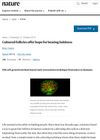
Growing hair follicles from cultured cells could potentially treat baldness, but more research is needed.
4 citations
,
December 1985 in “Archives of Dermatological Research” Eye lens capsules are the best for growing human skin cells.