 April 2017 in “Journal of Investigative Dermatology”
 Sweat glands and hair follicles are determined by opposing signals, with BMPs promoting sweat glands and blocking BMPs leading to hair follicles.
January 2005 in “Chinese Journal of Veterinary” Hairless mice lose hair by 3-4 weeks, develop thicker, folded skin, and show pigmentation differences.
 6 citations
,
January 2016 in “Skin appendage disorders”
6 citations
,
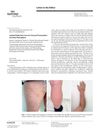
January 2016 in “Skin appendage disorders” A man with rare Lichen Planopilaris lost body hair, not scalp hair, and treatment stopped itching but didn't regrow hair.
 6 citations
,
February 2016 in “American Journal of Dermatopathology”
6 citations
,
February 2016 in “American Journal of Dermatopathology” The boy with woolly hair nevus had thinner hair and abnormal hair follicles, which improved with treatment but worsened when treatment stopped.
 August 2018 in “Pediatric Dermatology”
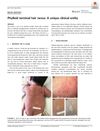
 A baby had a unique skin condition with a pale patch and surrounding dark hairs, not linked to other health issues.
 July 2024 in “Journal Archives of Health”
 Woolly hair is a rare genetic condition with no effective treatments.
17 citations
,
June 1990 in “PubMed” Hair varies in size and features depending on body region.
6 citations
,
February 2020 in “Journal of Cutaneous Pathology” Nevus psiloliparus lacks mature hair follicles but keeps other skin structures intact.
9 citations
,
January 1975 in “PubMed” Nude mice are hairless due to a shared defect affecting both skin and thymus, not just thymic issues.
September 2024 in “The Journal of Dermatology” Nevus comedonicus can sometimes grow terminal hair, challenging previous beliefs.
47 citations
,
April 2000 in “Experimental Dermatology” A new gene mutation causes a rare type of hair loss.
20 citations
,
July 2005 in “Experimental dermatology” The fuzzy gene is crucial for controlling hair growth cycles.
118 citations
,
January 1992 in “Experientia” 1 citations
,
August 2020 The Shaven mutation in mice affects hair growth and causes a greasy coat due to abnormal lipid content.
12 citations
,
January 2013 in “Indian dermatology online journal” The document reports a unique case of woolly hair with a combination of conditions not previously seen together.
 21 citations
,
April 1982 in “Genetics Research”
21 citations
,
April 1982 in “Genetics Research” Mice with the naked gene have missing or abnormal hair cells.
September 2016 in “Journal of dermatological science” The conclusion is that the variation in hair thinness in patients is mostly due to the amount of underdeveloped hairs, and treatments that thicken fine hairs might work for those with mild to severe conditions.
17 citations
,
May 1969 in “American Journal of Physical Anthropology” The silver marmoset's skin is thin, lacks pigment cells, and has unique features like keratinized spines and specialized glands.
 86 citations
,
October 2005 in “Experimental Dermatology”
86 citations
,
October 2005 in “Experimental Dermatology” The Foxn1 gene mutation causes hairlessness and immune system issues, and understanding it could lead to hair growth disorder treatments.
17 citations
,
November 1967 in “American Journal of Anatomy” Hairless mice have longer hair follicles and abnormal structures during the catagen phase.
June 2001 in “European Journal of Dermatology” A 54-year-old woman experienced progressive hair loss starting in adolescence, leading to sparse scalp hair and almost no eyebrows or eyelashes.
23 citations
,
December 1991 in “Annals of the New York Academy of Sciences” Balding scalps slow down hair growth.
8 citations
,
July 2004 in “Journal of morphology” Marsupial hair structure and keratin distribution are similar to placental mammals.
1 citations
,
October 1996 in “Dermatologic clinics” Adiponectin reduces inflammation and bone loss in joint replacements.
 August 2024 in “Current Issues in Molecular Biology”
 Key genes and RNAs related to hair growth in sheep were identified, aiding future breeding improvements.
 2 citations
,
September 2022 in “Frontiers in veterinary science”
2 citations
,
September 2022 in “Frontiers in veterinary science” Certain long non-coding RNAs are important for the growth of hair follicles in Inner Mongolian cashmere goats.
July 2025 in “Journal of Investigative Dermatology” Secreted inhibitors of Wnt and IGF signaling control hair and tooth development, creating species-specific patterns.
 12 citations
,
August 1984 in “Genetics Research”
12 citations
,
August 1984 in “Genetics Research” The N gene affects the protein makeup of mouse hair.
13 citations
,
January 2001 in “Pediatric dermatology” A dark-haired Chinese girl had hair that looked banded under certain light but was normal under a microscope.
 16 citations
,
November 2022 in “eLife”
16 citations
,
November 2022 in “eLife” Both gene and non-gene areas of DNA evolved to make some mammals hairless.