30 citations
,
May 1980 in “Journal of the American Academy of Dermatology” Alopecia areata can cause spotty white areas on nails.
 April 2024 in “JEADV. Journal of the European Academy of Dermatology and Venereology/Journal of the European Academy of Dermatology and Venereology”
 A new change in the WNT10A gene caused a condition leading to short hair growth in a Chinese family.
115 citations
,
November 2008 in “Proceedings of the National Academy of Sciences” Reptiles have genes similar to hair proteins, suggesting hair's genetic origins predate mammals.
4 citations
,
April 1978 in “PubMed” Netherton syndrome in a boy caused skin and hair issues, and treatment didn't work.
 13 citations
,
May 2022 in “Cell discovery”
13 citations
,
May 2022 in “Cell discovery” The study found new details about human hair growth and suggests that preventing a specific biological pathway could potentially treat hair graying.
 April 2023 in “Journal of Investigative Dermatology”
 Hair growth is driven by cells that move and change like a conveyor belt.
 32 citations
,
February 1998 in “The journal of investigative dermatology/Journal of investigative dermatology”
32 citations
,
February 1998 in “The journal of investigative dermatology/Journal of investigative dermatology” Two specific hair keratin genes are active during hair growth and decline as hair transitions to rest.
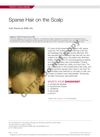
A 5-year-old girl has sparse, dry, and brittle hair but is otherwise healthy.
 15 citations
,
July 2016 in “Biochemical Journal”
15 citations
,
July 2016 in “Biochemical Journal” Wnt proteins from certain skin cells are crucial for normal hair growth and renewal.
11 citations
,
January 1977 in “Archives of dermatological research” Mouse tail skin has different keratinization near hair follicles and scales.
24 citations
,
December 1957 in “Experimental Cell Research” The glassy layer of hair follicles has different fibril sizes and arrangements in guinea pigs and young mice.
September 2025 in “British Journal of Dermatology” ILC1-like cells may contribute to hair loss in alopecia areata.
October 2024 in “Skin Research and Technology” Pili annulati causes zebra-striped hair but doesn't affect hair strength or quality of life.
5 citations
,
August 2005 in “Anatomy and Embryology” Rat skin has a linear system of nerve fibers linked to hair follicles and muscles.
August 2018 in “Journal of Investigative Dermatology” Humans evolved to have less hair and more sweat glands than chimpanzees and macaques.
 2 citations
,
December 1995 in “Pediatrics”
2 citations
,
December 1995 in “Pediatrics” Infant hair loss is usually temporary and grows back without treatment.
 181 citations
,
January 2009 in “Nature Genetics”
181 citations
,
January 2009 in “Nature Genetics” Certain mutations in a hair growth-related gene cause a type of genetic hair loss.
 1 citations
,
September 2024 in “Frontiers in Cell and Developmental Biology”
1 citations
,
September 2024 in “Frontiers in Cell and Developmental Biology” Pigs are a good model for studying human hair growth and disorders.
 3 citations
,
June 1997 in “Veterinary Dermatology”
3 citations
,
June 1997 in “Veterinary Dermatology” Minoxidil treatment can stimulate hair growth in hairless puppies if applied early.
 1 citations
,
January 2012 in “Journal of The Society of Japanese Women Scientists”
1 citations
,
January 2012 in “Journal of The Society of Japanese Women Scientists” Murine hair has specific types of ceramides and glucosylceramides but lacks acylceramides.
13 citations
,
September 1997 in “Archives of Dermatology” The boy likely has a fungal infection causing hair loss.
May 2025 in “Dermatology Reports” A genetic mutation in the LIPH gene causes a rare hair disorder with sparse, curly hair.
8 citations
,
December 2022 in “BMC Genomics” The research improved understanding of yak hair growth to help use yak wool better.
62 citations
,
December 2008 in “Journal of structural biology” Hair curvature in Japanese people is linked to specific cell types and filament arrangements in the hair cortex.
 January 2021 in “Research Square (Research Square)”
 Rabbits with high wool production have more hair follicles, influenced by specific long noncoding RNAs.
2 citations
,
May 2014 in “PubMed” A 10-year-old boy was diagnosed with a rare scalp condition causing hair loss and treated with a topical cream.
 4 citations
,
January 2014 in “Indian dermatology online journal”
4 citations
,
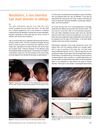
January 2014 in “Indian dermatology online journal” Monilethrix is a genetic hair disorder causing fragile, beaded hair with no effective treatment.
April 2016 in “Journal of the American Academy of Dermatology” A 4-year-old girl had a rare hair disorder affecting only part of her scalp.