33 citations
,
July 2007 in “Journal of cell science” Miz1 is essential for proper hair structure and growth.
 12 citations
,
February 2006 in “Lipids”
12 citations
,
February 2006 in “Lipids” Hair texture changes with age due to varying levels of lipids.
The document concludes that Loose Anagen Hair Syndrome is a benign condition where hair is thin and easily pulled out, often improving with age.
Understanding hair follicle interactions can help treat male pattern baldness.
20 citations
,
January 2002 in “Laboratory Animals” Mutations in the hairless gene cause hair loss and skin cysts in rhesus macaques.
7 citations
,
September 1980 in “Zoological Journal of the Linnean Society” Dendritic cells help regulate skin development and hair growth in mice.
 August 2023 in “Acta Scientific Paediatrics”
 A baby from an Indian family had a rare genetic disorder causing no scalp or body hair due to a specific gene deletion.
6 citations
,
September 2014 in “Journal of the American Academy of Dermatology” Researchers found a potential new type of skin growth called follicular mucinous nevus.
 7 citations
,
January 2020 in “Scientific Reports”
7 citations
,
January 2020 in “Scientific Reports” Rabbit skin analysis showed changes in hair growth and identified miRNAs that may regulate hair follicle development.
 1 citations
,
September 2011 in “Journal of Dermatology”
1 citations
,
September 2011 in “Journal of Dermatology” A woman with a new PTCH gene mutation has both Gorlin syndrome and severe hair loss.
38 citations
,
February 1989 in “Journal of Investigative Dermatology” Understanding hair follicle communication can help treat hair loss.
4 citations
,
March 2018 in “Animal biotechnology” The LAMTOR3 gene is involved in cashmere goat hair growth and is affected by certain treatments and other genes.
 April 2018 in “Journal of Investigative Dermatology”
 Hair follicle stem cells can change their role to ensure proper hair development.
7 citations
,
October 1988 in “Clinics in Dermatology” Minoxidil can promote hair growth in hairless mice.
5 citations
,
April 2019 in “DOAJ (DOAJ: Directory of Open Access Journals)” Stopping shaving or removing hair follicles usually resolves Pseudofolliculitis barbae.
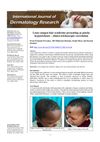 January 2026 in “International Journal of Dermatology Research”
 Early recognition of loose anagen hair syndrome is important to prevent misdiagnosis and unnecessary treatments.
14 citations
,
December 1991 in “Annals of the New York Academy of Sciences” MYC protooncogenes may be important for hair growth, but more research is needed.
41 citations
,
January 2018 in “Advances in experimental medicine and biology” 13 citations
,
June 2020 in “International Journal of Molecular Sciences” HNG helps hair grow by keeping hair in the growth phase longer.
 1 citations
,
September 2021 in “The Journal of Dermatology”
1 citations
,
September 2021 in “The Journal of Dermatology” Japanese cases of fibrosing alopecia show a unique age and hair loss pattern, possibly due to racial differences.
69 citations
,
May 1997 in “Veterinary Pathology” The angora mouse mutation causes long hair and hair defects due to a gene deletion.
6 citations
,
May 2024 in “Developmental Biology” November 2012 in “Annales de Dermatologie et de Vénéréologie” Frontal fibrosing alopecia can occur in children, not just postmenopausal women.
July 2026 in “Journal of Investigative Dermatology” Transplanted rat hair follicles grew hair and had increased but not fully restored nerve connections in mice.
46 citations
,
August 2006 in “Mechanisms of Development” Runx1 is crucial for proper hair structure and development.
13 citations
,
December 1983 in “Canadian journal of zoology” Heterotypic cell contacts likely help hair matrix cells differentiate during mouse hair follicle development.

Yonnyuniksoogobon-dan, an herbal mix, was found to promote hair growth in mice.
March 2026 in “Journal of Investigative Dermatology”