 November 2022 in “Gigascience”
 A specific genetic deletion in goats affects cashmere yield and thickness.

Fetal environments contain various chemicals that may disrupt hormones.
 February 2022 in “International Journal of Complementary & Alternative Medicine”
 Good hair and scalp health indicate good overall health.
 August 2021 in “Pelviperineology”
 Fascial Manipulation treatment helped a woman with vulvodynia and other health issues.
 July 2021 in “European Journal of Plastic Surgery”
 Modern society values both traditional beauty and imperfections, but media pressures lead to more cosmetic enhancements and ethical concerns.
 November 2020 in “bioRxiv (Cold Spring Harbor Laboratory)”
 Dermal EZH2 controls skin cell growth and differentiation in mice.
 August 2020 in “Textile research journal”
 The model helps understand how wool fiber structure affects its strength and flexibility.

Using calvarial bone for maxilla augmentation is less painful and allows for single-procedure dental implants.

PlacMA hydrogels from human placenta are versatile and useful for cell culture and tissue engineering.
 January 2020 in “Der Pharmacia Lettre”
 Nanoparticle-based herbal remedies could be promising for treating hair loss with fewer side effects and lower cost, but more research is needed.
 May 2019 in “bioRxiv (Cold Spring Harbor Laboratory)”
 Testosterone significantly affects urination differences between male and female mice.
 March 2019 in “Applied sciences”
 Laser therapy might help regrow hair in alopecia totalis better than steroids alone.
 November 2018 in “Springer eBooks”
 The document concludes that specialized hair transplant techniques can be effective, with varying success rates depending on the donor area and patient factors.
 July 2018 in “Plastic and Aesthetic Nursing”
 The 2018 ISPAN Meeting emphasized hands-on learning, patient safety, and professional growth in medical aesthetics and reconstructive practices.

Proretinal nanoparticles are a safe and effective way to deliver retinal to the skin.
 January 2018 in “Georg Thieme Verlag eBooks”
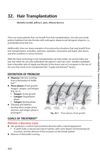
 Hair transplantation is a surgical procedure to move hair to bald areas, requires good donor hair, and results show in about a year.

Early NAS level changes affect alcohol consumption vulnerability.
 January 2018 in “Springer eBooks”
 Athletes need effective management of skin disorders for their performance and well-being.
 January 2018 in “Stem cell biology and regenerative medicine”
 The nucleus is key in controlling skin growth and repair by coordinating signals, gene regulators, and epigenetic changes.
Local hairline measurements are important for better surgical results and early disease detection in Colombian women.

Proper care and diet are crucial to prevent health issues in gerbils.
 January 2016 in “Dermatology Review”
 Endocrine disorders can cause various skin and hair issues.
 December 2015 in “University of Birmingham Institutional Research Archive (University of Birmingham)”
 AKR1C3 could be a treatment target for metabolic issues in PCOS.
 July 2014 in “Nasza Dermatologia Online”
 True facial beauty is natural, but cosmetic procedures can enhance it temporarily.
 November 2011 in “Informa Healthcare eBooks”
 Environmental, chemical, mechanical, and personal health factors can all damage hair and contribute to hair loss or changes in hair quality.

Hair transplants can cause hair loss if done while lichen planopilaris is active; wait until it's inactive for two years and check with a scalp biopsy first.
 February 2010 in “Journal of The American Academy of Dermatology”
 Surgery on a baby with a skin disorder improved eyelid position and eye health.
 February 2010 in “Journal of The American Academy of Dermatology”
 A woman's nail separation was likely caused by poor blood flow, and a treatment for similar conditions might help.
 February 2010 in “Journal of The American Academy of Dermatology”
 Mimicking growth factors in a topical solution can prolong hair growth phase and reduce hair loss without side effects.
 January 2010 in “Elsevier eBooks”
 Hair transplantation is a treatment for hair loss mainly caused by genetics, with various techniques and potential complications, and results visible after 8-12 months.