6 citations
,
January 2013 in “Journal of Cosmetics Dermatological Sciences and Applications” Lichen planopilaris is a common cause of scarring hair loss in Iraq.
October 2010 in “한국식품영양과학회 산업심포지움발표집” Fermented Liriope platyphylla helps hair grow in mice with hair loss.
 June 2025 in “ARSHI Veterinary Letters”
 The cat's skin condition improved and hair regrew after antifungal treatment.
Lactobacillus and fermented Korean berry can help hair grow faster.
May 2023 in “Pharmaceuticals” Three specific mutations in the LIPH gene can cause hair loss by damaging the protein's structure and function.
 April 1940 in “Archives of dermatology”
 Diagnosing and treating skin conditions is challenging, especially when drug reactions mimic other diseases.
2 citations
,
January 2024 in “Skin Appendage Disorders” Tick bites may cause hair loss due to inflammation from tick saliva.
 September 2021 in “Mağallaẗ al-Muẖtar li-l-ʿulūm”
 Two sisters have rare hair disorders causing short, fragile, kinky hair.
June 2024 in “Indian Journal of Veterinary Medicine” The dog's skin disease was successfully treated with medication and supplements.
 March 2022 in “Research Square (Research Square)”
 A new growth medium doubles Malassezia restricta yield by using artificial sebum.
8 citations
,
July 2015 in “International Journal of Dermatology” A new DSG4 gene mutation causes hair defects in a young girl.
5 citations
,
April 2019 in “DOAJ (DOAJ: Directory of Open Access Journals)” Stopping shaving or removing hair follicles usually resolves Pseudofolliculitis barbae.
22 citations
,
February 2000 in “Journal of the American Academy of Dermatology” Eosinophils are not a reliable marker for diagnosing alopecia areata.
January 2024 in “Editora In Vivo eBooks” Dermatophytosis is a fungal skin infection affecting animals and humans, common in cooler seasons.
May 2005 in “Faculty Opinions – Post-Publication Peer Review of the Biomedical Literature” Truncated LTBP-1 disrupts TGF-beta signaling, affecting hair growth.
 2 citations
,
January 2000 in “Journal of Toxicologic Pathology”
2 citations
,
January 2000 in “Journal of Toxicologic Pathology” A single recessive gene causes sparse hair in certain Japanese White rabbits.
12 citations
,
March 2004 in “Journal of Investigative Dermatology”  January 2025 in “Dermatologic Therapy”
 Low-dose oral minoxidil may help with symptoms and hair regrowth in lichen planopilaris without serious side effects.
9 citations
,
December 1985 in “JAMA” A child day-care center reported cases of contagious fungal scalp infection, indicating a need for greater awareness and control measures.
15 citations
,
June 2012 in “British Journal of Dermatology” A new mutation in the KRT86 gene causes a hair disorder with variable expression.
July 2025 in “Journal of Investigative Dermatology” Discoid lupus erythematosus involves immune activation and fibrosis around hair follicles, with shared pathways across humans, dogs, and mice, suggesting potential treatments for both humans and animals.
 November 2023 in “BMJ case reports”
 A man in his 30s had patchy hair loss on his leg due to primary follicular mucinosis.
 October 2022 in “The Journal of Family Practice”
 Tinea capitis is a scalp fungal infection in children that can cause hair loss, scaling, and other symptoms.

An elderly woman developed severe skin discoloration after homeopathic knee injections, but the exact cause is unclear.
 September 2018 in “International Journal of Dermatology”
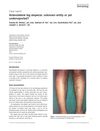
 Anterolateral leg alopecia is a benign, nonprogressive hair loss condition on the lower legs that is not well understood and may resolve on its own.
 November 2016 in “Journal of The American Academy of Dermatology”
 Control symptoms and use safe treatments for skin conditions like lichen planopilaris and chronic cutaneous lupus erythematosus.
 May 2023 in “Scientific Reports”
 The seed extract of Lepidium sativum L. can potentially treat hair loss, showing effects similar to 5% minoxidil.
September 2012 in “Turkish Journal of Dermatology” Erythema multiforme-like lesions can occur in lupus without drug use or herpes infection.
June 2023 in “Journal of Biosciences and Health” Healthy dogs and cats often carry skin fungi without showing symptoms, which can spread to others.
1 citations
,
May 2022 in “Journal of Drugs in Dermatology” Low-dose naltrexone and platelet-rich plasma can regrow hair in lichen planopilaris.