 57 citations
,
May 2007 in “Nature”
57 citations
,
May 2007 in “Nature” Adult mice can grow new hair from skin wounds.
 28 citations
,
August 2013 in “Facial Plastic Surgery Clinics of North America”
28 citations
,
August 2013 in “Facial Plastic Surgery Clinics of North America” Body and beard hair can be used for hair restoration in severely bald patients, but the technique is complex and costly.
 3 citations
,
June 2023 in “The journal of investigative dermatology/Journal of investigative dermatology”
3 citations
,
June 2023 in “The journal of investigative dermatology/Journal of investigative dermatology” The conclusion suggests that focusing on certain cellular pathways may improve the prevention and repair of hair loss caused by radiotherapy.
 November 2018 in “Springer eBooks”
 The document concludes that specialized hair transplant techniques can be effective, with varying success rates depending on the donor area and patient factors.
 September 2002 in “Dermatologic Surgery”
 The recipient site can affect the growth and survival of transplanted hair but not its thickness.
 26 citations
,
April 1999 in “Dermatologic Clinics”
26 citations
,
April 1999 in “Dermatologic Clinics” The long-pulsed alexandrite laser is effective for hair reduction, particularly for light-skinned individuals with dark hair, but caution is needed for darker skin.
17 citations
,
May 2014 in “Cell transplantation” Genetically modified stem cells from human hair follicles can lower blood sugar and increase survival in diabetic mice.
 16 citations
,
April 2009 in “Dermatologic Surgery”
16 citations
,
April 2009 in “Dermatologic Surgery” The place where hair is transplanted can change its growth rate and length but not its thickness.
12 citations
,
May 2016 in “Experimental Dermatology” A new skin model from hair follicles is a safer, simpler alternative for skin tests.
 8 citations
,
January 2013 in “The scientific world journal/TheScientificWorldjournal”
8 citations
,
January 2013 in “The scientific world journal/TheScientificWorldjournal” Human hair follicles may provide a noninvasive way to diagnose diseases and have potential in regenerative medicine.
 3 citations
,
November 2011 in “European Journal of Dermatology”
3 citations
,
November 2011 in “European Journal of Dermatology” 4-O-methylhonokiol from Magnolia officinalis significantly promotes hair growth.
1 citations
,
February 2025 in “International Journal of Molecular Sciences” Enzymatic digestion is an efficient method for isolating cells from hair follicles for tissue-engineered skin.
 1 citations
,
October 2013 in “The Journal of Dermatology”
1 citations
,
October 2013 in “The Journal of Dermatology” Hair loss in a drug reaction case involved both a common shedding phase and an immune attack on hair follicle stem cells.
1 citations
,
July 2006 in “Journal of Investigative Dermatology” A 4kb fragment of the desmocollin 3 promoter targets gene expression to specific skin and hair follicle areas.
 207 citations
,
January 2011 in “Dermatologic Therapy”
207 citations
,
January 2011 in “Dermatologic Therapy” Laser hair removal is the most requested cosmetic procedure and has become a scientifically-based treatment suitable for all skin types.
 April 2019 in “Archives of aesthetic plastic surgery”
 Higher fluences in 808-nm diode laser treatments are more effective for axillary hair removal.
 22 citations
,
June 2002 in “Seminars in cutaneous medicine and surgery”
22 citations
,
June 2002 in “Seminars in cutaneous medicine and surgery” Laser hair removal works well for people with dark hair and light skin, but it's less effective for light hair or dark skin; improvements are expected.
 57 citations
,
November 1987 in “Pediatric Dermatology”
57 citations
,
November 1987 in “Pediatric Dermatology” Children's hair grows in different types from before birth through puberty, with growth rates and characteristics varying by age, sex, and race.
 46 citations
,
May 1986 in “Seminars in Reproductive Medicine”
46 citations
,
May 1986 in “Seminars in Reproductive Medicine” Testosterone and dihydrotestosterone affect hair growth, and new techniques like the folliculogram help study it, but fully understanding hair growth is still complex.
 31 citations
,
April 1999 in “Dermatologic Clinics”
31 citations
,
April 1999 in “Dermatologic Clinics” Nd:YAG laser can reduce hair with multiple treatments, but permanent removal isn't guaranteed.
 23 citations
,
December 2001 in “Lasers in Surgery and Medicine”
23 citations
,
December 2001 in “Lasers in Surgery and Medicine” Permanent hair removal is hard, but using longer laser pulses at lower power might improve results.
 14 citations
,
March 2012 in “Lasers in Surgery and Medicine”
14 citations
,
March 2012 in “Lasers in Surgery and Medicine” A low-power, fast laser safely reduces hair with minimal pain and few side effects.
 8 citations
,
December 2020 in “Scientific reports”
8 citations
,
December 2020 in “Scientific reports” Selective breeding caused the unique curly hair in Mangalitza pigs.
4 citations
,
August 2024 in “Health Science Reports” Hair follicle punch grafts effectively help heal difficult wounds with few complications.
 3 citations
,
July 2012 in “Sokoto Journal of Veterinary Sciences”
3 citations
,
July 2012 in “Sokoto Journal of Veterinary Sciences” As sheep age, their hair fibers and follicles grow larger and more organized, with no significant differences between males and females.
 3 citations
,
June 2006 in “Expert Review of Dermatology”
3 citations
,
June 2006 in “Expert Review of Dermatology” The document concludes that hair loss is complex, affects many people, has limited treatments, and requires more research on its causes and psychological impact.
 1 citations
,
May 2002 in “British Journal of Dermatology”
1 citations
,
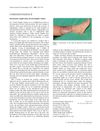
May 2002 in “British Journal of Dermatology” Hair loss caused by longer latent hair cycle and sudden miniaturization, not gradual follicle size reduction.
June 2026 in “BMC Microbiology” Cyanoacrylate glue effectively reduces contamination in hair follicle samples.
 September 2018 in “International Journal of Dermatology”
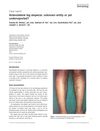
 Anterolateral leg alopecia is a benign, nonprogressive hair loss condition on the lower legs that is not well understood and may resolve on its own.
June 2013 in “International Journal of Dermatology” Central lipohypertrophy in HIV-infected women may lead to shorter eyelashes.