 6 citations
,
January 2017 in “Journal of toxicologic pathology”
6 citations
,
January 2017 in “Journal of toxicologic pathology” Rabbit skin with active hair growth shows thicker, redder areas due to larger, more numerous hair follicles and increased blood vessels.
36 citations
,
February 2004 in “Veterinary Dermatology” Lymphangiosarcoma was confirmed in cats with specific skin symptoms using a lymphatic marker.
 18 citations
,
September 1990 in “Veterinary Dermatology”
18 citations
,
September 1990 in “Veterinary Dermatology” Lambs' skin showed similar but more severe responses to a second orf virus infection, involving immune cells and new skin formation.
 1 citations
,
September 2020 in “Journal of Dermatological Science”
1 citations
,
September 2020 in “Journal of Dermatological Science” The gene LRRC15 is more active in balding areas of the scalp compared to non-balding areas.
October 2024 in “Indian Journal of Dermatology” Early biopsy is crucial for diagnosing rare skin sarcoidosis, improving treatment.
 5 citations
,
November 2017 in “Asian journal of pharmaceutical and clinical research”
5 citations
,
November 2017 in “Asian journal of pharmaceutical and clinical research” Pakis Gajah (Angiopteris evecta) water extract may promote hair growth in rabbits, but more research is needed for human use.
 October 2017 in “The Indian Journal of Animal Sciences”
 The prolactin gene polymorphism doesn't affect cashmere quality in these goats.
26 citations
,
April 2007 in “Journal of clinical oncology”  24 citations
,
July 1998 in “Journal of the South African Veterinary Association”
24 citations
,
July 1998 in “Journal of the South African Veterinary Association” Ringworm in dairy calves can spread to humans.
2 citations
,
April 1970 in “Archives of Dermatology” Ichthyosis serpentina may be a variant linked to bamboo hair, with a possible genetic component.
25 citations
,
May 1972 in “Canadian journal of zoology” Black-tailed deer have four types of pelages and molt twice a year.
January 2012 in “Zhongguo shouyi xuebao” Sheep breeds show different keratin gene expression in the groin, linked to hair follicle density.
15 citations
,
April 1970 in “PubMed” Netherton's syndrome may have a familial link and doesn't always include atopy.
13 citations
,
March 1997 in “Research in Veterinary Science/Research in veterinary science” Epithelial proliferation and hyperkeratosis are linked to gastric ulcers in pigs.
 19 citations
,
November 2021 in “Lupus Science & Medicine”
19 citations
,
November 2021 in “Lupus Science & Medicine” Black patients with discoid lupus erythematosus have more severe skin damage and higher chances of dyspigmentation, scalp, and ear involvement.
The chapter concludes that certain skin diseases in bovines cause symmetrical, non-painful lesions and temporary hair loss due to stress.
 108 citations
,
October 2009 in “Javma-journal of The American Veterinary Medical Association”
108 citations
,
October 2009 in “Javma-journal of The American Veterinary Medical Association” Foals with Rhodococcus equi infection often have other health problems that lower their chances of survival.
 August 2024 in “Veterinary Dermatology”
 Topical ceramide treatment partially improves the skin condition in Jack Russell Terriers with a genetic skin disorder.
 2 citations
,
September 2016 in “Symbiosis online journal of veterinary sciences”
2 citations
,
September 2016 in “Symbiosis online journal of veterinary sciences” A cat in Brazil was found with a severe skin condition linked to feline AIDS.
Papaya seed extract, especially at 15%, speeds up hair growth in rabbits.
4 citations
,
April 2024 in “Clinical Cosmetic and Investigational Dermatology” Trichoscopy helps distinguish between scalp Discoid Lupus Erythematosus and Lichen Planopilaris for accurate diagnosis and treatment.
August 2019 in “Wiedza Medyczna” Kerion is a severe scalp infection that needs quick treatment to avoid permanent hair loss in children.
 6 citations
,
July 2009 in “Veterinary dermatology”
6 citations
,
July 2009 in “Veterinary dermatology” Vesiculobullous lesions should be considered part of canine cutaneous epitheliotropic T-cell lymphoma.
 October 2016 in “Veterinary record case reports”
 A cat had a rare skin disorder with hair loss and scaling, linked to a suspected tumor.
 July 2018 in “International journal of research - granthaalayah”
 Croton tiglium application significantly improved hair regrowth in alopecia areata patients.
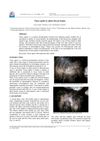
An adult Libyan woman was successfully treated for a rare scalp infection usually seen in children.
 5 citations
,
January 2017 in “Anais brasileiros de dermatologia/Anais Brasileiros de Dermatologia”
5 citations
,
January 2017 in “Anais brasileiros de dermatologia/Anais Brasileiros de Dermatologia” Porokeratotic eccrine and hair follicle nevus is a very rare skin disorder possibly caused by a GJB2 gene mutation.
 26 citations
,
December 2022 in “Journal of the American Academy of Dermatology”
26 citations
,
December 2022 in “Journal of the American Academy of Dermatology” Monkeypox skin lesions show full-thickness skin death and swollen skin cells, with the virus found in affected cells.
 November 2021 in “Folia Microbiologica”
 Trichophyton bullosum has been found causing severe skin infections in donkeys in North Africa for the first time since 1933.
 75 citations
,
January 1995 in “American journal of primatology”
75 citations
,
January 1995 in “American journal of primatology” Vervet monkeys show physical changes like hair loss and scrotal color changes due to stress or nutrition issues.