15 citations
,
August 2004 in “Journal of the American Academy of Dermatology” Shaving can cause a viral skin infection that looks like bacterial folliculitis.
 November 2023 in “The journal of investigative dermatology/Journal of investigative dermatology”
 Cancer treatment drugs can cause permanent hair loss by damaging hair follicle stem cells, but a specific inhibitor might reverse this effect.
January 2011 in “Junshi yixue” A mouse model for studying scleroderma in chronic graft-versus-host disease was successfully created.
39 citations
,
April 2022 in “Biomedical Materials” A special gel helps heal skin wounds without scars by calming the immune response.
Scalp lesions in discoid lupus are more common in women and linked to other autoimmune diseases.
 58 citations
,
November 2012 in “PLoS ONE”
58 citations
,
November 2012 in “PLoS ONE” Human skin cells can be turned into versatile stem cells, but their ability to do so decreases with repeated use.
August 1993 in “Journal of Dermatological Science”  March 2008 in “Journal of Clinical Dermatology”
 Micropigmentation is a good and safe method to improve the look of scalp and eyebrow scars.
 5 citations
,
December 2011 in “Canadian Journal of Plastic Surgery”
5 citations
,
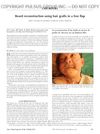
December 2011 in “Canadian Journal of Plastic Surgery” Hair grafts can successfully reconstruct a beard on reconstructed jaw skin, improving appearance and patient satisfaction.
1 citations
,
October 2025 in “Current Issues in Molecular Biology” Escin improves skin blood flow and health by enhancing blood vessel networks.
April 2024 in “JAAD Case Reports” Wearing fire helmets may worsen lichen planopilaris in firefighters.
April 2025 in “Asian Journal of Case Reports in Surgery” Trichilemmal carcinoma is a rare skin cancer that requires careful diagnosis and follow-up.
December 2014 in “Actas dermo-sifiliográficas/Actas dermo-sifiliográficas” Hair removal with intense pulsed light can cause rare skin lesions that are hard to fully treat.
 July 2025 in “Bioma Berkala Ilmiah Biologi”
 Wild boar skin from Timor Island has three layers with various structures like hair follicles and glands.
45 citations
,
May 1992 in “Journal of Investigative Dermatology”  February 2026 in “Dermatology Reports”
 Trichoscopy helps diagnose and treat dissecting cellulitis early, preventing scarring.
 January 2008 in “Hair transplant forum international”
 Improving the way we use our bodies during dissection can help prevent discomfort and injury.
38 citations
,
June 2018 in “International Journal of Oral and Maxillofacial Surgery” Both bone donor sites had low long-term issues and high patient satisfaction.
September 2017 in “Journal of Investigative Dermatology” RCS-01 is safe and may help rejuvenate aging skin.
September 2018 in “Dermatologic Surgery”  September 2022 in “Journal of the American Academy of Dermatology”
 Patients with lichen planopilaris/frontal fibrosing alopecia have a higher rate of vitamin D deficiency than the general US population.
5 citations
,
August 2005 in “Anatomy and Embryology” Rat skin has a linear system of nerve fibers linked to hair follicles and muscles.
 8 citations
,
October 1998 in “Comparative Biochemistry and Physiology Part C: Pharmacology, Toxicology and Endocrinology”
8 citations
,
October 1998 in “Comparative Biochemistry and Physiology Part C: Pharmacology, Toxicology and Endocrinology” Proscar (finasteride) blocks 5α-reductase in sea urchin ovaries and testes, suggesting potential treatment for androgen-related conditions.
 January 2019 in “Our Dermatology Online”
 Almost 40% of older men in the study had hair loss on the front and side of their legs, and most were unaware of it.
89 citations
,
May 2005 in “Stem Cells” Mouse skin has special cells in the epidermis that decrease with age and are linked to keratinocyte stem cells.
July 2022 in “Journal of Investigative Dermatology” TRPS1 loss in balding scalp areas contributes to hair loss in androgenic alopecia.
6 citations
,
August 2024 in “The Laryngoscope” PRP injections improve voice quality and are safe for treating vocal fold scars.

Proper niche formation in Drosophila requires Slit-Robo signaling for cell migration.
May 2022 in “Dermatology practical & conceptual” Trichoscopy is crucial for diagnosing and managing androgenetic alopecia, showing increased vellus hairs, empty follicles, and fibrosis with severity.
 1 citations
,
January 2006
1 citations
,
January 2006 Diagonal earlobe and preauricular creases may indicate higher coronary artery disease risk in men.