January 2022 in “SSRN Electronic Journal” LncRNA RP11-818024.3 helps hair growth and recovery in hair loss by boosting cell survival and reducing cell death.
 33 citations
,
January 2010 in “Case reports in dermatology”
33 citations
,
January 2010 in “Case reports in dermatology” Dermoscopy helps diagnose frontal fibrosing alopecia by distinguishing it from other hair loss conditions.
22 citations
,
April 2012 in “Informa Healthcare eBooks” Frontal fibrosing alopecia is a type of hair loss that usually happens after menopause.
February 2026 in “JEADV Clinical Practice” Lichen planopilaris can cause hair loss on limbs, not just the scalp.
 August 2021 in “Annals of Agricultural and Environmental Medicine”
 The article concludes that understanding Frontal Fibrosing Alopecia (FFA) is crucial for effective treatment, which includes medication like 5α-reductase inhibitors and hydroxychloroquine.
 12 citations
,
January 2020 in “Skin appendage disorders”
12 citations
,
January 2020 in “Skin appendage disorders” Low-dose oral minoxidil effectively treats female hair loss with good safety.
 2 citations
,
March 2016 in “The Journal of Dermatology”
2 citations
,
March 2016 in “The Journal of Dermatology” The Facial Psoriasis Log-based Area and Severity Index is a more effective way to measure improvements in facial psoriasis than the traditional method.
325 citations
,
June 1994 in “Archives of Dermatology” Postmenopausal frontal fibrosing alopecia may be a unique condition linked to postmenopausal changes.
 1 citations
,
May 2020 in “Journal of The American Academy of Dermatology”
1 citations
,
May 2020 in “Journal of The American Academy of Dermatology” Women with hair loss should be checked for PCOS, as it's often related and early diagnosis can help with treatment.
 April 2016 in “Journal of Investigative Dermatology”
 FOL-005, a new substance, was found to reduce hair growth without toxicity when injected into skin, suggesting it could be used to treat excessive hair growth.
 April 2023 in “Journal of Investigative Dermatology”
 The study suggests fibrosing alopecia in a pattern distribution has distinct features and may vary by race.
 January 2017 in “Springer eBooks”
 Over 40% of postmenopausal women experience hair loss, with treatments aiming to stop further loss and possibly thicken hair.
 41 citations
,
July 2017 in “Journal of The American Academy of Dermatology”
41 citations
,
July 2017 in “Journal of The American Academy of Dermatology” Men with Frontal fibrosing alopecia typically lose hair on the front scalp and sometimes on sideburns and upper lip, with treatments showing varied success.
 October 2020 in “International Journal of Research in Dermatology”
 The review suggests more research is needed to understand Frontal fibrosing alopecia, a condition causing hairline recession in postmenopausal women.
1 citations
,
December 2024 in “Archives of Iranian Medicine” Tofacitinib may help treat Lichen Planopilaris, but more research is needed.
 October 2023 in “Dermatology practical & conceptual”
 Folliculitis Decalvans and Frontal Fibrosing Alopecia can coexist in people with darker skin, showing features of both conditions.
April 2021 in “The journal of investigative dermatology/Journal of investigative dermatology” Lichen planopilaris in men often affects the scalp, eyebrows, arms, legs, and beard, with many having family members with hair loss.
14 citations
,
January 2014 in “Indian Journal of Dermatology Venereology and Leprology” Frontal fibrosing alopecia can affect men's beards and leads to permanent hair loss.
 2 citations
,
June 2011 in “Expert Review of Dermatology”
2 citations
,
June 2011 in “Expert Review of Dermatology” Female pattern hair loss involves thinning hair on crown and frontal scalp, diagnosed by hair ratio, and treated with minoxidil, antiandrogens, or hair transplantation.
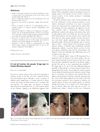 39 citations
,
July 2015 in “British Journal of Dermatology”
39 citations
,
July 2015 in “British Journal of Dermatology” The pseudo 'fringe sign' can also appear in frontal fibrosing alopecia, not just in traction alopecia, showing that this condition may be more common than thought.
April 2021 in “Aktuelle Dermatologie” Frontal Fibrosing Alopecia is a type of hair loss that mainly affects postmenopausal women, has unclear causes, and lacks evidence-based treatments.
 17 citations
,
January 2015 in “International Journal of Trichology”
17 citations
,
January 2015 in “International Journal of Trichology” Frontal fibrosing alopecia may affect nails and could be a type of lichen planus, treatable with certain medications.
17 citations
,
February 2001 in “Journal of the American Academy of Dermatology” Lithium can cause skin changes similar to mycosis fungoides.
December 2016 in “Anales del sistema sanitario de Navarra” Frontal fibrosing alopecia is increasing, especially in postmenopausal women, and treatment with finasteride can improve it.
 68 citations
,
July 2011 in “Journal of Biochemistry/The journal of biochemistry”
68 citations
,
July 2011 in “Journal of Biochemistry/The journal of biochemistry” New LPA receptors (LPA4, LPA5, LPA6) have diverse roles in the body.

Topical latanoprost acid at 0.05% concentration improved hair growth in women with androgenetic alopecia.
 12 citations
,
January 2017 in “Skin appendage disorders”
12 citations
,
January 2017 in “Skin appendage disorders” Two patients with skin lupus were mistakenly thought to have a different scalp condition but improved with lupus treatment.
 9 citations
,
August 2018 in “Journal der Deutschen Dermatologischen Gesellschaft”
9 citations
,
August 2018 in “Journal der Deutschen Dermatologischen Gesellschaft” Most patients with frontal fibrosing alopecia are middle-aged women, often have thyroid disease, and some treatments can help stabilize the condition.
7 citations
,
March 2023 in “The Journal of Biochemistry” LONRF1 is important for oxidative damage response and tissue remodeling during wound healing.
 August 2019 in “Research Square (Research Square)”
 Certain long non-coding RNAs in cashmere goats affect hair growth when treated with a specific growth factor.