 1 citations
,
March 2022 in “bioRxiv (Cold Spring Harbor Laboratory)”
1 citations
,
March 2022 in “bioRxiv (Cold Spring Harbor Laboratory)” Low-coverage sequencing is a cost-effective way to identify genes related to wool traits in rabbits.
169 citations
,
February 2018 in “Immunity” Inactive stem cells in hair follicles and muscles can avoid detection by the immune system.
55 citations
,
March 2014 in “EMBO Reports” Protein ubiquitylation is crucial for controlling stem cell functions and could be targeted for cancer treatment.
25 citations
,
June 2017 in “Journal of Investigative Dermatology” HPV8 causes skin cancer by expanding specific skin stem cells.
2 citations
,
April 2025 in “Journal of Investigative Dermatology” T cells affect skin cell genes in inflammatory diseases, and therapy can normalize these changes.
Boosting certain cell signals can prevent hair loss from chemotherapy and radiation.
Boosting certain cell signals can prevent hair loss from chemotherapy and radiation.
July 2017 in “Cancer Research” Krt15+ cells in mice can resist radiation, regenerate tissue, and start tumors, suggesting new cancer treatment targets.
January 2013 in “edoc (University of Basel)” TRF1 is crucial for creating and maintaining stem cells and marks both pluripotent and adult stem cells.
23 citations
,
July 2020 in “BMC Genomics” NCBP3, SDHA, and PTPRA are the best genes for accurate goat skin research.
 November 2023 in “Animal Bioscience”
 miR-133a-3p and miR-145-5p help goat hair follicle stem cells differentiate by controlling NANOG and SOX9.
April 2016 in “Archivio Istituzionale della Ricerca (Universita Degli Studi Di Milano)” Sox9 is important in the development of tumors in domestic animals.
 5 citations
,
May 2011 in “European Journal of Medical Genetics”
5 citations
,
May 2011 in “European Journal of Medical Genetics” A genetic duplication on chromosome 5 was linked to a woman's unique combination of medical conditions.
September 2025 in “PeerJ” FCER1A and RGS1 may help diagnose and treat systemic lupus erythematosus.
5 citations
,
November 2015 in “International Journal of Dermatology”  February 2025 in “Archives animal breeding/Archiv für Tierzucht”
 Certain gene combinations improve cashmere quality and production in Liaoning goats.
 April 2017 in “Journal of Investigative Dermatology”
 HPH-15, a new compound, effectively reduces skin fibrosis in experiments without causing harm.
3 citations
,
September 2013 in “Journal of the American Academy of Dermatology” A new genetic mutation linked to Hutchinson-Gilford progeria syndrome was found in China.
7 citations
,
June 2017 in “Gene” Overexpression of FGF5s makes Chinese Merino sheep grow longer and heavier wool.
14 citations
,
February 1991 in “FEBS Letters” Introducing the rat OTC gene partially corrected OTC deficiency in mice.
 24 citations
,
July 1994 in “Molecular Endocrinology”
24 citations
,
July 1994 in “Molecular Endocrinology” Researchers found an RNA transcript that might help control a growth factor linked to tumor development.
 2 citations
,
June 2024 in “Frontiers in Plant Science”
2 citations
,
June 2024 in “Frontiers in Plant Science” LLPS is crucial for RALF signaling, aiding plant growth and stress resilience.
6 citations
,
March 1996 in “Journal of Investigative Dermatology”  9 citations
,
January 2021 in “International Journal of Medical Sciences”
9 citations
,
January 2021 in “International Journal of Medical Sciences” Sox10 is important for hair follicle development and hair growth cycles.
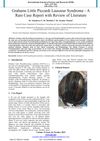 October 2023 in “International Journal of Science and Research (IJSR)”
 Early diagnosis of GLPLS is crucial to prevent complications, but scarring alopecia is irreversible.
22 citations
,
October 2004 in “Journal of Investigative Dermatology” The gene causing hair loss and heart issues in rough coat mice is still unknown.
January 2011 in “China Animal Husbandry & Veterinary Medicine” Constant-release melatonin reduces SOX21 gene expression in goats during the hair follicle resting phase.
1 citations
,
January 2025 in “Medicine” Targeting SOX proteins may improve cancer treatment by restoring immune function.
 April 2023 in “The journal of investigative dermatology/Journal of investigative dermatology”
 Deleting the Hoxc13 gene in frogs shows its crucial role in developing skin structures similar to hair.
8 citations
,
November 2009 in “The Neurologist/The neurologist” If someone has scaly skin, muscle stiffness, and intellectual disability, doctors should consider Sjogren-Larsson Syndrome, but other conditions if more symptoms are present.