
TBX3 gene affects horse coat color, with higher expression in darker areas.
 August 2019 in “Research Square (Research Square)”
 Certain long non-coding RNAs in cashmere goats affect hair growth when treated with a specific growth factor.
 75 citations
,
October 2010 in “Mammalian genome”
75 citations
,
October 2010 in “Mammalian genome” Sphynx cats are hairless and Devon Rex cats have curly hair due to specific genetic mutations.
75 citations
,
July 2016 in “New phytologist” The protein RSL4 is crucial for making root hairs longer by controlling genes related to cell growth.
 November 2022 in “Journal of Investigative Dermatology”
 Some people with schwannomatosis have a new type of mutation in the LZTR1 gene.
20 citations
,
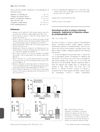
April 2009 in “Cell Biology International” Hair follicle stem cells can become corneal-like cells with the help of pax6.
 5 citations
,
June 2015 in “British Journal of Dermatology”
5 citations
,
June 2015 in “British Journal of Dermatology” A certain medication improved severe itching in a boy with liver and bowel disease by reducing histamine levels, suggesting a new treatment target.
January 2009 in “China Animal Husbandry & Veterinary Medicine” The B2C promoter works in sheep cells but not in mouse embryos.
3 citations
,
July 2022 in “Brain and Behavior” The HtrA1L364P mutation causes brain dysfunction and blood vessel damage.
April 2018 in “Plastic & Reconstructive Surgery Global Open” LGR6+ stem cells may improve bone healing.
 25 citations
,
December 2018 in “Human Molecular Genetics”
25 citations
,
December 2018 in “Human Molecular Genetics” The document concludes that certain mutations may contribute to the inflammation in hidradenitis suppurativa and suggests that targeting TNFα could be a treatment strategy.
Epimorphin helps shape and develop epithelial cells, like those in hair follicles.
1 citations
,
February 1991 in “Journal of Biological Chemistry”  17 citations
,
August 2012 in “Journal of Medical Genetics”
17 citations
,
August 2012 in “Journal of Medical Genetics” A new mutation in the XEDAR gene might cause a rare skin condition called hypohidrotic ectodermal dysplasia.
 11 citations
,
March 2020 in “Cellular Signalling”
11 citations
,
March 2020 in “Cellular Signalling” XIST RNA helps regenerate hair follicles by targeting miR-424 and activating hedgehog signaling.
 1 citations
,
September 2020 in “Journal of Dermatological Science”
1 citations
,
September 2020 in “Journal of Dermatological Science” The gene LRRC15 is more active in balding areas of the scalp compared to non-balding areas.
January 2026 in “Animal Genetics” A genetic variant in the GJB6 gene likely caused the Labrador's paw pad condition.
January 1964 in “OSTI OAI (U.S. Department of Energy Office of Scientific and Technical Information)” CXCL7 is essential for muscle repair by aiding early neutrophil infiltration.
9 citations
,
June 2019 in “Cell cycle/Cell cycle (Georgetown, Tex. Online)” A specific RNA increases hair stem cell growth and skin healing by affecting a protein through interaction with a microRNA.
26 citations
,
February 1998 in “DNA and Cell Biology” K6 gene expression can be controlled and manipulated in mice for studying skin disorders.
52 citations
,
October 1995 in “Experimental Cell Research” Human hair keratin genes hHa2 and hHb1 are located on chromosomes 17 and 12.
 42 citations
,
July 2014 in “Journal of biological chemistry/The Journal of biological chemistry”
42 citations
,
July 2014 in “Journal of biological chemistry/The Journal of biological chemistry” Heparan sulfate is important for hair growth, preventing new hair formation in mature skin, and controlling oil gland development.
9 citations
,
June 2016 in “Stem cells” Overexpression of sPLA2-IIA in mouse skin reduces hair stem cells and increases cell differentiation through JNK/c-Jun pathway activation.
4 citations
,
September 2004 in “Experimental Dermatology” Connexin mutations can cause various diseases like hearing loss and skin disorders.
 4 citations
,
July 2021 in “bioRxiv (Cold Spring Harbor Laboratory)”
4 citations
,
July 2021 in “bioRxiv (Cold Spring Harbor Laboratory)” BLMP-1 is important for regular molting and gene expression cycles in worms.
39 citations
,
February 1990 in “The journal of cell biology/The Journal of cell biology” Trichohyalin, a hair follicle protein, has a part with repeating patterns of 23 amino acids.
 April 2023 in “Journal of Investigative Dermatology”
 Changing YBX1 protein activity affects skin stem cell function and aging.
13 citations
,
June 2014 in “Molecular therapy” The lentiviral array can monitor and predict gene activity during stem cell differentiation.
 27 citations
,
April 1992 in “Biochemical Journal”
27 citations
,
April 1992 in “Biochemical Journal” Minoxidil reduces lysine hydroxylase in skin cells.
 11 citations
,
January 2000 in “The Journal of Steroid Biochemistry and Molecular Biology”
11 citations
,
January 2000 in “The Journal of Steroid Biochemistry and Molecular Biology” LY320236 is a strong blocker of two enzymes that change testosterone into dihydrotestosterone and might help treat conditions related to male hormones.