 3 citations
,
November 2019 in “The American Journal of Dermatopathology”
3 citations
,
November 2019 in “The American Journal of Dermatopathology” Widened sweat ducts are a very specific sign of scarring hair loss.
 3 citations
,
September 2018 in “Dermatologic Surgery”
3 citations
,
September 2018 in “Dermatologic Surgery” Platelet-Rich Plasma (PRP) can improve hair loss in cicatricial alopecia cases, but treatment must be ongoing and results vary among patients.
 2 citations
,
June 2020 in “Dermatology and therapy”
2 citations
,
June 2020 in “Dermatology and therapy” Narrowband-UVB phototherapy successfully treated a rare case of Graham Little-Piccardi-Lassueur syndrome.
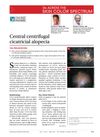 1 citations
,
April 2022 in “The Journal of Family Practice”
1 citations
,
April 2022 in “The Journal of Family Practice” CCCA causes progressive hair loss in Black women, starting from a central scalp patch.
 1 citations
,
July 2020 in “Benha Journal of Applied Sciences”
1 citations
,
July 2020 in “Benha Journal of Applied Sciences” Trichoscopy is useful for diagnosing Frontal Fibrosing Alopecia.
 1 citations
,
July 2014 in “Our Dermatology Online”
1 citations
,
July 2014 in “Our Dermatology Online” The patient with both scarring and non-scarring hair loss showed complex immune reactions and improved with steroid treatment.
 March 2025 in “Forum Dermatologicum”
 Trichoscopy is crucial for accurately diagnosing fibrosing alopecia in pattern distribution.

The article suggests that patients with Frontal Fibrosing Alopecia may have more contact allergies, but it doesn't prove that allergies cause the condition.
 November 2022 in “Research Square (Research Square)”
 Using facial sunscreen and moisturizer may increase the risk of frontal fibrosing alopecia.
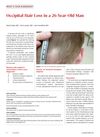 January 2022 in “Consultant”
 The man's occipital hair loss was due to temporal triangular alopecia, not alopecia areata.
 July 2021 in “British Journal of Dermatology”
 A woman with systemic sclerosis developed a unique scarring hair loss combining features of systemic sclerosis and frontal fibrosing alopecia.

Fractional CO2 laser is more effective and safer than steroid injections for treating alopecia areata.
 October 2018 in “InTech eBooks”
 The most effective treatments for hair loss are minoxidil, finasteride, PRP, and hair transplants, with steroids and immunosuppressants for autoimmune types.
 July 2018 in “Nasza Dermatologia Online”
 Frontal fibrosing alopecia and ulerythema ophryogenes may be related and can evolve from one to the other.
 February 2016 in “The journal of investigative dermatology/Journal of investigative dermatology”
 JAK inhibitors may help treat alopecia areata by reversing hair loss.
 December 2015 in “Actas Dermo-Sifiliográficas”
 Hair transplantation for Frontal Fibrosing Alopecia may work if the disease is inactive for 2 years and with ongoing treatment to maintain results.
 April 2014 in “Jurnal Biomedik : JBM”
 An 8-year-old girl had nail and hair issues that improved without specific treatment, but fungal nail infection was hard to cure.
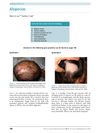 February 2013 in “Archives of Disease in Childhood: Education & Practice”
 Different types of alopecia in children require specific diagnoses and treatments.
 December 2012 in “Drugs & Therapy Perspectives”
 Doctors use their experience to choose treatments for scarring hair loss because it's hard to diagnose and treat.
 January 2012 in “Yearbook of Dermatology and Dermatologic Surgery”
 Some African American women experience central scalp hair loss, often linked to a history of fungal scalp infection.
 January 2012 in “Postgraduate obstetrics & gynecology”
 Up to 50% of women may experience significant hair loss by age 50, with various causes and treatments available.
 January 2003 in “American Journal of Clinical Dermatology”
 In 2002, various skin reactions were reported due to different drugs, including allergies, hair loss, skin lesions, and other skin conditions.
 1 citations
,
October 2022 in “Dermatology practical & conceptual”
1 citations
,
October 2022 in “Dermatology practical & conceptual” Isolated patchy heterochromia with pili annulati can occur without other health issues.
14 citations
,
April 1976 in “Journal of Cutaneous Pathology” A calcified nodule on a boy's face came from hair follicles and expelled calcium through the skin.
 8 citations
,
January 2021 in “Pharmaceutics”
8 citations
,
January 2021 in “Pharmaceutics” Nanoporous silica entrapped lipid-drug complexes significantly improve the solubility and absorption of drugs that don't dissolve well in water.
 October 2014 in “Aktuelle Dermatologie”
 A 19-year-old with MRKHS developed complete hair loss, and treatment options were discussed.
4 citations
,
March 2020 in “JAAD Case Reports” Vitamin B12 deficiency can cause darkening of all nails.

Doctors should consider Netherton syndrome in patients with chronic skin and hair issues to avoid misdiagnosis.
 3 citations
,
January 2020 in “Acta Dermato Venereologica”
3 citations
,
January 2020 in “Acta Dermato Venereologica” Netherton Syndrome can cause severe skin lesions in rare cases.
January 2006 in “Dianzi xianwei xuebao” Netherton syndrome causes specific skin and hair changes that help in early diagnosis.