 17 citations
,
May 2016 in “Archives of Dermatological Research”
17 citations
,
May 2016 in “Archives of Dermatological Research” Reflectance confocal microscopy can help tell apart scarring from non-scarring hair loss.
 14 citations
,
January 2006 in “Australasian journal of dermatology”
14 citations
,
January 2006 in “Australasian journal of dermatology” Alopecia areata can look like frontal fibrosing alopecia, making diagnosis hard.
 13 citations
,
March 2014 in “Pediatric Dermatology”
13 citations
,
March 2014 in “Pediatric Dermatology” Minoxidil 5% solution significantly improved hair density in a girl with loose anagen hair syndrome over 28 months, with no side effects.
 11 citations
,
August 2017 in “American Journal of Dermatopathology”
11 citations
,
August 2017 in “American Journal of Dermatopathology” EVG staining helps tell apart follicular scars from follicular streamers, aiding in diagnosing different types of hair loss.
 10 citations
,
January 2015 in “Skin appendage disorders”
10 citations
,
January 2015 in “Skin appendage disorders” Low-cost videomicroscopes are not as reliable as standard videodermatoscopes for scalp examination due to lower image quality.

Low-dose oral isotretinoin improved hair loss and facial bumps in patients with a specific type of hair loss.
 7 citations
,
August 2019 in “Clinical and Experimental Dermatology”
7 citations
,
August 2019 in “Clinical and Experimental Dermatology” The Mona Lisa's high forehead and sparse eyebrows might be due to a hair loss condition or Renaissance fashion trends, but the actual reason is unknown.
 4 citations
,
December 2017 in “American Journal of Dermatopathology”
4 citations
,
December 2017 in “American Journal of Dermatopathology” Naked hair shafts are significantly associated with scarring hair loss and may help diagnose it, especially when multiple are found.
 3 citations
,
June 2025 in “Archives of Dermatological Research”
3 citations
,
June 2025 in “Archives of Dermatological Research” Biologics and JAK inhibitors may improve treatment for scarring alopecias.
 3 citations
,
April 2022 in “Cutis”
3 citations
,
April 2022 in “Cutis” CCCA is a common, scarring hair loss in Black women that needs early detection.
 3 citations
,
November 2020 in “Clinical, Cosmetic and Investigational Dermatology”
3 citations
,
November 2020 in “Clinical, Cosmetic and Investigational Dermatology” Early diagnosis and combination therapy, especially with finasteride and dutasteride, are key to managing Frontal Fibrosing Alopecia effectively.
 3 citations
,
November 2019 in “The American Journal of Dermatopathology”
3 citations
,
November 2019 in “The American Journal of Dermatopathology” Widened sweat ducts are a very specific sign of scarring hair loss.
 3 citations
,
September 2018 in “Dermatologic Surgery”
3 citations
,
September 2018 in “Dermatologic Surgery” Platelet-Rich Plasma (PRP) can improve hair loss in cicatricial alopecia cases, but treatment must be ongoing and results vary among patients.
 2 citations
,
June 2020 in “Dermatology and therapy”
2 citations
,
June 2020 in “Dermatology and therapy” Narrowband-UVB phototherapy successfully treated a rare case of Graham Little-Piccardi-Lassueur syndrome.
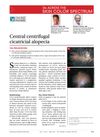 1 citations
,
April 2022 in “The Journal of Family Practice”
1 citations
,
April 2022 in “The Journal of Family Practice” CCCA causes progressive hair loss in Black women, starting from a central scalp patch.
 1 citations
,
July 2020 in “Benha Journal of Applied Sciences”
1 citations
,
July 2020 in “Benha Journal of Applied Sciences” Trichoscopy is useful for diagnosing Frontal Fibrosing Alopecia.
 March 2025 in “Forum Dermatologicum”
 Trichoscopy is crucial for accurately diagnosing fibrosing alopecia in pattern distribution.

The article suggests that patients with Frontal Fibrosing Alopecia may have more contact allergies, but it doesn't prove that allergies cause the condition.
 November 2022 in “Research Square (Research Square)”
 Using facial sunscreen and moisturizer may increase the risk of frontal fibrosing alopecia.
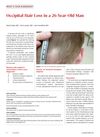 January 2022 in “Consultant”
 The man's occipital hair loss was due to temporal triangular alopecia, not alopecia areata.
 July 2021 in “British Journal of Dermatology”
 A woman with systemic sclerosis developed a unique scarring hair loss combining features of systemic sclerosis and frontal fibrosing alopecia.
 October 2018 in “InTech eBooks”
 The most effective treatments for hair loss are minoxidil, finasteride, PRP, and hair transplants, with steroids and immunosuppressants for autoimmune types.
 July 2018 in “Nasza Dermatologia Online”
 Frontal fibrosing alopecia and ulerythema ophryogenes may be related and can evolve from one to the other.
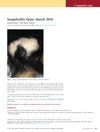 February 2016 in “The journal of investigative dermatology/Journal of investigative dermatology”
 JAK inhibitors may help treat alopecia areata by reversing hair loss.
 December 2015 in “Actas Dermo-Sifiliográficas”
 Hair transplantation for Frontal Fibrosing Alopecia may work if the disease is inactive for 2 years and with ongoing treatment to maintain results.
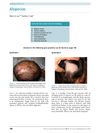 February 2013 in “Archives of Disease in Childhood: Education & Practice”
 Different types of alopecia in children require specific diagnoses and treatments.
 December 2012 in “Drugs & Therapy Perspectives”
 Doctors use their experience to choose treatments for scarring hair loss because it's hard to diagnose and treat.
 January 2012 in “Yearbook of Dermatology and Dermatologic Surgery”
 Some African American women experience central scalp hair loss, often linked to a history of fungal scalp infection.
 8 citations
,
January 1989 in “Annual Reports in Medicinal Chemistry”
8 citations
,
January 1989 in “Annual Reports in Medicinal Chemistry” Hair loss from alopecia areata and androgenetic alopecia can be treated, but more effective and safer treatments are needed.
 26 citations
,
August 2016 in “Actas Dermo-Sifiliográficas”
26 citations
,
August 2016 in “Actas Dermo-Sifiliográficas” Frontal Fibrosing Alopecia in men is often missed and can come with symptoms like facial bumps and hair loss on eyebrows and limbs.