 1 citations
,
February 2004
1 citations
,
February 2004 Skin diseases are common and can significantly affect people's lives; better outcome measures and ethical clinical trials are needed to improve dermatology care.
 April 2026 in “Frontiers in Medicine”
 Upadacitinib effectively treats psoriasis and lichen planus together.
 March 2026 in “American Journal of Clinical Dermatology”
 Cancer survivors need better skin care to improve their quality of life.
 March 2026 in “IP Indian Journal of Clinical and Experimental Dermatology”
 Wrinkles, dry skin, and hair changes are common in elderly skin, while infections and eczema are also prevalent.
 January 2026 in “Pediatria Polska”
 Early diagnosis and treatment of tinea capitis in children is crucial to prevent permanent hair loss and scarring.
 January 2025 in “Universidad de Córdoba Insitutional Repository (Universidad de Córdoba)”
 An imbalanced scalp microbiome may worsen alopecia areata severity and inflammation, but treatment can partially restore balance.
 September 2024 in “Portuguese Journal of Dermatology and Venereology”
 CCCA and LPP may be related hair loss conditions influenced by genetics and environment, needing early treatment.
 February 2024 in “PloS one”
 Tofacitinib and adalimumab are promising treatments for cicatricial alopecia with few side effects.
 October 2023 in “Journal of Medicine, University of Santo Tomas (JMUST Online)”
 Elderly patients frequently suffer from skin conditions, especially inflammatory ones, highlighting the need for better healthcare.
 September 2023 in “Journal of Nepal Paediatric Society”
 Skin infections and rashes are the most common skin problems in children.
 January 2023 in “Revista da Associação Médica Brasileira”
 Brazilian patients with inflammatory bowel disease have a high rate of skin problems compared to healthy people.

Early identification of lupus through skin signs and blood tests is crucial in India.
 November 2019 in “Harper's Textbook of Pediatric Dermatology”
 Understanding normal hair growth and loss in children is key to diagnosing and treating hair disorders.

Proretinal nanoparticles are a safe and effective way to deliver retinal to the skin.
 January 2018 in “Springer eBooks”
 Different races and genders have unique skin and hair issues, requiring specialized care and more research for effective treatment.
 September 2017 in “Journal of Dermatology & Cosmetology”
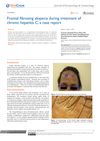
 Hepatitis C treatment may cause frontal fibrosing alopecia.
 May 2017 in “InTech eBooks”
 Some hair loss disorders cause permanent loss due to scarring, and treatments like steroids don't always work well.
 March 2017 in “BIRDEM Medical Journal”
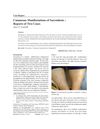
 Sarcoidosis can cause various skin issues, making diagnosis difficult.
 December 2016 in “John Wiley & Sons, Ltd eBooks”
 The document concludes that proper recognition and treatment of skin appendage disorders are important for management.
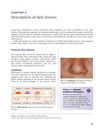
The document explains different types of skin lesions and their characteristics, causes, and related conditions.
 July 2016 in “American Journal of Dermatopathology”
 The meeting showcased rare skin disease cases, highlighting the need for accurate diagnosis and treatment.

Lichen planopilaris and frontal fibrosing alopecia are likely the same disease with different clinical appearances.
 January 2015 in “Dermatology”
 The document covers various dermatological treatments and conditions.
 January 2015 in “Springer eBooks”
 Chronic kidney disease can cause hair loss, which may be related to zinc deficiency or certain medications, and sometimes hair grows back when the underlying issue is treated.
 March 2014 in “Journal of The American Academy of Dermatology”
 The document lists various dermatology topics, treatments, and diagnostic methods.
 May 2009 in “The American Journal of Dermatopathology”
 Mast cells play a significant role in hair loss conditions like male pattern hair loss and alopecia areata.
 January 2009 in “Springer eBooks”
 The document concludes that treating skin conditions should include psychological care and a multidisciplinary approach is essential for effective management.
 June 2008 in “Springer eBooks”
 The document concludes that permanent hair loss conditions are complex, require early specific treatments, and "secondary permanent alopecias" might be a more accurate term than "secondary cicatricial alopecia."
 June 2008 in “British Journal of Dermatology”
 UK medical students lack dermatology education, liver biopsy patients with risk factors show more fibrosis, and certain fungi resist drugs due to melanin; genetics may influence female hair loss.
 May 2003 in “Facial Plastic Surgery Clinics of North America”
 Hair loss can be treated with medications like minoxidil and finasteride or surgery, but treatment effectiveness varies by alopecia type and accurate diagnosis is important.