 April 2018 in “Journal of Cosmetic and Laser Therapy”
 The editorial introduces studies on various cosmetic and laser treatments, their effectiveness, and posttreatment care.
 3 citations
,
May 2024 in “Cureus”
3 citations
,
May 2024 in “Cureus” Laser hair removal improves life quality short-term for women with PCOS-related hirsutism.
 January 2009 in “Actas dermo-sifiliográficas/Actas dermo-sifiliográficas”
 Lasers and light treatments are now the most common ways to remove hair.
 December 2018 in “Lasers in Surgery and Medicine”
 Science improves peace by advancing medical treatments, like laser therapies and non-invasive imaging.
 76 citations
,
January 2007 in “American Journal of Clinical Dermatology”
76 citations
,
January 2007 in “American Journal of Clinical Dermatology” Women with PCOS often have skin problems like excessive hair, acne, hair loss, and dark patches, which can be treated with hormonal and non-hormonal therapies.
 August 2023 in “Asian journal of pharmaceutical and clinical research”
 Intense Pulsed Light is an effective and safe hair removal method for people with excessive hair growth.
1 citations
,
January 2023 in “Skin Appendage Disorders” Radiofrequency devices can help remove or grow hair, but more research is needed.
 207 citations
,
January 2011 in “Dermatologic Therapy”
207 citations
,
January 2011 in “Dermatologic Therapy” Laser hair removal is the most requested cosmetic procedure and has become a scientifically-based treatment suitable for all skin types.
 January 2023 in “Our Dermatology Online”
 Laser hair removal is effective but may have side effects.
 6 citations
,
June 2013 in “British Journal of Dermatology”
6 citations
,
June 2013 in “British Journal of Dermatology” Intense pulsed light treatment mainly damages pigmented hair parts but spares stem cells, allowing hair to regrow.
Hirsutism in women is mostly due to PCOS and can be managed with oral contraceptives and hair removal methods.
 March 2025 in “Journal of Cutaneous and Aesthetic Surgery”
 Non-laser devices show promise in treating hair issues, but more research is needed.
 March 2026 in “Cosmetics”
 Using enzymes with laser hair removal may reduce unwanted hair growth better than laser alone.
15 citations
,
January 2008 in “PubMed” Laser and IPL hair reduction is effective but requires multiple sessions and ongoing maintenance.
 3 citations
,
March 2008 in “Medical laser application”
3 citations
,
March 2008 in “Medical laser application” Lasers have become safer and more effective for treating skin problems and hair removal.
 82 citations
,
May 2016 in “Best Practice & Research in Clinical Obstetrics & Gynaecology”
82 citations
,
May 2016 in “Best Practice & Research in Clinical Obstetrics & Gynaecology” The conclusion is that managing androgen excess requires long-term treatment, including hormonal contraceptives and androgen blockers, with follow-up after six months.
 20 citations
,
December 2016 in “American Journal of Clinical Dermatology”
20 citations
,
December 2016 in “American Journal of Clinical Dermatology” Men prefer less invasive cosmetic procedures and need different treatment approaches than women.
33 citations
,
October 2016 in “Photomedicine and laser surgery” Future clinical uses of Intense Pulsed Light (IPL) are likely to grow and become more effective with new advancements and combined treatments.
9 citations
,
January 2023 in “Indian Dermatology Online Journal” Medical aesthetics now helps treat medical conditions, expanding options for dermatologists.
 31 citations
,
April 1999 in “Dermatologic Clinics”
31 citations
,
April 1999 in “Dermatologic Clinics” Nd:YAG laser can reduce hair with multiple treatments, but permanent removal isn't guaranteed.
 15 citations
,
February 2008 in “Annals of plastic surgery”
15 citations
,
February 2008 in “Annals of plastic surgery” Most patients were satisfied with diode laser hair removal and experienced no long-term side effects.
 5 citations
,
April 2019 in “Plastic and reconstructive surgery. Global open”
5 citations
,
April 2019 in “Plastic and reconstructive surgery. Global open” Fractional lasers could help hair regrowth in androgenic alopecia, but more research is needed to confirm their effectiveness and safety.
 32 citations
,
January 2010 in “Dermatology”
32 citations
,
January 2010 in “Dermatology” Combining laser hair removal with topical eflornithine is recommended for better results in treating unwanted facial hair.
 11 citations
,
June 2005 in “Journal of Cosmetic Dermatology”
11 citations
,
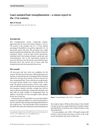
June 2005 in “Journal of Cosmetic Dermatology” Lasers in hair transplantation show promise but are not yet standard, with current methods causing some side effects and needles still being preferred for creating recipient sites.
 9 citations
,
May 2005 in “Facial plastic surgery”
9 citations
,
May 2005 in “Facial plastic surgery” Laser hair removal can be safe and effective for dark-skinned individuals with the right laser settings.
 9 citations
,
March 2005 in “Aesthetic surgery journal”
9 citations
,
March 2005 in “Aesthetic surgery journal” The long-pulse alexandrite laser effectively removes hair permanently.
 January 2018 in “Springer eBooks”
 Lasers are FDA-approved for permanent hair reduction, not removal, and more research is needed to improve treatments.
 68 citations
,
January 2007 in “Journal of Cosmetic and Laser Therapy”
68 citations
,
January 2007 in “Journal of Cosmetic and Laser Therapy” Laser/light treatments for hair loss are popular but lack scientific data proving effectiveness.
 20 citations
,
April 1999 in “British journal of plastic surgery”
20 citations
,
April 1999 in “British journal of plastic surgery” Ruby laser hair removal significantly reduces hair density.
 6 citations
,
January 2018 in “Multimedia Tools and Applications”
6 citations
,
January 2018 in “Multimedia Tools and Applications” The new method removes hair from skin images quickly and accurately to help identify skin lesions better.