Search
for
Sort by
Research
60-90 / 128 results
research A Homozygous Missense Variant in K25 Underlying Overlapping Phenotype with Woolly Hair and Dental Anomalies
A specific mutation in the K25 gene causes a rare genetic disorder with curly hair at birth and later hair loss, along with dental issues.
research Alopezien und Hypotrichosen im Kindesalter
Genetic testing can identify causes of rare hair loss disorders in children, but no treatments exist.
research Development of Woolly Hair and Hairlessness in a CRISPR−Engineered Mutant Mouse Model with KRT71 Mutations
Researchers made a mouse model with curly hair and hair loss by editing a gene.
research Hair Follicular Expression and Function of Group X Secreted Phospholipase A2 in Mouse Skin
sPLA2-X is crucial for normal hair growth and follicle health.
research Faculty Opinions recommendation of Autosomal-dominant woolly hair resulting from disruption of keratin 74 (KRT74), a potential determinant of human hair texture.
A mutation in the KRT74 gene causes woolly hair by affecting hair texture.
research Mutations in SREBF1, Encoding Sterol Regulatory Element Binding Transcription Factor 1, Cause Autosomal-Dominant IFAP Syndrome
Changes in the SREBF1 gene cause a rare genetic skin and hair disorder.
research A review of genotrichoses and hair pathology associated with inherited skin diseases
Next-generation sequencing greatly improves understanding and treatment of genetic hair disorders.
research Autosomal recessive hereditary hypotrichosis simplex: A case report
A 21-month-old boy has a rare genetic disorder causing sparse hair due to an LSS gene mutation.
research Autosomal-Dominant Woolly Hair Resulting from Disruption of Keratin 74 (KRT74), a Potential Determinant of Human Hair Texture
A mutation in the KRT74 gene causes tightly curled hair.
research Distinguishing Mouse Strains by Proteomic Analysis of Pelage Hair
Proteomic analysis can identify genetic differences in mouse hair, helping understand hair defects and variations.
research A KRT71 Loss-of-Function Variant Results in Inner Root Sheath Dysplasia and Recessive Congenital Hypotrichosis of Hereford Cattle
A specific genetic change in the KRT71 gene causes a hair loss condition in Hereford cattle.

research CRISPR/Cas9-mediated Disruption of Fibroblast Growth Factor 5 in Rabbits Results in a Systemic Long Hair Phenotype by Prolonging Anagen
Disrupting the FGF5 gene in rabbits leads to longer hair by extending the hair growth phase.
research Claves diagnósticas en displasias pilosas II
Hair shaft disorders are diagnosed through examination and history, with general care and some treatments offering improvement.
research [Translated article] Keys to the Diagnosis of Hair Shaft Disorders: Part II
Hair shaft disorders, often due to genetics or environment, lack specific treatments but can be managed with gentle hair care and may improve with age or topical treatments.
research Faculty Opinions recommendation of Autosomal-dominant woolly hair resulting from disruption of keratin 74 (KRT74), a potential determinant of human hair texture.
A mutation in the KRT74 gene causes woolly hair by affecting hair texture.
research Keratin 71 Mutations: From Water Dogs to Woolly Hair
A mutation in the KRT71 gene causes a hair disorder by disrupting hair follicle structure and texture.
research Variant PADI3 in Central Centrifugal Cicatricial Alopecia
Mutations in the PADI3 gene are linked to a higher risk of scarring hair loss in women of African descent.

research Mutations in Sterol O-Acyltransferase 1 (Soat1) Result in Hair Interior Defects in AKR/J Mice
A mutation in the Soat1 gene causes hair structure defects and other health issues in AKR/J mice.
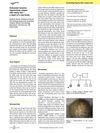
research Autosomal recessive hypotrichosis simplex with woolly hair: a report of a new family
Two siblings were found to have a genetic condition causing progressive hair loss and woolly hair, which may often be misdiagnosed.
research An epistatic effect of KRT25 on SP6 is involved in curly coat in horses
The genes KRT25 and SP6 affect curly hair in horses, with KRT25 also causing hair loss. If both genes are mutated, the horse gets curly hair and hair loss. KRT25 can hide the effect of SP6.
research Segregation of Incomplete Achromatopsia and Alopecia Due to PDE6H and LPAR6 Variants in a Consanguineous Family from Pakistan
Genetic variants in PDE6H and LPAR6 cause vision impairment and hair loss in two Pakistani brothers.
research Whole-transcriptome analysis reveals the profiles and roles of coding and non-coding RNAs during hair follicle cycling in Rex rabbits
Key genes and RNA networks regulate hair growth and follicle density in Rex rabbits.
research Disruption of P2RY5, an orphan G protein–coupled receptor, underlies autosomal recessive woolly hair
Mutations in the P2RY5 gene cause autosomal recessive woolly hair.

research Botanical extract combined with minoxidil improve hidrotic ectodermal dysplasia caused by p.G11R mutations: a case report
Botanical extracts and Minoxidil improved hair condition in a boy with a genetic disorder.
research Tracing selection signatures in the pig genome gives evidence for selective pressures on a unique curly hair phenotype in Mangalitza
Selective breeding caused the unique curly hair in Mangalitza pigs.

research Hair Disorders
Understanding normal hair growth and loss in children is key to diagnosing and treating hair disorders.
research 192 MicroRNAs and their regulatory interactions in the human hair follicle
The research found that certain microRNAs are important for human hair growth and health.
research Diagnostic challenges in determining alopecia areata
Diagnosing alopecia areata is challenging and requires careful examination and various tests to distinguish it from other hair loss types.
research LPA3, a unique G protein-coupled receptor for lysophosphatidic acid
LPA3 is crucial for embryo implantation and links LPA to prostaglandin signaling.