22 citations
,
September 2024 in “Chemical Engineering Journal” A new microneedle patch effectively and safely treats alopecia areata.
 14 citations
,
January 1990 in “Fertility and Sterility”
14 citations
,
January 1990 in “Fertility and Sterility” Some patients with high prolactin levels don't show symptoms because they have a form of the hormone that's less active.
 April 2017 in “Medicina Clínica (english Edition)”
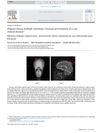
 A woman with a rare form of multiple myeloma had a headache and a skull mass, which led to her diagnosis after tests and a biopsy.
ANE syndrome is caused by a mutation in the RBM28 protein that disrupts ribosome assembly.
NuMA-microtubule interactions are vital for proper skin structure formation and function.
 November 2024 in “ACS Materials Letters”
 The new nitric oxide delivery system may effectively treat hair loss by improving hair follicle health and reducing inflammation.
 April 2019 in “The journal of investigative dermatology/Journal of investigative dermatology”
 Machine learning can predict how well patients with alopecia areata will respond to certain treatments.
 March 2025 in “Journal of Clinical Medicine”
 Low-dose oral minoxidil effectively treats alopecia but can cause side effects like excess hair growth and fluid retention.
July 2025 in “Journal of Investigative Dermatology” Low-dose oral minoxidil is safe for the heart in the short term for hair loss patients.
4 citations
,
September 2019 in “Journal of Biomedical Optics” Medulla loss in scalp hair could help detect breast cancer.
 May 2026 in “Journal of Asia Pacific Aesthetic Sciences”
 Low-dose intralesional corticosteroid treatment led to rapid hair regrowth in localized alopecia areata.
 106 citations
,
April 2013 in “Dermatologic Surgery”
106 citations
,
April 2013 in “Dermatologic Surgery” Low-level light therapy safely improves hair growth and thickness for androgenetic alopecia.
August 2025 in “Annals of African Medicine”  January 2024 in “Wiadomości Lekarskie”
 Patients with limited English prefer professional language interpretation in otolaryngology clinics.
 April 2019 in “Journal of Investigative Dermatology”
 Non-coding RNA boosts retinoic acid production and signaling, aiding regeneration.
 April 2025 in “BMC Immunology”
 Targeting SIRT1 with antisense oligonucleotides could be a promising treatment for hair loss.
January 2021 in “Research Square (Research Square)” Long noncoding RNAs may help understand rabbit hair follicle density.
July 2026 in “Journal of the American Academy of Dermatology” The lotion helps manage mild to moderate hair loss.
21 citations
,
January 2010 in “International journal of trichology” Trichoscopy can diagnose monilethrix, a genetic hair defect causing hair thinning and loss.
 April 2017 in “Journal of Investigative Dermatology”
 The PON1 192R gene variant is linked to a higher risk of psoriasis and heart disease in Western Mexico.
 3 citations
,
August 2022 in “JAAD case reports”
3 citations
,
August 2022 in “JAAD case reports” A woman developed swelling in her body after taking low-dose oral minoxidil for hair loss, but it resolved after stopping the medication.
November 2022 in “Journal of Investigative Dermatology” Statins may help treat alopecia areata by reducing harmful immune interactions.
March 2018 in “Chin J Reprod Contracep” Chlormadinone acetate is useful for birth control and treating various hormonal issues.
March 2026 in “Skin Appendage Disorders” Diagnosing and treating monilethrix is challenging when it occurs with other hair disorders.
July 2020 in “Faculty Opinions – Post-Publication Peer Review of the Biomedical Literature” 6 citations
,
December 2021 in “Journal of Clinical Medicine” LiPADI is a useful tool for monitoring the severity and treatment of lichen planus.
 November 2023 in “The journal of investigative dermatology/Journal of investigative dermatology”
 The study developed a mouse model for Alopecia Areata that responds to treatment, useful for future research.
10 citations
,
December 2018 in “Internal Medicine” Myasthenia gravis can affect both motor and non-motor systems due to immune system issues.
 5 citations
,
January 2019 in “Skin appendage disorders”
5 citations
,
January 2019 in “Skin appendage disorders” The conclusion is that it's important to tell apart alopecia areata from lipedematous alopecia for proper treatment, as alopecia areata can be reversed.
 July 2025 in “Lasers in Surgery and Medicine”
 Non-ablative fractional laser treatment safely improves hair growth and scalp appearance.