Search
for
Sort by
Research
720-750 / 1000+ results
research 700 Oncostatin M is upstream of JAK-STAT signaling during the murine hair cycle
Blocking Oncostatin M's role in the JAK-STAT pathway can stimulate hair growth in mice.

research O02 Ubiquitomics of CYLD-deficient skin tumours reveals dysregulation of hair follicle keratinocyte processes
CYLD deficiency in skin tumors disrupts hair follicle cell processes and protein secretion.
research Prediction of cell states and key transcription factors of the human cornea through integrated single-cell omics analyses
A new tool accurately identifies human cornea cell states and key factors.
research Phospholipase C‐δ1 is an essential molecule downstream of Foxnl, the gene responsible for the nude mutation, in normal hair development
Phospholipase C-δ1 is crucial for normal hair development.
research Autosomal recessive monilethrix: Novel variants of the DSG4 gene in three Chinese families
New gene variants linked to a rare inherited hair loss disorder were found in three Chinese families.
research Correlation and regression analysis of the KRT27 and ELOVL4 genes in cashmere fineness and other production performances in Liaoning cashmere goats
Certain gene combinations improve cashmere quality and production in Liaoning goats.

research Functional mapping of the mouse hairless gene promoter region
Researchers found key regions in the mouse hairless gene that control its activity in skin and brain cells, affecting hair follicle function.
research Congenital atrichia with papular lesions resulting from novel mutations in human hairless gene in four consanguineous families
Mutations in the hairless gene cause a rare form of permanent hair loss.
research Signal Peptide-CUB-EGF-like Domain-Containing Protein 3 (SCUBE3): From Molecule to Therapy
SCUBE3 is a potential target for cancer and alopecia treatment but is challenging to target due to its varied roles.
research Keratin 17 mutations cause either steatocystoma multiplex or pachyonychia congenita type 2
Keratin 17 gene mutations cause both steatocystoma multiplex and pachyonychia congenita type 2.
research Reply
The Thr1022Ala variant in the hairless gene is not a disease-causing mutation.

research 937 Disruption of the innate lymphoid cell network alters the hair cycle during induced anagen
Removing certain immune cells in mice causes their hair to enter the growth phase earlier than usual.
research Effect of lentivirus-mediated miR-182 targeting FGF9 on hallux valgus
miR-182 may help treat hallux valgus by targeting FGF9.

research Molecular mechanisms of Y chromosome loss and UTY gene activity
Loss of the Y chromosome and UTY gene activity increases cancer risk in men.

research Novel variant in WNT10A caused short anagen hair syndrome in a Chinese pedigree
A new change in the WNT10A gene caused a condition leading to short hair growth in a Chinese family.
research Lichen myxedematosus in a patient with hepatocellular carcinoma
Removing the liver tumor improved the patient's skin condition and hair growth.

research The role of Pygo2 during intestinal tumor initiation and progression in vivo
Pygo2 is important for early growth and progression of intestinal tumors, and could be a target for treating cancers with certain mutations.
research ACE2 and TMPRSS2 Potential Involvement in Genetic Susceptibility to SARS-COV-2 in Cancer Patients
Targeting ACE2 and TMPRSS2 may help prevent or treat COVID-19 in cancer patients.
research Activation of the transcription factor Gli1 and the Sonic hedgehog signalling pathway in skin tumours
research Association between TLR1 polymorphisms and alopecia areata
A specific gene variant (rs4833095) is linked to a higher risk of alopecia areata in Koreans.
research An accessible pharmacodynamic transcriptional biomarker for notch target engagement
Hair follicle samples effectively show how well the drug MK-0752 targets and engages with the Notch pathway.
research 479 Transcriptomics identifies potential novel therapeutic targets in androgenetic alopecia
Found new possible treatments for hair loss.

research The 532 Nm Laser Treatment Promotes the Proliferation of Tendon- Derived Stem Cells and Up-Regulates Nr4a1 to Stimulate Tenogenic Differentiation
A 532 nm laser at 15 J/cm2 speeds up tendon healing by increasing tendon stem cell growth and tendon-related gene activity.

research Analysis of hidradenitis suppurativa–linked mutations in four genes and the effects of PSEN1-P242LfsX11 on cytokine and chemokine expression in macrophages
The document concludes that certain mutations may contribute to the inflammation in hidradenitis suppurativa and suggests that targeting TNFα could be a treatment strategy.
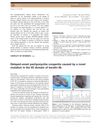
research Delayed-onset pachyonychia congenita caused by a novel mutation in the V2 domain of keratin 6b
A new mutation in the K6b gene caused a girl's late-appearing nail condition.

research Pachyonychia congenita: Sporadic onset with mutation analysis
A boy with Pachyonychia congenita has a confirmed gene mutation, highlighting the need for a local genetic database in India.
research 854 CCL5 affects the hair-inductive capacity of three-dimensional (3D)-cultured dermal papilla cells
CCL5 is important for the hair growth potential of human dermal papilla cells.

research 311 Single-cell transcriptomics reveals distinct molecular programs in folliculotropic mycosis fungoides
Folliculotropic mycosis fungoides has unique molecular features and cell interactions that could guide targeted therapy.
research Direct cellular reprogramming enables development of viral T antigen–driven Merkel cell carcinoma in mice
Scientists made a mouse model of a serious skin cancer by changing skin cells with a virus and a specific gene, which is similar to the disease in humans.