 December 2022 in “Frontiers in plant science”
 CCDC22 and CCDC93 are essential for root and root hair growth in Arabidopsis.
 July 2022 in “The journal of investigative dermatology/Journal of investigative dermatology”
 Thymic stromal lymphopoietin (TSLP) promotes hair growth by stimulating specific skin cells.
 July 2022 in “The Egyptian Journal of Plastic and Reconstructive Surgery”
 Using Platelet Rich Plasma with hair transplants is effective for treating hair loss due to burns.
May 2022 in “Journal of clinical and nursing research” Fire needle acupuncture is effective for treating alopecia areata.
 January 2022 in “Cellular and Molecular Biology”
 Adding Triamcinolone to the anesthetic can reduce swelling after hair transplants, and using Platelet-Rich Plasma can improve hair thickness and patient satisfaction. The SRD5A2 gene also plays a key role in the success of hair transplants.
January 2022 in “Clinical Cases in Dermatology” A 22-year-old man has alopecia areata, an autoimmune hair loss condition, with various treatments available.

Researchers found a genetic link for hereditary hair loss but need more analysis to identify the exact gene.
 June 2021 in “International Ayurvedic Medical Journal”
 Ayurvedic treatments like leech therapy and turmeric-neem paste can effectively treat alopecia areata without harmful side effects.
 March 2021 in “Journal of Maxillofacial and Oral Surgery”
 Beard hair can be used for hair transplants in severe alopecia cases, with minimal complications and good results.
 January 2020 in “Journal of oral medicine and oral surgery”
 Hair grew in a man's mouth due to a rare condition called heterotopia.
July 2019 in “Dermatology practical & conceptual” The study found that alopecia areata is strongly linked to autoimmune diseases and may indicate a genetic predisposition to such conditions.
Injection contraception has more negative side effects than hormonal pills.
 January 2019 in “Current research in diabetes & obesity journal”
 A woman with type 2 diabetes developed alopecia areata, suggesting a link between the two autoimmune conditions.
 January 2019 in “Jui rinsho hifuka”
 A dog's hair loss was caused by a hormone-secreting testicular tumor.
 August 2018 in “Pediatric Dermatology”
 A baby had a unique skin condition with a pale patch and surrounding dark hairs, not linked to other health issues.
 July 2018 in “Journal of The American Academy of Dermatology”
 Fluorescent tattoos are a good way to mark the scalp for hair treatments because they're accurate, invisible in normal light, and have low risk.
July 2017 in “Journal of Ayurveda and Integrated Medical Sciences” Ayurvedic treatments effectively and permanently treated hair loss in a week.
 April 2017 in “The journal of investigative dermatology/Journal of investigative dermatology”
 QMSI is a valuable method for studying drug penetration in skin tissues.
January 2017 in “프로그램북(구 초록집)” Iron deficiency anemia can cause hair breakage.
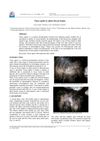
An adult Libyan woman was successfully treated for a rare scalp infection usually seen in children.
January 2015 in “SciDok (Saarland University and State Library)” Clobetasol nanocarriers can be effectively delivered to hair follicles, with uptake improved by massage and affected by particle type.
January 2014 in “European Journal of Dermatology” A method was found to visualize hair regrowth and avoid unnecessary side effects from treatments.
July 2013 in “University of Southern California Digital Library” New stem cells in nails and sweat glands can regenerate skin and hair.

Patients with lichen planus should be tested for hepatitis C.
January 2013 in “INTAS POLIVET” Vitamin A supplements improved skin and health issues in dogs.
Sesa oil, Keshking oil, and Parachute oils were the most available hair loss treatments in Bhilai-Durg city during 2011-12.
December 2011 in “The American Journal of Cosmetic Surgery” The brow-suspension suture is a quick, safe, and effective alternative to traditional brow lifts.
June 2010 in “The Knowledge Bank (The Ohio State University)” Inhibiting retinoic acid activates WNT signaling, potentially aiding hair disorder and skin cancer treatments.

Online tools are effective and cost-efficient for recruiting dermatology research participants, especially among younger people.
Discoid Lupus Erythematosus is more common in women aged 31-40, often worsened by sunlight, and confirmed by specific lab tests.