January 2004 in “The Chinese Journal of Dermatovenereology” Yishen Decoction effectively reduces blood viscosity and improves hair loss in patients.
 81 citations
,
July 2008 in “The Journal of Clinical Endocrinology and Metabolism”
81 citations
,
July 2008 in “The Journal of Clinical Endocrinology and Metabolism” Certain mutations in the H6PD gene cause Cortisone Reductase Deficiency by affecting hormone production.
 3 citations
,
September 2015 in “Journal of Vascular Surgery”
3 citations
,
September 2015 in “Journal of Vascular Surgery” Chemical lumbar sympathectomy is an effective and safe treatment for idiopathic livedo reticularis.
 April 2023 in “The journal of investigative dermatology/Journal of investigative dermatology”
 HPV8 causes hair follicle stem cells to grow, leading to skin lesions.
May 2025 in “Oral Sciences Reports” A lip nodule from a filler injection was successfully removed with surgery.
130 citations
,
April 2003 in “Journal of Investigative Dermatology” Four specific keratins in hair follicles help understand hair structure and function.
September 2008 in “Pediatric Rheumatology” Two children with lysinuric protein intolerance showed symptoms similar to lupus.
16 citations
,
November 2008 in “Journal of the American Academy of Dermatology” Consider necrolytic acral erythema in similar cases and treat with oral zinc sulfate.
 1 citations
,
January 2025 in “RSC Advances”
1 citations
,
January 2025 in “RSC Advances” Ascorbic acid derivatives improve drug delivery systems.
36 citations
,
July 1996 in “The journal of investigative dermatology/Journal of investigative dermatology” Mice with the 'lanceolate hair' mutation have abnormal hair and skin similar to human Netherton's syndrome.
1 citations
,
January 1999 in “Dermatology” 1 citations
,
January 2009 in “The Open Dermatology Journal” Chemotherapy caused nail grooves and separation, but they healed after treatment stopped.
 November 2025 in “Frontiers in Pharmacology”
 Xiaozhi Yufa decoction may help treat hair loss by improving hair growth and reducing inflammation.
UBC13 and UBC22 enzymes are important for plant growth and development in Arabidopsis thaliana.
June 2015 in “Annals of the Rheumatic Diseases” Managing multiple autoimmune diseases in one patient is very challenging.
Arabidopsis Formin 2 stabilizes actin filaments to aid cell-to-cell trafficking.
 77 citations
,
February 2017 in “Stem Cell Reports”
77 citations
,
February 2017 in “Stem Cell Reports” SHISA6 helps maintain certain stem cells in mouse testes by blocking signals that would otherwise cause them to differentiate.
 19 citations
,
January 2001 in “Journal of cutaneous laser therapy”
19 citations
,
January 2001 in “Journal of cutaneous laser therapy” The Nd:YAG laser safely reduces facial hair and slows regrowth, with patient satisfaction.
 November 2022 in “Gigascience”
 A specific genetic deletion in goats affects cashmere yield and thickness.
 3 citations
,
January 2019 in “Annals of Dermatology”
3 citations
,
January 2019 in “Annals of Dermatology” The study concluded that careful examination is key to differentiate between lipidized fibrous histiocytoma and juvenile xanthogranuloma.
15 citations
,
June 2012 in “British Journal of Dermatology” A new mutation in the KRT86 gene causes a hair disorder with variable expression.
September 2016 in “Journal of dermatological science” The conclusion is that the variation in hair thinness in patients is mostly due to the amount of underdeveloped hairs, and treatments that thicken fine hairs might work for those with mild to severe conditions.
December 2010 in “OhioLink ETD Center (Ohio Library and Information Network)” Sry may regulate fatty acid metabolism and shows different expression levels in rat tissues.
18 citations
,
June 2018 in “Journal of Dental Research” Msx2 is essential for proper enamel formation by preventing abnormal cell transformation.
 6 citations
,
February 2023 in “Journal of nanobiotechnology”
6 citations
,
February 2023 in “Journal of nanobiotechnology” The new anti-acne treatment HA-P5 effectively reduces acne by targeting two key receptors and avoids an enzyme that can hinder treatment.
 June 2020 in “Journal of Investigative Dermatology”
 The technique effectively shows how human skin and hair cells form into ball-like structures.
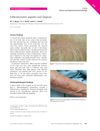 May 2014 in “Clinical and Experimental Dermatology”
 A 70-year-old woman with a rare skin condition improved after treatment with topical steroids and acitretin.
February 2023 in “Zenodo (CERN European Organization for Nuclear Research)” 5 citations
,
May 2024 in “BMC Genomics” Different genes affect hair length in yaks.
July 2024 in “Journal of Investigative Dermatology” INTASYL is a promising, adaptable RNAi technology for treating skin cancers.