5 citations
,
March 2019 in “Scandinavian journal of rheumatology” Doctors should consider comedonic discoid lupus erythematosus to avoid misdiagnosis.
 October 2022 in “International journal of research in dermatology”
 A woman with lupus had unusual symptoms like blisters, skin inflammation, and throat ulcers, which improved with steroid and dapsone treatment.
 June 2017 in “Journal of evolution of medical and dental sciences”
 Most lupus patients in coastal Kerala had skin-specific lesions that could help diagnose the disease, and non-specific skin issues were linked to more severe, systemic lupus.
October 2010 in “eCommons (Cornell University)” Cutaneous epitheliotropic lymphoma in dogs is often misdiagnosed but can be treated with chemotherapy and alternative therapies.
14 citations
,
November 2016 in “Lupus” Lenalidomide effectively and safely treats skin symptoms in pediatric lupus, reducing the need for prednisone.
 December 2023 in “Revista de la Facultad de Ciencias Médicas (Quito)”
 Fever and rash can be early signs of lupus.
23 citations
,
July 2023 in “Proceedings of the National Academy of Sciences” CD8+ T cells drive alopecia areata, while regulatory T cells are protective.
 123 citations
,
September 1987 in “JAMA”
123 citations
,
September 1987 in “JAMA” IL-2 treatment causes skin eruptions and other reversible side effects, and may play a role in psoriasis.
 March 2021 in “Annals of Translational Medicine”
 Two patients with lupus had an unusual type of hair loss not typical for the disease.
Scalp involvement in primary cutaneous lymphomas is common and can be aggressive, requiring careful attention.
245 citations
,
October 2015 in “Nature medicine” Hair follicle-derived IL-7 and IL-15 are crucial for maintaining skin-resident memory T cells and could be targeted for treating skin diseases and lymphoma.
June 2016 in “Annals of the Rheumatic Diseases” Early symptoms of SLE include fatigue, joint pain, and sensitivity to sunlight.
3 citations
,
January 2017 in “Acta Dermato Venereologica” Lipid-antigen stimulation may play a role in folliculotropic mycosis fungoides.
 6 citations
,
July 2015 in “European Journal of Dermatology”
6 citations
,
July 2015 in “European Journal of Dermatology” Stopping methotrexate might reverse lymphoma-like conditions in some patients.
November 2025 in “Journal of Investigative Dermatology” Certain immune cells in atopic dermatitis skin could be targeted for treatment.
May 2017 in “The journal of investigative dermatology/Journal of investigative dermatology” Topical immunotherapy for alopecia areata may work by creating immune cell clusters in the skin.
July 2025 in “Journal of Investigative Dermatology” Three molecular subtypes of advanced skin T-cell lymphoma were identified, with potential biomarkers for predicting treatment response and disease progression.
 291 citations
,
April 2010 in “Gastroenterology”
291 citations
,
April 2010 in “Gastroenterology” Certain proteins, Lgr5 and Lgr6, are important markers of adult stem cells and are involved in tissue repair and cancer development.
April 2012 in “The FASEB Journal” LPA 4 helps control blood and lymph vessel development in zebrafish.
March 2023 in “International Journal of Dermatology” Non-itchy rashes can indicate serious diseases like lupus.
1 citations
,
November 2000 in “PubMed” Combining cytostatic and steroid drugs effectively treats systemic lupus erythematosus.
October 2021 in “European journal of cancer” Repeated biopsies are crucial for managing lupus panniculitis when initial treatments fail.
 6 citations
,
April 2020 in “Cureus”
6 citations
,
April 2020 in “Cureus” A woman with both TLE and SLE improved with hydroxychloroquine treatment.
1 citations
,
January 2013 in “Lung India” Radiological findings help distinguish LAM, PLCH, and BHD to avoid invasive tests.
 December 2025 in “Clinical Cosmetic and Investigational Dermatology”
 A rare lupus case on the chin was successfully treated with steroids and immunomodulators after accurate diagnosis using advanced imaging techniques.

A woman in Sri Lanka was diagnosed with lupus after presenting with protein loss from the gut and other symptoms.
 July 2022 in “The journal of investigative dermatology/Journal of investigative dermatology”
 Thymic stromal lymphopoietin (TSLP) promotes hair growth by stimulating specific skin cells.
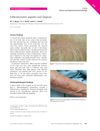 May 2014 in “Clinical and Experimental Dermatology”
 A 70-year-old woman with a rare skin condition improved after treatment with topical steroids and acitretin.
99 citations
,
April 1998 in “The journal of investigative dermatology/Journal of investigative dermatology” Hair follicles help skin immune recovery after UVB exposure.
September 2025 in “Mansoura Journal of Chemistry” Blood and urine markers are important for diagnosing lupus in children.