January 2005 in “Enlighten: Publications (The University of Glasgow)” Melanocyte pathology requires keratinocyte hyperplasia and regulation dysfunction.
 24 citations
,
September 2018 in “Lasers in Surgery and Medicine”
24 citations
,
September 2018 in “Lasers in Surgery and Medicine” Multiphoton microscopy can non-invasively tell apart scarring from non-scarring hair loss and could aid in treatment.
 December 2013 in “International Journal of Dermatology”
 The clinical signs of Adams-Oliver syndrome can vary greatly, even among family members.
 1 citations
,
August 2019 in “Pediatric dermatology”
1 citations
,
August 2019 in “Pediatric dermatology” Topical minoxidil helped an 8-year-old boy with a genetic hair disorder grow hair.
 81 citations
,
June 2012 in “European journal of human genetics”
81 citations
,
June 2012 in “European journal of human genetics” Inherited ichthyoses cause widespread skin scaling and thickening due to gene mutations.
 September 2016 in “Journal of Dermatological Science”
 Both SMS1 and SMS2 are crucial for normal hair growth and cycle in mice.
Multiphoton microscopy helps understand and improve vitiligo treatments by visualizing skin cell changes.
 8 citations
,
January 2011 in “Experimental and Therapeutic Medicine”
8 citations
,
January 2011 in “Experimental and Therapeutic Medicine” Stromal cells in melanoma promote tumor growth and spread.
58 citations
,
November 1969 in “British Journal of Dermatology” Netherton's disease causes multiple hair defects.
8 citations
,
December 2017 in “Small Ruminant Research” Variation in the TCHH gene affects wool curliness in sheep.
 245 citations
,
January 1998 in “Genes & Development”
245 citations
,
January 1998 in “Genes & Development” Hoxc13 gene is essential for hair, nail, and papilla development.
6 citations
,
January 2004 in “DNA Research” A mutation in the Sgkl gene causes defective hair growth in mice.
 October 2024 in “Journal of the Endocrine Society”
 A rare genetic mutation causes resistance to vitamin D, leading to severe rickets and requiring high doses of calcium and vitamin D for treatment.
 2 citations
,
January 1960 in “Australian Journal of Biological Sciences”
2 citations
,
January 1960 in “Australian Journal of Biological Sciences” The Naked gene in mice causes abnormal sebaceous glands and disrupts hair follicle organization.
 August 2013 in “Gastroenterology”
 A 60-year-old man with Cronkhite-Canada syndrome improved with treatment, but the condition has a high mortality rate and a risk of colorectal cancer.
1 citations
,
April 2017 in “Journal of Investigative Dermatology” ZNF750 and MPZL3 are important in causing seborrheic dermatitis.
 October 2023 in “Indian dermatology online journal”
 The young woman has a benign, hereditary skin condition with no signs of a more serious syndrome.
February 2026 in “Pediatric Dermatology”  7 citations
,
October 1985 in “Genetics Research”
7 citations
,
October 1985 in “Genetics Research” Beige and leaden pigment genes act within melanocytes, affecting pigment patterns.
41 citations
,
September 2003 in “Journal of Investigative Dermatology” Overexpression of COX-2 causes early hair loss in mice, but can be prevented with a COX-2 inhibitor.
 June 2024 in “Research Square (Research Square)”
 Young women in West Bengal, India, with PCOS often have estrogen resistance, leptin receptor issues, folate deficiency, T2DM, and acanthosis, commonly linked to obesity.
6 citations
,
February 2020 in “Journal of Cutaneous Pathology” Nevus psiloliparus lacks mature hair follicles but keeps other skin structures intact.
 January 2023 in “Türkiye klinikleri adli tıp ve adli bilimler dergisi”
 DNA markers can help predict male pattern baldness, useful in criminal and missing person cases.
22 citations
,
October 2004 in “Journal of Investigative Dermatology” The gene causing hair loss and heart issues in rough coat mice is still unknown.
52 citations
,
May 1997 in “Journal of Biological Chemistry” High ornithine decarboxylase levels may lead to hair loss and cancer by increasing CK2 activity in the nucleus.
11 citations
,
January 2005 in “Brazilian Journal of Medical and Biological Research” Hairless USP mice have enlarged skin cysts as they age.
29 citations
,
December 2004 in “Developmental biology” cDermo-1 causes dense skin, feathers, and scales in chickens.
 November 2022 in “Journal of the Endocrine Society”
 A boy with a new NR5A1 gene mutation has a sex development disorder without affecting his adrenal glands.

PmtHEE is a better model for studying pigmented skin because it includes melanocytes and shows improved cell differentiation.
 6 citations
,
August 2012 in “The Journal of Pediatrics”
6 citations
,
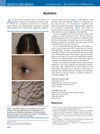
August 2012 in “The Journal of Pediatrics” A 12-year-old girl was diagnosed with monilethrix, a genetic condition causing fragile, beaded hair that breaks easily, with no effective treatment available.