 81 citations
,
November 2012 in “Journal of the National Cancer Institute”
81 citations
,
November 2012 in “Journal of the National Cancer Institute” The tumor suppressor gene FLCN affects mitochondrial function and energy use in cells.
 124 citations
,
September 1992 in “Endocrinology”
124 citations
,
September 1992 in “Endocrinology” The human type II 5α-reductase gene, linked to certain male health conditions, has a specific structure and low similarity to other related genes.
2 citations
,
September 2024 in “Journal of the American Academy of Dermatology”  1 citations
,
September 2023 in “Journal of the American Academy of Dermatology”
1 citations
,
September 2023 in “Journal of the American Academy of Dermatology” Baricitinib significantly improves hair regrowth in severe alopecia areata.
September 1999 in “Molecular Carcinogenesis” Increased ODC expression makes normally tumor-resistant mice more prone to tumor development.
 16 citations
,
July 2020 in “Advanced functional materials”
16 citations
,
July 2020 in “Advanced functional materials” 3D cell-derived matrices improve tissue regeneration and disease modeling.
January 2026 in “Molecular Nutrition & Food Research” Gynostemma pentaphyllum and Damulin B help prevent skin aging from UVB by reducing oxidative stress and improving skin health.
5 citations
,
January 2000 Pododermatitis in farmed mink is likely caused by an unknown infectious agent with secondary bacterial infection.
5 citations
,
October 2021 in “American Journal of Medical Genetics Part A” A new genetic variant causes BRESHECK syndrome by disrupting cell growth and stress response.
Compound 6 is a promising candidate for better wound healing.
 December 2021 in “Research Square (Research Square)”
 M-CSF-stimulated myeloid cells can cause alopecia areata in mice.
May 2005 in “Molecular Carcinogenesis” mrp/plf-mRNA can indicate tumor-promoting effects in skin.
 14 citations
,
March 2020 in “Scientific Reports”
14 citations
,
March 2020 in “Scientific Reports” Using dual-frequency ultrasound with microbubbles can potentially improve the delivery of hair growth treatment through the skin and enhance hair growth.
4 citations
,
August 2013 in “Chinese Medical Journal” A specific gene mutation in KRT86 is linked to hair disorder in a Chinese Han family.
 51 citations
,
February 2009 in “Journal of dermatological science”
51 citations
,
February 2009 in “Journal of dermatological science” Pitx2 helps outer root sheath cells differentiate but can't start hair growth on its own.
 17 citations
,
May 2012 in “Journal of dermatology”
17 citations
,
May 2012 in “Journal of dermatology” Bimatoprost is slightly more effective than minoxidil for eyebrow growth, and both are safe.

BMD-1141 effectively regrows hair in alopecia areata with less frequent dosing than current treatments.
 January 2012 in “Journal of Investigative Dermatology”
 Small molecule DMF improves psoriasis and multiple sclerosis, adult skin cells can be made to grow new hair, certain skin cells initiate hair growth, IL-17C controls gut health and can cause skin inflammation, and skin cells produce IL-17 that can lead to psoriasis.

TLR2 helps control hair growth and regeneration, and its reduction with age or obesity can impair hair growth.
 7 citations
,
October 1985 in “Genetics Research”
7 citations
,
October 1985 in “Genetics Research” Beige and leaden pigment genes act within melanocytes, affecting pigment patterns.
A molecule called α-ketobutyrate was found to extend lifespan and improve aging-related symptoms in worms and mice by activating certain cellular pathways and may help develop anti-aging treatments for humans.
 July 2019 in “Journal der Deutschen Dermatologischen Gesellschaft”
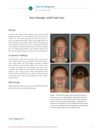
 A mother and daughter have a rare genetic hair loss disorder with no effective treatment.
April 2019 in “Journal of Investigative Dermatology” Researchers created a new mouse model for studying scleroderma.
January 2004 in “Molecular biotechnology”  1 citations
,
March 2022 in “Journal of Dermatological Science”
1 citations
,
March 2022 in “Journal of Dermatological Science” Adding TERT and BMI1 to certain skin cells can improve their ability to create hair follicles in mice.
17 citations
,
May 2019 in “Molecules” These temporary hair dyes may be harmful to human health.
1 citations
,
November 2014 in “Thérapie” Potassium channel activators like nicotinamide and minoxidil might help treat solid tumors.
 August 2023 in “International Journal of Molecular Sciences”
 The human scalp hair bulb contains different types of melanocytes with varying abilities to produce melanin.
Electrical stimulation with minoxidil boosts hair cell growth.
35 citations
,
May 2006 in “Journal of Investigative Dermatology” Monilethrix involves multiple genes affecting hair structure, including DSG4 mutations.