40 citations
,
January 1973 in “Journal of Dairy Science” Zinc deficiency in male goats leads to poor hair growth, smaller testicles, reduced libido, and is hard to reverse.
PPARβ/δ helps yaks adapt to high altitudes by regulating lipid metabolism in their coats.
9 citations
,
July 2021 in “Frontiers in genetics” Melatonin makes cashmere grow earlier and more by increasing certain gene activity in goats.
 January 2023 in “Trakia Journal of Sciences”
 Goats infested with lice showed anemia and skin issues, which improved after treatment.
 1 citations
,
January 2020 in “Research Square (Research Square)”
1 citations
,
January 2020 in “Research Square (Research Square)” Inherited color dilution in Rex rabbits is linked to DNA methylation changes in hair follicles.
11 citations
,
November 1991 in “Journal of Neuropathology & Experimental Neurology” Brindled mice show abnormal catecholamine neuron development due to copper deficiency.
 25 citations
,
February 2019 in “Genomics”
25 citations
,
February 2019 in “Genomics” Cashmere and milk goats have different hair growth cycles and gene expressions, which could help improve wool production.
April 2019 in “Journal of Investigative Dermatology” Researchers created a new mouse model for studying scleroderma.
24 citations
,
October 2022 in “Cell Regeneration” A new mouse model effectively mimics vitiligo for research and drug testing.
1 citations
,
August 2024 in “Pediatric Dermatology” A rare, harmless hair condition was found in an infant's eyebrow, needing no treatment.
 1 citations
,
August 2024 in “Pharmaceuticals”
1 citations
,
August 2024 in “Pharmaceuticals” Goat placenta extract in a special delivery system improved hair growth and thickness in chemotherapy patients.
1 citations
,
July 2024 in “International Journal of Molecular Sciences” MicroRNA-181a slows sheep hair growth by targeting GNAI2 and affecting a key growth pathway.
35 citations
,
March 2010 in “British journal of dermatology/British journal of dermatology, Supplement” The study showed that mouse eyelashes can be used to study eyelash growth and that bimatoprost makes them longer and more numerous.
The FOS gene helps hair growth in Tan sheep.
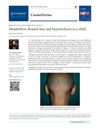 January 2026 in “Cosmoderma”
 A 9-year-old girl has a rare hair disorder causing beaded, sparse hair.
 28 citations
,
August 2018 in “BMC genomics”
28 citations
,
August 2018 in “BMC genomics” DNA methylation changes are linked to hair growth cycles in goats.
9 citations
,
November 2022 in “Biology” Key genes and pathways influence wool traits in Merino sheep.
January 2011 in “Open Collections” Mouse preputial glands are highly developed sebaceous glands that mainly secrete neutral fat droplets.
 2 citations
,
January 2017 in “Folia biologica”
2 citations
,
January 2017 in “Folia biologica” The KRTAP7-1 gene is very similar across different cattle and yak breeds and likely plays a role in hair strength and shape.
31 citations
,
August 2023 in “Cell Genomics” The Tyrolean Iceman had mostly Anatolian farmer ancestry and traits like darker skin and a risk for certain health issues.
14 citations
,
February 1991 in “FEBS Letters” Introducing the rat OTC gene partially corrected OTC deficiency in mice.
1 citations
,
May 2016 in “Journal of Veterinary Diagnostic Investigation” Exotic lice infest 45% of California mule deer, with younger and selenium-deficient deer more vulnerable.
 39 citations
,
August 2005 in “Dermatologic surgery”
39 citations
,
August 2005 in “Dermatologic surgery” Micropigmentation is a widely accepted tattooing technique for hiding cosmetic issues and medical uses, with permanent results and few side effects, but risks infection if not done with sterile tools.
1 citations
,
May 2024 in “Animal Biotechnology” Reducing miR-361-5p boosts hair growth in cashmere goats by activating stem cells.
 January 2024 in “Australasian journal of dermatology (Print)”
 A boy's hair turned red because of genetic mutations, not lack of zinc.
11 citations
,
January 1992 in “PubMed” TGF-beta 1 and IGF-II mRNA have specific patterns in pig subcutaneous tissue, affecting fat and muscle development.
13 citations
,
August 2005 in “Journal of Investigative Dermatology Symposium Proceedings” Mutations in the DSG4 gene cause fragile, sparse hair in humans, mice, and rats.
NCBP3, SDHA, and PTPRA are the best genes for normalizing goat skin experiments.
 July 2022 in “New Zealand journal of agricultural research”
 The KRTAP27-1 gene variations in sheep may affect wool length and weight.
1 citations
,
August 2020 The Shaven mutation in mice affects hair growth and causes a greasy coat due to abnormal lipid content.