 April 2019 in “The journal of investigative dermatology/Journal of investigative dermatology”
 848 genes related to fat and metabolism are less active in people with Central Centrifugal Cicatricial Alopecia.
 July 2018 in “Journal of College of Medical Sciences-nepal”
 Women with certain types of hair loss may have low iron levels.
 July 2018 in “Elsevier eBooks”
 Stopping tight hairstyles can prevent and reduce traction alopecia.
 July 2018 in “Benha Journal of Applied Sciences”
 Higher levels of miR-203 may contribute to hair loss in alopecia areata.
 April 2018 in “Journal of Investigative Dermatology”
 Mint water extract boosts protective enzymes in skin cells.
 April 2018 in “Journal of Investigative Dermatology”
 Claudin-1 and Claudin-3 are crucial for keeping hair follicle structure and preventing a type of hair loss called telogen effluvium.
 April 2018 in “Journal of Investigative Dermatology”
 The role of γδT-cells in causing alopecia areata remains unclear.
 April 2018 in “Journal of Investigative Dermatology”
 Nicotinic acid reduces excessive oil production in skin cells by activating a specific receptor, which could help treat acne.
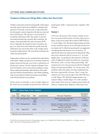 April 2018 in “Dermatologic Surgery”
 A new surgical technique using vellus hair grafts effectively treated vitiligo without causing unwanted hair growth.
 February 2018 in “Egyptian Journal of Radiation Sciences and Applications”
 Patients with Discoid Lupus Erythematosus have lower vitamin D and antioxidant levels and higher oxidative stress.
Dermoscopy is useful for diagnosing hair loss patterns in dogs.
 January 2017 in “International journal of clinical & experimental dermatology”
 Eating a balanced diet with vitamins, micronutrients, and antioxidants is important for hair health and can help with hair loss.
 January 2017 in “Lasers in Surgery and Medicine”
 The 2017 issue emphasized progress in laser and energy-based skin treatments, but noted the need for more research on certain procedures and technologies.
 January 2017 in “Clinical & medical biochemistry”
 Certain gene variations in AKT2 are more common in women with PCOS and are linked to higher levels of specific hormones and symptoms.
 August 2016 in “Journal of Investigative Dermatology”
 DHT reduces a cell's ability to promote hair growth, while 3D culture without DHT improves it.
 August 2016 in “Journal of Investigative Dermatology”
 Researchers found a new genetic mutation linked to a hair condition in a Japanese boy.
 August 2016 in “Journal of Investigative Dermatology”
 The endocannabinoid system affects oil production and inflammation in skin cells.
 August 2016 in “Journal of Investigative Dermatology”
 Zinc deficiency disrupts hair growth and cycle, but zinc supplements can fix this.
 August 2016 in “Journal of Investigative Dermatology”
 The research found that certain microRNAs are important for human hair growth and health.
 July 2016 in “American Journal of Dermatopathology”
 The meeting showcased rare skin disease cases, highlighting the need for accurate diagnosis and treatment.
 April 2016 in “Journal of The American Academy of Dermatology”
 Ixekizumab is effective and safe for patients who did not improve with etanercept treatment for psoriasis.
 April 2016 in “Journal of The American Academy of Dermatology”
 The study found that severe alopecia areata affects any age, treatments often give temporary results, and some factors predict worse outcomes.
 April 2016 in “Journal of The American Academy of Dermatology”
 People with certain allergic conditions or higher white blood cell counts have more severe hair loss, and treating hair and nail side effects early in melanoma therapy can improve quality of life.
 March 2016 in “Journal of the European Academy of Dermatology and Venereology”
 The April 2016 JEADV issue covered various dermatology topics, including psoriasis, psoriatic arthritis, mTOR inhibitors, autoimmune diseases, photodynamic therapy, viral DNA in skin diseases, chronic hand eczema, and female hair loss.
 January 2016 in “International journal of reproduction, contraception, obstetrics and gynecology”
 A certain gene variation is linked to a higher risk of polycystic ovarian syndrome in South Indian women.
Forensic hair analysis for drugs is now more reliable and accurate.
 December 2015 in “University of Birmingham Institutional Research Archive (University of Birmingham)”
 AKR1C3 could be a treatment target for metabolic issues in PCOS.
 September 2015 in “International Journal of Dermatology”
 Skin diseases are common in HIV patients and could help detect HIV early in Ethiopia.
 August 2015 in “Free Radical Biology and Medicine”
 The document concludes that the discussed biological mechanisms and potential therapies are not related to hair loss or hair growth.
 April 2015 in “Plastic and Reconstructive Surgery”
 Activating TLR3 helps improve skin and hair follicle regeneration after wounds.