7 citations
,
May 2022 in “Indonesian Journal of Science and Technology” Compounds from Etlingera alba may help treat Triple Negative Breast Cancer.
 January 2011 in “Journal of Human Genetics”
 A Japanese patient with a rare genetic disorder had a less severe case than others, suggesting other factors may affect symptoms.
2 citations
,
September 2016 in “Journal of Dermatological Science” Reduced TRPS1 leads to increased STAT3 and SOX9 in hair follicles, affecting hair growth.
Combining ATRA with TPO-RA effectively stabilizes platelet counts in ITP patients.
13 citations
,
May 2019 in “Archives of dermatological research” Tranexamic acid reduces skin aging more in female mice.
 April 2018 in “The journal of investigative dermatology/Journal of investigative dermatology”
 Biotrinine® may be an effective treatment for chronic hair loss.
28 citations
,
December 2001 in “European Journal of Pharmacology” M50054 may help treat hepatitis and hair loss from chemotherapy.
9 citations
,
January 2013 in “PubMed” Dihydrotestosterone might cause migraines, and finasteride could help reduce them.
 60 citations
,
August 2008 in “Human molecular genetics online/Human molecular genetics”
60 citations
,
August 2008 in “Human molecular genetics online/Human molecular genetics” A position effect on the TRPS1 gene causes excessive hair growth in humans and mice.
7 citations
,
May 2015 in “Journal of biological chemistry/The Journal of biological chemistry” Different ligands change the shape of the TRPV3 ion channel in unique ways.
 2 citations
,
August 2008 in “Journal of Liaquat University of Medical & Health Sciences”
2 citations
,
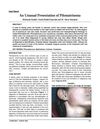
August 2008 in “Journal of Liaquat University of Medical & Health Sciences” A painless cheek lump was misdiagnosed but found to be a rare, benign skin lesion called pilomatrixoma, treatable by surgery.
 8 citations
,
December 2018 in “Journal of Dermatological Treatment”
8 citations
,
December 2018 in “Journal of Dermatological Treatment” The PRP-like cosmetic with biomimetic peptides is potentially effective and safe for treating alopecia areata.
September 2017 in “Journal of Investigative Dermatology” LRIG1 protein affects hair growth by regulating skin receptors, leading to hair loss when overexpressed.
 13 citations
,
February 2020 in “Journal of the American Academy of Dermatology”
13 citations
,
February 2020 in “Journal of the American Academy of Dermatology” Microneedling and oral tranexamic acid both improve facial melasma, but microneedling shows more sustained benefits.
 1 citations
,
April 2021 in “Journal of Investigative Dermatology”
1 citations
,
April 2021 in “Journal of Investigative Dermatology” Activating TRPA1 reduces scarring and promotes tissue regeneration.
14 citations
,
March 2023 in “Bioengineering” Standardized PRP is effective for tendinopathies, with most patients improving after one injection.
 March 2025 in “Journal of Science Natural Science”
 Acetyl tetrapeptide-3 was successfully made for use in hair loss treatments.
52 citations
,
May 2006 in “Journal of Structural Biology” Keratin-associated proteins help link filaments and affect keratin's strength.
 June 2024 in “Archives of dermatological research”
 Both treatments work, but Minoxidil 0.5% MMP® is better for certain scalp areas and less advanced hair loss.
 March 2026 in “Cosmetics”
 Using enzymes with laser hair removal may reduce unwanted hair growth better than laser alone.
 5 citations
,
June 2019 in “British Journal of Dermatology”
5 citations
,
June 2019 in “British Journal of Dermatology” Tofacitinib was more effective than apremilast in treating hair loss in a mouse model of alopecia areata.
 April 2016 in “Journal of Investigative Dermatology”
 A peptide known for reducing wrinkles also effectively inhibits an enzyme linked to skin inflammation and acne.
November 2024 in “Journal of Investigative Dermatology” ATP-sensitive potassium channels are important for hair growth.
 December 2023 in “Sains Malaysiana”
 The enzyme Rand protease works well for leather dehairing and its stability is important, with Leu75 playing a key role.
July 2024 in “Journal of Investigative Dermatology” PRP preparation partially activates platelets, causing varied growth factor release.
 September 2023 in “bioRxiv (Cold Spring Harbor Laboratory)”
 FOL-026 peptide can help repair blood vessels and promote growth, offering potential treatment for vascular diseases.
 January 2025 in “Biomedical Reports”
 Telitacicept helped stabilize complement levels in a patient with lupus and thyroid cancer.
93 citations
,
May 2002 in “Journal of Investigative Dermatology” Overexpressing thrombospondin-1 in mice skin prevents UVB-induced skin damage.
1 citations
,
April 2015 in “InTech eBooks” RAGE is a potential target for melanoma treatment, but its effectiveness is uncertain due to variable expression levels.
44 citations
,
January 1984 in “Molecular and Cellular Biochemistry”