 April 2018 in “Journal of Investigative Dermatology”
 IL-9 increases skin cell movement but decreases their ability to invade, and this effect is controlled by cell contractility, not by MMPs.
 September 2017 in “Journal of Investigative Dermatology”
 Aging causes sweat glands to shrink and move upward, leading to less elastic skin and more wrinkles.

Wound healing involves three phases and various cells and factors, with scars typically forming in adults. Chronic wounds can occur due to various issues, and abnormal scarring can lead to hypertrophic or keloid scars. Emerging research areas include the role of proteins, microRNAs, macrophage manipulation, and stem cell treatment.
 September 2016 in “Journal of dermatological science”
 The OVOL1-OVOL2 axis is important for hair follicle differentiation and can help diagnose certain hair-related tumors.
 January 2016 in “SpringerBriefs in bioengineering”
 Genetic defects and UV radiation cause skin damage and aging.
NuMA-microtubule interactions are vital for proper skin structure formation and function.
December 2015 in “아시안뷰티화장품학술지” Green tea's EGCG has various health benefits, including antioxidant properties, skin protection, cancer cell growth inhibition, anti-inflammatory effects, fat breakdown, detoxification, diabetes management, hair growth stimulation, and prevention of gum disease.
January 2015 in “프로그램북(구 초록집)” Korean Red Ginseng may help prevent hair loss from chemotherapy.
 March 2014 in “Journal of The American Academy of Dermatology”
 Reflectance confocal microscopy can noninvasively diagnose onychomatricoma by showing unique features different from healthy nails or nail fungus.
January 2014 in “Международный журнал прикладных и фундаментальных исследований” Zinc affects hair growth and may be linked to hair loss.
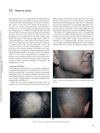 April 2012 in “Informa Healthcare eBooks”
 Alopecia areata is a common autoimmune condition causing varying hair loss, diagnosed by specific patterns of inflammation around hair follicles, with several treatment options available.
 November 2011 in “APMIS. Acta pathologica, microbiologica et immunologica Scandinavica./APMIS”
 Polyomavirus A2 infection in newborn mice caused hair follicle tumors.
June 2008 in “Experimental Dermatology” 17-beta estradiol and prednisolone may help regrow hair damaged by chemotherapy.
 January 2007 in “Sen'i Gakkaishi”
 Mf-rich hair degrades more than Ma-rich hair, especially with Proteinase K.

Hair coloring and bleaching can permanently break down hair protein and temporarily change its properties.
Chemical treatments weaken hair's thermal stability and structure.
August 2005 in “The Journal of Cell Biology” Sgk3 kinase is essential for normal hair growth in mice.
January 2002 in “Basic medical sciences and clinics” Hair follicle stem cells are crucial for hair growth and renewal.
DHT, not testosterone, mainly affects hair growth and related conditions.
September 2022 in “Journal of Theoretical Biology” Hair follicles can regenerate after radiation damage but not during a specific growth phase.
1235 citations
,
December 2013 in “Nature” Two fibroblast types shape skin structure and repair differently.
990 citations
,
October 1999 in “Development” Activated LEF/TCF complexes are crucial for hair development and cycling.
 480 citations
,
August 2014 in “Nature Biotechnology”
480 citations
,
August 2014 in “Nature Biotechnology” Changing the environment around stem cells could help tissue repair, but it's hard to be precise and avoid side effects.
 466 citations
,
August 2004 in “Journal of the American Academy of Dermatology”
466 citations
,
August 2004 in “Journal of the American Academy of Dermatology” Rosacea is a skin condition with unclear causes, classified into four subtypes.
 363 citations
,
March 2017 in “Nature Communications”
363 citations
,
March 2017 in “Nature Communications” Stem cells help heal wounds by rapidly dividing and migrating to the wound edge.
 341 citations
,
November 2009 in “The FASEB Journal”
341 citations
,
November 2009 in “The FASEB Journal” Calreticulin has roles in healing, immune response, and disease beyond its known functions in the endoplasmic reticulum.
305 citations
,
December 2000 in “The EMBO Journal” Inhibiting Bmp signaling disrupts hair growth and differentiation.
263 citations
,
February 2020 in “International journal of molecular sciences” ADSCs help in wound healing and skin regeneration but need more research for full understanding.
 262 citations
,
May 2017 in “Nanomedicine”
262 citations
,
May 2017 in “Nanomedicine” New nanofiber technology improves wound healing by supporting cell growth and delivering treatments directly to the wound.
 238 citations
,
March 2013 in “Development”
238 citations
,
March 2013 in “Development” Fat cells help recruit healing cells and build skin structure during wound healing.