September 2017 in “Journal of Investigative Dermatology” RCS-01 is safe and may help rejuvenate aging skin.
 April 2017 in “Plastic and reconstructive surgery. Global open”
 Fetal scalp cells have more regenerative genes than adult cells, and decellularized muscle matrix is better for muscle repair than commercial alternatives.
April 2017 in “Plastic & Reconstructive Surgery Global Open” Hyaluronan from Has2 is important for proper wound healing and hair follicle development.
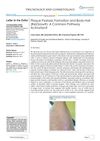 March 2017 in “Trichology and cosmetology:”
 Psoriasis treatment may affect body hair growth, with a complex relationship between skin and hair growth mechanisms.
January 2017 in “DR-NTU (Nanyang Technological University)” Keratin sponges are as biocompatible as collagen, but keratin gels are slightly less so.
December 2016 in “Experimental and Molecular Pathology” Mus pahari mice have fragile skin due to abnormal collagen and elastin.
 August 2016 in “The journal of investigative dermatology/Journal of investigative dermatology”
 The hexosamine pathway helps protect skin cells from stress and may improve skin and hair health.
 August 2016 in “Journal of Investigative Dermatology”
 Human hair follicles have a scent receptor that can influence hair growth.
 April 2016 in “Journal of The American Academy of Dermatology”
 A child on life support experienced rapid hair loss due to severe illness affecting hair growth.
April 2016 in “Journal of Investigative Dermatology” Iron deficiency causes hair loss by affecting hair differentiation and cycling.
 April 2016 in “Journal of Investigative Dermatology”
 Autophagy, a cell recycling process, is crucial for prolonged hair growth and could be a potential target for treating hair growth disorders.
 April 2016 in “Journal of Investigative Dermatology”
 Scientists have found a way to grow hair follicles from human cells in a lab, which could help treat hair loss and skin damage.
 April 2016 in “Journal of Investigative Dermatology”
 Lymphoid-specific helicase (Lsh) is crucial for skin growth, change, and healing after injury.
February 2016 in “Seoul National University Open Repository (Seoul National University)” Photodynamic therapy can temporarily remove nonpigmented hair but is less effective than lasers for black hair.
January 2016 in “프로그램북(구 초록집)” Hormones and neuropeptides affect hair growth, with androgens having opposite effects on beard and scalp hair.
 January 2016 in “Springer eBooks”
 New materials and methods could improve skin healing and reduce scarring.
 December 2015 in “Focus on catalysts”
 Pomiferin may improve skin and scalp health by boosting important protein expression.
Nipple area expansion in mice needs both pregnancy hormones and mechanical strain.
The document concludes that current hair loss treatments have limitations and suggests researching new treatments targeting different factors of hair loss.
 January 2015 in “Dermatology online journal”
 A man with total hair loss also developed a rare nail condition, likely due to autoimmune issues.
New bio-ink can print complex tissues and organs.
January 2014 in “International Journal of Dermatology and Venereology” A man with hair loss and a scalp lump was diagnosed with a diffuse neurofibroma but chose not to have surgery.
 January 2014 in “Pathology”
 The document concludes that understanding nail anatomy is key for diagnosing nail diseases, early signs of nail melanoma may allow for less aggressive treatment, and specific genetic mutations are important in thyroid cancer prognosis and treatment.
January 2014 in “Journal of Central South University(Science and Technology)” PPCM microspheres can effectively release finasteride over 42 days.
Oxidized hair can naturally regain strength and stability over six months.
Granzyme B accelerates skin aging and impairs healing by breaking down important skin components.
Wound healing is complex and requires more research to enhance treatment methods.
 January 2012 in “Elsevier eBooks”
 New treatments for skin and hair repair show promise, but further improvements are needed.

Type II spiral ganglion neurites avoid high concentrations of laminin and fibronectin.
June 2010 in “European Journal of Cancer Supplements” Senescent fibroblasts can help start tumors in normal skin cells.