 2 citations
,
April 2008 in “Journal of Dispersion Science and Technology”
2 citations
,
April 2008 in “Journal of Dispersion Science and Technology” Shampoos with more than 0.6% of cationic minoxidil particles can promote hair growth.
January 2002 in “Analecta malacitana: Revista de la Sección de Filología de la Facultad de Filosofía y Letras” Minoxidil is a popular hair growth treatment, but how it works isn't fully understood.
 26 citations
,
August 2018 in “Dermatologic Therapy”
26 citations
,
August 2018 in “Dermatologic Therapy” Minoxidil helps treat pattern hair loss in both men and women.
 40 citations
,
January 2018 in “Pharmaceutics”
40 citations
,
January 2018 in “Pharmaceutics” Eucalyptol and oleic acid in nanoemulsions improve minoxidil delivery to hair follicles, potentially enhancing hair loss treatment.
1 citations
,
January 2025 in “World Journal of Emergency Medicine” Minoxidil can cause unexpected heart problems like chest pain.
3 citations
,
March 2022 in “Archives of Dermatological Research”  July 1987 in “Reactions (Auckland)”
 Oral minoxidil may slow male pattern baldness and cause body hair growth, but hair loss can happen after stopping it.
 May 2026 in “Zenodo (CERN European Organization for Nuclear Research)”
 Minoxidil can help grow facial hair, but more proof is needed.
January 2026 in “International Journal of Biological Macromolecules” The hydrogel improves hair growth treatment by enhancing drug delivery and promoting follicle repair.
 April 2023 in “Actas Dermo-Sifiliográficas”
 Low doses of oral minoxidil, a hair loss treatment, can cause temporary morning swelling around the eyes, but it's not serious and can disappear with continued use or dose adjustment.
 16 citations
,
January 1986 in “Dermatology”
16 citations
,
January 1986 in “Dermatology” Using minoxidil lotion for hair regrowth in androgenetic alopecia has limited success and should be evaluated carefully.
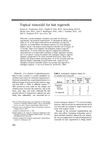 80 citations
,
September 1984 in “Journal of The American Academy of Dermatology”
80 citations
,
September 1984 in “Journal of The American Academy of Dermatology” 5% minoxidil helps hair regrowth in androgenic alopecia.
2 citations
,
May 2022 in “Journal of Industrial and Engineering Chemistry” Minoxidil-loaded nanoparticles effectively promote hair regrowth and are safe for use.
September 2022 in “Zenodo (CERN European Organization for Nuclear Research)” MaasaLong may improve male health, but consult a doctor before use.
November 2025 in “Skin Appendage Disorders” Combining triamcinolone microinjections with minoxidil improves hair growth in women more than minoxidil alone.
November 2025 in “Journal of Investigative Dermatology” Minoxidil helps hair growth by improving blood vessel function.
 July 1995 in “Journal of Dermatological Science”
 Cyclosporine starts hair growth faster, while minoxidil makes it last longer.
 May 2026 in “Journal of the American Academy of Dermatology”
 Sublingual minoxidil safely increases hair growth in transgender people on testosterone therapy.
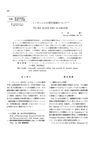 1 citations
,
January 1992 in “Juntendō Igaku/Juntendo igaku”
1 citations
,
January 1992 in “Juntendō Igaku/Juntendo igaku” Minoxidil promotes hair growth by increasing blood flow and directly affecting hair follicles.
 September 2023 in “Medicine”
 Herbal extract spray improved hair growth in a man with hair loss.
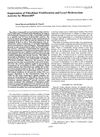 63 citations
,
September 1987 in “Journal of Biological Chemistry”
63 citations
,
September 1987 in “Journal of Biological Chemistry” Minoxidil slows fibroblast growth and collagen production, potentially treating keloids, hypertrophic scars, and connective tissue disorders.

Topical minoxidil significantly boosts nail growth and is safe.
 112 citations
,
October 2005 in “Mayo Clinic Proceedings”
112 citations
,
October 2005 in “Mayo Clinic Proceedings” Minoxidil and finasteride can slow hair loss and stimulate regrowth, but won't restore all lost hair or reverse complete baldness.
January 2023 in “Revista Ibero-Americana de Humanidades, Ciências e Educação” Combining Finasteride and Minoxidil effectively treats hair loss in middle-aged men.
 March 2026 in “Journal of Pakistan Association of Dermatologists”
 Low-dose oral minoxidil is more effective and convenient for treating male pattern baldness than topical minoxidil.
Minoxidil helps hair grow and stand up.
November 2025 in “The Journal of Dermatology” Minoxidil helps hair regrow faster in stress-related hair loss.

Topical minoxidil significantly boosts nail growth and is safe.
 1 citations
,
January 2001 in “Cosmetics and toiletries”
1 citations
,
January 2001 in “Cosmetics and toiletries” Procyanidin B-2 from apple juice significantly increases hair growth and may be more effective than minoxidil without side effects.
March 2021 in “Berkala Ilmu Kesehatan Kulit dan Kelamin” The best treatment for male pattern baldness is a combination of topical minoxidil and oral finasteride.