May 2010 in “Europe PMC (PubMed Central)” Near-infrared probes can safely and effectively image cysteine protease activity for disease diagnosis.
May 2023 in “International journal of molecular sciences” The ABCA4 gene protects hair follicle stem cells from toxic vitamin A byproducts.
 24 citations
,
November 2008 in “Arquivos Brasileiros de Endocrinologia & Metabologia”
24 citations
,
November 2008 in “Arquivos Brasileiros de Endocrinologia & Metabologia” Four patients with a type of rickets and hair loss had different mutations in their vitamin D receptor gene, causing it to not work properly.
 7 citations
,
January 2018 in “Neurodegenerative Diseases”
7 citations
,
January 2018 in “Neurodegenerative Diseases” Researchers found a new ABCD1 gene mutation linked to a rare brain and nerve disorder with unusual brain changes.
January 1999 in “Praxis sociológica” Melanocyte stem cells can become melanoma, resembling human melanoma.
 February 2026 in “Nano Research”
 A special treatment speeds up chronic wound healing by fixing cell energy issues and reversing aging in cells.
January 2022 in “Mammalian Genome” The wavy coat in NCT mice is caused by multiple genes, including a mutation in the Prss53 gene.
3 citations
,
August 2024 in “The Journal of Cell Biology” Actin filaments help stabilize and reshape cell membranes.
 1 citations
,
November 2020 in “International Journal of Dermatology”
1 citations
,
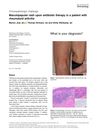
November 2020 in “International Journal of Dermatology” Methotrexate caused a rare skin rash in a rheumatoid arthritis patient, which resolved after stopping the drug.
2 citations
,
October 2023 in “PubMed” Scientists created a cell model to study and find treatments for a skin disease called RDEB.
6 citations
,
October 2001 in “British Journal of Ophthalmology” Intralesional cidofovir may be a viable treatment for conjunctival lesions in Melkersson-Rosenthal syndrome without systemic toxicity.
 November 2021 in “Research Square (Research Square)”
 MRI can enhance the quality and effectiveness of certain stem cells.
 2 citations
,
August 2023 in “Development”
2 citations
,
August 2023 in “Development” Hair follicles in the back of the rosette fancy mouse have reversed orientations due to a gene mutation.
 1 citations
,
January 2013 in “MedChemComm”
1 citations
,
January 2013 in “MedChemComm” PF-05314882 selectively activates androgen receptors without much effect on prostate and may help in prostate cancer treatment and hair loss prevention.
25 citations
,
September 2005 in “Journal of the American Academy of Dermatology” Rapp-Hodgkin syndrome, AEC, and EEC are different expressions of the same genetic disorder caused by TP63 gene mutations.
 2 citations
,
November 2017 in “PloS one”
2 citations
,
November 2017 in “PloS one” Some vitamin D analogs can thicken skin and reduce pore size like a common acne treatment, with one analog also affecting skin growth factors.
 May 2025 in “Cellular Oncology”
 Blocking both P-cadherin and c-Met can effectively stop head and neck cancer growth.
19 citations
,
January 1962 Carruthers' work advances understanding of skin biochemistry but needs clearer interpretation and more discussion on certain topics.
 January 2021 in “Research Square (Research Square)”
 150 kHz electromagnetic radiation may improve polycystic ovary condition in rats.
 June 2026 in “Digital Commons - PCOM (Philadelphia College of Osteopathic Medicine)”
 Mitoquinone protects heart cells from doxorubicin damage and slightly boosts its effect on prostate cancer cells.
 6 citations
,
January 2011 in “Journal of pediatric endocrinology & metabolism/Journal of pediatric endocrinology and metabolism”
6 citations
,
January 2011 in “Journal of pediatric endocrinology & metabolism/Journal of pediatric endocrinology and metabolism” An 11-year-old Greek girl was diagnosed with a rare genetic disorder, highlighting the importance of genetic testing and family history.
 October 2021 in “Dermatology reports”
 The care model improved timely diagnosis and treatment for psoriasis and psoriatic arthritis.
 August 2019 in “Reactions Weekly”
 Daclizumab may cause psoriasis-like skin problems in multiple sclerosis patients.

RCVS should be considered in thunderclap headaches, and MRA and DSA are better for diagnosis than CT angiogram.
15 citations
,
August 2022 in “The Application of Clinical Genetics” ABCD1 gene mutations cause adrenomyeloneuropathy, leading to symptoms like limb weakness and spasticity, with management focusing on rehabilitation and spasticity treatment.
November 2025 in “ACS Nano” The microreactor effectively fights antibiotic-resistant infections and promotes tissue healing.
5 citations
,
December 2023 in “Current Biology” A feedback loop between LRH and RSL4 controls root hair growth in Arabidopsis.
 January 2025 in “American Journal of Stem Cells”
 Melanocyte stem cells hold promise for skin regeneration and treating pigmentation issues.
January 2009 in “ScholarlyCommons (University of Pennsylvania)” The P133R mutation in AKR1D1 enzyme causes harmful bile acid buildup, explaining related health issues.
 28 citations
,
October 2004 in “Differentiation”
28 citations
,
October 2004 in “Differentiation” A gene deletion causes the "hairless" trait in Iffa Credo rats.