4 citations
,
February 2015 in “PubMed” The emu oil emulsion with minoxidil was better at promoting hair growth than the commercial product.
November 2025 in “Journal of Sleep Research” Iron levels are linked to sleep apnea severity, especially in women with hair loss.
Granzyme B accelerates skin aging and impairs healing by breaking down important skin components.
 August 2016 in “Journal of Investigative Dermatology”
 Different levels of microRNAs in different parts of the scalp can cause male pattern baldness.
 81 citations
,
February 2000 in “Anti-cancer drugs”
81 citations
,
February 2000 in “Anti-cancer drugs” Doxil showed some effectiveness against advanced prostate cancer but caused severe side effects at higher doses.
 July 2022 in “The journal of investigative dermatology/Journal of investigative dermatology”
 A patient with a PLEC mutation has epidermolysis bullosa, muscular dystrophy, and myasthenia gravis, which improved with steroid treatment.
April 2017 in “Journal of Investigative Dermatology” Deleting Crif1 in mouse skin disrupts skin balance and hair growth.
 66 citations
,
December 2014 in “Nature Communications”
66 citations
,
December 2014 in “Nature Communications” Fibroblasts can be turned into melanocytes for potential skin treatments.
18 citations
,
April 1998 in “MIT Press eBooks” DMG-Na may improve blood flow and help hair growth without side effects.
Diphenyl cresyl phosphate has low toxicity but can harm the liver, kidneys, adrenal glands, and testicles at high doses.
92 citations
,
September 2013 in “Journal of Investigative Dermatology” BMAL1 and Period1 genes can influence human hair growth.
65 citations
,
February 2011 in “Molecular cancer therapeutics” CCT128930 is a promising new drug that effectively targets and inhibits a cancer-related protein, showing potential for cancer treatment.
 1 citations
,
November 2002 in “Journal of dermatology”
1 citations
,
November 2002 in “Journal of dermatology” The antibody created from BCC tissues reacts similarly to both BCC and hair follicles, suggesting BCC may come from hair follicle cells.
 10 citations
,
March 2014 in “Scandinavian journal of clinical and laboratory investigation”
10 citations
,
March 2014 in “Scandinavian journal of clinical and laboratory investigation” Malondialdehyde-modified DNA may trigger an immune response in alopecia areata patients.
5 citations
,
January 2000 Pododermatitis in farmed mink is likely caused by an unknown infectious agent with secondary bacterial infection.
 April 2023 in “The journal of investigative dermatology/Journal of investigative dermatology”
 Blocking a key energy pathway in human hair follicles can trigger stress responses that stop cell growth.
50 citations
,
November 1984 in “Journal of Heredity” Lethal-milk mice produce zinc-deficient milk, causing health issues in pups unless supplemented with zinc.
November 2004 in “Oncology Times” Advocacy groups should avoid marketing partnerships that may imply drug endorsements.
 July 2022 in “The journal of investigative dermatology/Journal of investigative dermatology”
 MPZL3 protein helps keep sebaceous gland size and cell growth in check.
April 2020 in “Journal of the Endocrine Society” Type 3 acromegaly patients have more health issues and higher death risk.
11 citations
,
November 2015 in “Carcinogenesis” Deleting TNFα gene reduces skin cancer risk in certain mice.
4 citations
,
October 2021 in “Journal of Clinical Medicine” Carriers of a specific gene mutation have subtle skin changes without visible symptoms.
35 citations
,
October 2002 in “Biochemical and Biophysical Research Communications” The research cloned keratin 7 genes from humans, mice, and marsupials, found similarities between human and mouse genes, and discovered new areas of K7 expression in mice.
Mycophenolate mofetil is a good alternative for autoimmune hepatitis patients who can't tolerate azathioprine.
11 citations
,
October 2007 in “Journal of Investigative Dermatology” Mutations in the Sgk3 gene cause fuzzy hair in mice.
8 citations
,
December 2022 in “Journal of Translational Medicine” WNMFDDA effectively predicts drug-disease associations.
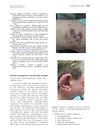
A 72-year-old man was diagnosed with a rare skin form of Rosai-Dorfman disease after years of misdiagnosis.
 24 citations
,
May 2013 in “Drug Design Development and Therapy”
24 citations
,
May 2013 in “Drug Design Development and Therapy” Multimodal minoxidil microemulsion is more effective in treating hair loss than minoxidil alone.
 14 citations
,
January 2016 in “Experimental and molecular pathology”
14 citations
,
January 2016 in “Experimental and molecular pathology” Giving immune serum from vaccinated mice to mice without T cells prevents infection and tumor growth.