 9 citations
,
January 2017 in “Elsevier eBooks”
9 citations
,
January 2017 in “Elsevier eBooks” Skin's epithelial stem cells are crucial for repair and maintenance, and understanding them could improve treatments for skin problems.
A young athlete's fragile hair condition improved by cutting hair and using gentle shampoo.
October 2024 in “Applied Sciences” Cell growth improved the strength of 3D bioprinted structures.
 286 citations
,
April 2009 in “The journal of neuroscience/The Journal of neuroscience”
286 citations
,
April 2009 in “The journal of neuroscience/The Journal of neuroscience” TRPA1 is crucial for mechanical sensitivity in skin sensory neurons.
16 citations
,
November 2018 in “The journal of pain/Journal of pain” 14,15-EET may help reduce poststroke pain by affecting certain brain proteins.
 May 2002 in “British Journal of Dermatology”
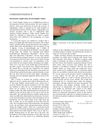
 A pregnant woman's skin condition improved after giving birth, possibly due to high estrogen levels during pregnancy.
11 citations
,
May 2023 in “Proceedings of the National Academy of Sciences” MicroRNA-205 helps hair regrow by making hair follicle stem cells less stiff.
 May 2025 in “Science Advances”
 PIEZO1 helps keep hair follicle stem cells inactive, affecting hair growth.
 August 2025 in “Biomacromolecules”
 The hydrogel dressing improves wound healing, offers long-lasting antibacterial effects, and enhances patient comfort.
 January 2024 in “Wiadomości Lekarskie”
 Kinematic alignment in knee surgery often requires smaller femoral components than mechanical alignment.
 April 2021 in “Journal of Law Public Policies and Human Sciences”
 The described COVID-19 treatments seemed effective in influencing the disease's course, duration, and severity.
 2 citations
,
May 2018 in “Journal of Investigative Dermatology”
2 citations
,
May 2018 in “Journal of Investigative Dermatology” Mice can regrow hair on wounds due to specific cell interactions and mechanical forces not seen in rats.
Human hair can almost fully recover its structure within about 1,000 minutes after being stretched.
7 citations
,
October 2019 in “Frontiers in bioengineering and biotechnology” Fusion proteins can protect hair from heat damage.
 July 2025 in “Scientific Reports”
 Fermented grapeseed oil effectively repairs and protects chemically damaged hair.
March 2021 in “Cell stem cell” Skin cell behavior is influenced by the tightness of nearby cells, affecting their growth and development.
34 citations
,
January 2011 in “Annals of dermatology/Annals of Dermatology” Using a hair dryer at 15 cm with continuous motion causes less damage than natural drying.
10 citations
,
February 2018 in “Royal Society Open Science” Modified wheat protein in shampoo repairs and smooths damaged hair effectively.
91 citations
,
December 2000 in “The journal of cell biology/The Journal of cell biology” Scientists successfully created mouse hair proteins in the lab, which are stable and similar to natural hair.
53 citations
,
July 2016 in “Cosmetics” Future hair cosmetics will be safer and more effective.
7 citations
,
July 2025 in “The Journal of Physiology” C-tactile nerves are sensitive to hair movement.
 1 citations
,
January 2026 in “Frontiers in Cell and Developmental Biology”
1 citations
,
January 2026 in “Frontiers in Cell and Developmental Biology” AI improves biomaterial design by making it faster, cheaper, and more effective for personalized medicine.
1 citations
,
July 2023 in “Pharmaceutics” New microneedles deliver drugs through the skin accurately and effectively.
1 citations
,
August 2018 in “Madridge journal of dermatology & research” The device effectively and safely increased hair growth in people with Androgenetic Alopecia.
 September 2025 in “PubMed”
 Mechanical stimulation and new therapies show promise for hair regrowth.
 February 2025 in “Science Advances”
 Wnt signaling helps regenerate hair follicles by affecting how skin cells sense and respond to mechanical forces.
 April 2024 in “Cosmetics”
 Different oils affect hair flexibility and strength, with their impact varying on whether hair is virgin or bleached.

Peptide hydrogels show promise for healing skin, bone, and nerves but need improvement in stability and compatibility.
 June 2026 in “arXiv (Cornell University)”
 Hair beds in fluid show nonlinear response due to viscosity, inertia, and elasticity.
 19 citations
,
January 2009 in “International review of cell and molecular biology”
19 citations
,
January 2009 in “International review of cell and molecular biology” Hair's strength and flexibility come from its protein structure and molecular interactions.