19 citations
,
February 2016 in “Journal of Biological Chemistry” KCNQ potassium channels help control the sensitivity of touch receptors in the skin.
 October 2025 in “bioRxiv (Cold Spring Harbor Laboratory)”
 Root hair growth slows under force, confirming a model of cell wall mechanics.
July 2025 in “Journal of Investigative Dermatology” Wnt signaling helps regenerate hair follicles in wounds by reducing skin cell sensitivity to mechanical stress.
7 citations
,
July 2025 in “The Journal of Physiology” C-tactile nerves are sensitive to hair movement.
 5 citations
,
March 2023 in “bioRxiv (Cold Spring Harbor Laboratory)”
5 citations
,
March 2023 in “bioRxiv (Cold Spring Harbor Laboratory)” Dynamic, light touch is sensed through a common mechanism involving Piezo2 channels in sensory axons.
1 citations
,
January 2001 in “PubMed” Mechanoreceptors convert physical touch into electrical signals through specialized nerve structures.
 81 citations
,
June 2014 in “Cold Spring Harbor perspectives in medicine”
81 citations
,
June 2014 in “Cold Spring Harbor perspectives in medicine” Skin has specialized touch receptors that can tell different sensations apart.
The transcription factor Meis2 is essential for touch sensation and proper nerve development in touch receptors.
 286 citations
,
April 2009 in “The journal of neuroscience/The Journal of neuroscience”
286 citations
,
April 2009 in “The journal of neuroscience/The Journal of neuroscience” TRPA1 is crucial for mechanical sensitivity in skin sensory neurons.
12 citations
,
March 2022 in “Development” Mechanical forces are crucial in shaping our sensory organs during development.
109 citations
,
November 2011 in “Nature Neuroscience” 13 citations
,
August 2023 in “Developmental Cell” Mechanosensory neurons adapt to different skin types after birth.
63 citations
,
February 2010 in “Journal of Neurophysiology” Microstimulation of certain facial and mouth nerves can evoke specific sensations, while deeper nerves may require multiple stimulations to affect perception.

Meis2 is essential for touch sensation and proper nerve connection to touch receptors in certain skin areas of mice.
660 citations
,
December 2011 in “Cell” Different hair follicles in the skin are innervated by unique combinations of mechanosensory neurons, crucial for touch sensation.
Meis2 is essential for touch sensation and nerve function in mice.
 6 citations
,
September 2021 in “Experimental Brain Research”
6 citations
,
September 2021 in “Experimental Brain Research” Rats have different touch receptors in their paws that help with movement and handling objects.
123 citations
,
November 2003 in “Neuroscience Letters” TRPV4 helps sense pressure in mouse skin.

Mechanical surface cues can control macrophage behavior for better immunotherapy and tissue healing.
1 citations
,
June 2019 in “IEEJ Transactions on Sensors and Micromachines” A new device mimics hair follicle functions and detects tiny forces with high sensitivity.
Sphingosine 1-phosphate helps control mechanical pain.
19 citations
,
November 2014 in “Journal of Comparative Physiology A” Spider joint hair sensilla are adapted to sense movement during walking.
 31 citations
,
November 2016 in “Cell Reports”
31 citations
,
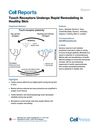
November 2016 in “Cell Reports” Touch sensitivity in mouse skin decreases during hair growth due to changes in touch receptors.
January 2022 in “Social Science Research Network” Potassium channel modulators mostly increase the activity of rat whisker mechanoreceptors.
17 citations
,
January 2024 in “Journal of Materials Chemistry B” Magneto-responsive biocomposites help heal wounds faster and better.
 64 citations
,
November 2012 in “EMBO reports”
64 citations
,
November 2012 in “EMBO reports” Lamins are vital for cell survival, organ development, and preventing premature aging.
 24 citations
,
January 2019 in “Biomaterials Science”
24 citations
,
January 2019 in “Biomaterials Science” The shape of fibrous scaffolds can improve how stem cells help heal skin.
 24 citations
,
May 2016 in “Stem Cell Reviews and Reports”
24 citations
,
May 2016 in “Stem Cell Reviews and Reports” The document concludes that understanding how adult stem and progenitor cells move is crucial for tissue repair and developing cell therapies.
 11 citations
,
August 2014 in “PLoS ONE”
11 citations
,
August 2014 in “PLoS ONE” GFRα2 is essential for controlling neuron size but not for target innervation in certain sensory neurons.
 11 citations
,
September 2011 in “Biochemical journal”
11 citations
,
September 2011 in “Biochemical journal” Neurotrophin-4 increases calcium current in specific mouse neurons through the PI3K pathway.