2 citations
,
July 2018 in “Chinese Journal of Dermatology” Sebaceous nevus changes with age, and dermoscopy and RCM are effective for diagnosis.
 10 citations
,
November 2006 in “Nordicom Review”
10 citations
,
November 2006 in “Nordicom Review” The article concludes that contemporary visual culture emphasizes body modification, yet it also reveals societal denial of this trend.
47 citations
,
April 1978 in “Journal of Cutaneous Pathology” Basal cell epithelioma resembles fetal hair follicles, not adult or fetal skin.
44 citations
,
April 1979 in “Journal of Ultrastructure Research” 24 citations
,
November 2003 in “The FASEB Journal” Epimorphin helps start hair growth in mice.
April 2012 in “Cancer Research” Bone marrow-derived cells can lead to skin inflammation and tumors in mice.
July 2022 in “British Journal of Dermatology”  66 citations
,
December 2014 in “Nature Communications”
66 citations
,
December 2014 in “Nature Communications” Fibroblasts can be turned into melanocytes for potential skin treatments.
4 citations
,
July 1987 in “Dermatologic Clinics” 43 citations
,
April 2010 in “Developmental Biology” Sebaceous glands can form new hair follicles when activated, but hair follicle bulges cannot.
June 2026 in “Indian Dermatology Online Journal” A supernumerary nipple was correctly identified using dermoscopy, avoiding misdiagnosis.
 21 citations
,
June 2010 in “Anais Brasileiros De Dermatologia”
21 citations
,
June 2010 in “Anais Brasileiros De Dermatologia” The document reports the first Brazilian case of a girl with Becker nevus syndrome, characterized by skin changes, breast underdevelopment, and scoliosis.
 January 2025 in “Turkiye Klinikleri Journal of Ophthalmology”
 Pilomatrixoma is a rare, harmless tumor near the eyebrow in kids, best treated with surgery.
 September 2023 in “Curēus”
 A 21-year-old male has a benign skin condition called Becker's nevus, which he chose not to treat.
1 citations
,
January 1999 in “Proceedings of the British Society of Animal Science” Biotin helps maintain hair follicle growth by affecting cell death and survival signals.
 5 citations
,
April 2021 in “Frontiers in Pharmacology”
5 citations
,
April 2021 in “Frontiers in Pharmacology” Using minoxidil-coated microbubbles with ultrasound significantly boosts hair growth.
14 citations
,
August 2013 in “Journal of Parasitology” Mite infestations severely harm the health of endangered Amargosa voles.
 November 2022 in “Animal Bioscience”
 Adding methionine to a low-protein diet helps Angora rabbits grow better fur.
6 citations
,
April 2019 in “Advances in Pharmacology and Pharmacy” Mimosa pudica extract may help create new sedative and anti-anxiety drugs.
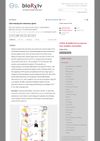 August 2023 in “bioRxiv (Cold Spring Harbor Laboratory)”
 The research found that specific stem cells maintain skin gland openings and that disrupting their activity can cause blockages or early cancer signs, indicating a need for targeted treatments.
8 citations
,
October 2020 in “Stem cell research & therapy” DNMT1 helps turn hair follicle stem cells into fat cells by blocking a specific microRNA.
27 citations
,
February 2003 in “Cell and Tissue Research” FM dyes effectively stain Merkel cells for long-term observation.
5 citations
,
January 2016 in “Hair therapy & transplantation” Miliacin combined with polar lipids boosts hair growth factor production, cell renewal, and increases collagen in hair tissue.
October 2020 in “Plastic Surgery” Bone marrow stem cells improve healing of deep skin wounds.
2 citations
,
February 2025 Merkel cell polyomavirus can infect and persist in skin cells, evading the immune system, but certain treatments can control it.
11 citations
,
June 2001 in “British Journal of Dermatology” c-Myc, Max, and Bin1 help hair follicle cells mature and die.
21 citations
,
November 1969 in “Journal of Investigative Dermatology” A new staining method clearly shows nerves around eyebrow hair follicles.
29 citations
,
July 2003 in “Experimental Dermatology” The upper hair follicle is stable, while the lower part allows movement during hair growth.
1 citations
,
July 2024 in “International Journal of Molecular Sciences” MicroRNA-181a slows sheep hair growth by targeting GNAI2 and affecting a key growth pathway.
1 citations
,
January 2003 Merkel cells likely attract sensory nerve fibers.