 February 2009 in “Springer eBooks”
 Hyperpigmentation is common in pregnancy and may not fully fade after birth; melasma, also frequent, can persist but has limited treatment options during pregnancy.
January 2009 in “The Chinese Journal of Dermatovenereology” Higher doses of Tribulus terrestris extract increase MC-1R expression in mouse hair follicles.
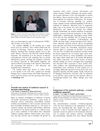 June 2008 in “Experimental dermatology”
 Melatonin protects skin and hair from damage and stress by acting as an antioxidant and influencing cell growth.
Melatonin helps hair grow.
The PI's development is closely linked to skin and hair pigmentation in macaques.
January 2008 in “Linchuang pifuke zazhi” Betamethasone activates and increases the growth of certain skin cells from hair follicles.
Melatonin reduced oxidative damage, inflammation, and protected hair cells in scalded rats.
September 2006 in “Experimental Dermatology” Targeting multiple pathways and understanding genetic mutations are crucial for effective melanoma therapy.
 June 2006 in “Almustansiriya journal of pharmaceutical sciences/Al-Mustansiriyah journal of pharmaceutical sciences”
 Melatonin may help reduce the needed dose of prednisolone and improve hair growth in alopecia areata patients.
 January 2006 in “Yearbook of Dermatology and Dermatologic Surgery”
 Hair graying is caused by the loss of pigment cells due to poor maintenance of stem cells in the hair follicle.
January 2006 in “Chinese Journal of Dermatology” Amelanotic melanocytes from hair follicles are immature and likely don't transfer melanosomes to keratinocytes.
 January 2006 in “Carl von Ossiezky University of Oldenburg”
 Unpigmented keratinocytes absorb substances faster, while melanocytes bind more strongly to melanin.
 August 2005 in “British journal of dermatology/British journal of dermatology, Supplement”
 Melatonin may help treat hair loss and needs more research.
January 2005 in “Enlighten: Publications (The University of Glasgow)” Melanocyte pathology requires keratinocyte hyperplasia and regulation dysfunction.
 September 2004 in “Experimental dermatology”
 Melatonin directly affects mouse hair follicles and may influence hair growth.
 May 2004 in “International Journal of Cosmetic Science”
 Melanogenesis inhibitors like kojic acid and niacinamide can reduce inflammation and pigment production in skin cells.
January 2004 in “Linchuang pifuke zazhi” All-trans retinoic acid helps amelanotic melanocytes in hair follicles develop and produce pigment while reducing their growth.
January 2003 in “Linchuang pifuke zazhi” Melanin granules can be expelled by exocytosis.
Melatonin affects cell growth differently based on its concentration.
January 2002 in “HAL (Le Centre pour la Communication Scientifique Directe)” Melatonin affects fur growth timing in chinchillas.
January 2000 in “HAL (Le Centre pour la Communication Scientifique Directe)” Melatonin boosts hair growth in chinchillas.
April 2023 in “International Journal of Pharmaceutics” Melatonin in a special emulsion can help treat hair loss more effectively.
 April 2004 in “Inpharma Weekly”
 Melatonin helps hair growth in women with hair loss issues.
103 citations
,
April 2005 in “Experimental dermatology” Prostaglandin F2alpha and related compounds can increase hair growth and darken hair in mice.
56 citations
,
December 2010 in “The journal of investigative dermatology/Journal of investigative dermatology” Hair follicle cells age faster and lose pigment due to less catalase, causing hair to turn gray.
43 citations
,
March 2017 in “Drug Design Development and Therapy” The new nanoparticles could improve melanoma treatment by working better than current options.
41 citations
,
July 2016 in “Journal of Investigative Dermatology” Dysplastic nevi have unique gene expressions, making them distinct from common melanocytic nevi.
 37 citations
,
January 2016 in “Australasian Journal of Dermatology”
37 citations
,
January 2016 in “Australasian Journal of Dermatology” Scalp melanomas are more dangerous and often missed, needing earlier detection.
35 citations
,
January 1981  29 citations
,
November 2014 in “Experimental Dermatology”
29 citations
,
November 2014 in “Experimental Dermatology” Injecting alpha-melanocyte-stimulating hormone in mice improved skin healing and reduced scarring.