 January 2026 in “Forum Dermatologicum”
 LED therapy is safe and can help with acne, aging skin, and hair loss, but consumer devices may be less effective.
 March 2024 in “Clinical, cosmetic and investigational dermatology”
 Tofacitinib successfully treated vitiligo in a patient with lupus without side effects.
 April 2021 in “Sohag Medical Journal”
 Alopecia areata is an autoimmune condition causing hair loss, linked to genetic factors and immune system issues, with no cure yet.
 April 2017 in “The journal of investigative dermatology/Journal of investigative dermatology”
 Astrotactin2 affects hair follicle orientation and skin cell polarity.
 April 2016 in “The journal of investigative dermatology/Journal of investigative dermatology”
 The back of the scalp has more nerve fibers than the front, which may explain why some people feel more sensitivity there.

The document discusses how traditional Chinese medicine extracts may affect hair growth in animals but lacks detailed results.

Alopecia areata is an autoimmune disease affecting hair follicles and may harm heart health.
 October 2007 in “Journal of Investigative Dermatology”
 The meeting highlighted the genetic basis of female pattern hair loss and various skin health insights.
 236 citations
,
July 2001 in “Trends in Molecular Medicine”
236 citations
,
July 2001 in “Trends in Molecular Medicine” Future hair loss treatments should aim to extend hair growth, reactivate resting follicles, reverse shrinkage, and possibly create new follicles, with gene therapy showing promise.
 215 citations
,
March 2018 in “Archives of Toxicology”
215 citations
,
March 2018 in “Archives of Toxicology” Tiny pollution particles called PM2.5 can harm skin cells by causing stress, damage to cell parts, and cell death.
 77 citations
,
March 2014 in “Cold Spring Harbor Perspectives in Medicine”
77 citations
,
March 2014 in “Cold Spring Harbor Perspectives in Medicine” Fat cells are important for healthy skin, hair growth, and healing, and changes in these cells can affect skin conditions and aging.
 68 citations
,
December 2014 in “Cell Biochemistry and Function”
68 citations
,
December 2014 in “Cell Biochemistry and Function” Nuclear hormone receptors play a significant role in skin wound healing and could lead to better treatment methods.
 53 citations
,
September 1999 in “The journal of cell biology/The Journal of cell biology”
53 citations
,
September 1999 in “The journal of cell biology/The Journal of cell biology” K16 can partially replace K14 but causes hair loss and skin issues.
 39 citations
,
January 2013 in “Indian Journal of Dermatology, Venereology and Leprology”
39 citations
,
January 2013 in “Indian Journal of Dermatology, Venereology and Leprology” Eating high glycemic foods and drinking milk may worsen acne by increasing insulin and IGF-1 levels.
 35 citations
,
July 2007 in “Dermatologic clinics”
35 citations
,
July 2007 in “Dermatologic clinics” Facial dark spots can be caused by the sun, genetics, makeup, or medicine, and are diagnosed by patient history and skin tests.
 31 citations
,
July 2017 in “Clinical Science”
31 citations
,
July 2017 in “Clinical Science” MicroRNAs are important for skin health and could be targets for new skin disorder treatments.
 18 citations
,
October 2014 in “Experimental Dermatology”
18 citations
,
October 2014 in “Experimental Dermatology” Local skin glucocorticoid production is crucial for healthy skin, and its disruption can lead to skin diseases.
 15 citations
,
July 1999 in “Dermatologic Clinics”
15 citations
,
July 1999 in “Dermatologic Clinics” The document concludes that immune system abnormalities cause alopecia areata, but the exact process is still not completely understood.
 12 citations
,
November 2020 in “Molecules”
12 citations
,
November 2020 in “Molecules” Carvone helps treat skin issues by reducing melanin and stopping harmful cell growth.
 4 citations
,
October 2013 in “Springer eBooks”
4 citations
,
October 2013 in “Springer eBooks” Melatonin receptors, found in many body parts, can help treat various diseases like depression and diabetes due to their effects on inflammation, tumor progression, sleep disorders, and body mass regulation.
 2 citations
,
August 2013 in “Journal of Investigative Dermatology”
2 citations
,
August 2013 in “Journal of Investigative Dermatology” Nuclear shape and chromatin changes affect gene expression in skin cell differentiation.
 1 citations
,
January 2015 in “Journal of nutrition & health”
1 citations
,
January 2015 in “Journal of nutrition & health” Fish oil improves skin health in people with diabetes and high cholesterol.
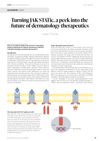 August 2024 in “New Zealand Medical Student Journal”
 JAK inhibitors show promise for treating skin diseases effectively and safely.
 April 2019 in “Journal of Investigative Dermatology”
 DPP4-positive fibroblasts play a major role in producing proteins that lead to skin fibrosis.
 April 2019 in “Journal of Investigative Dermatology”
 Removing REDD1 in mice increases skin fat by making fat cells larger and more numerous.
 April 2019 in “Journal of Investigative Dermatology”
 New vitamin D3 forms need the vitamin D receptor to reduce fibrosis in human cells.
 10 citations
,
September 2020 in “Archives of Dermatological Research”
10 citations
,
September 2020 in “Archives of Dermatological Research” Both methods improve hair density and thickness; double-spin may be more effective.
 3 citations
,
February 2009 in “Journal of The European Academy of Dermatology and Venereology”
3 citations
,
February 2009 in “Journal of The European Academy of Dermatology and Venereology” Sparse hairs below frontal hairline can indicate early male balding.
 September 2017 in “Pediatric Dermatology”
 The document concludes that an experimental drug may help wound healing in Epidermolysis Bullosa, links Hydroa vacciniforme to EBV, discusses diagnosing hair loss disorders, finds many children with eczema have allergies, reviews the safety of a skin medication in children, notes side effects of a Duchenne's treatment, and identifies a marker for pediatric mastocytosis.
 1 citations
,
September 2016 in “Springer eBooks”
1 citations
,
September 2016 in “Springer eBooks” Sebum production varies by individual and is influenced by age, gender, and hormones, affecting skin and hair health.