 June 2003 in “Journal of Investigative Dermatology Symposium Proceedings”
 Advancements in hair biology include new treatments and tools for hair growth and alopecia.
 84 citations
,
July 2003 in “European journal of biochemistry”
84 citations
,
July 2003 in “European journal of biochemistry” Mouse skin can produce and process serotonin, with variations depending on hair cycle, body location, and mouse strain.
 17 citations
,
January 2013 in “Journal of Cosmetics, Dermatological Sciences and Applications”
17 citations
,
January 2013 in “Journal of Cosmetics, Dermatological Sciences and Applications” 3D bioprinting could improve skin repair and treat conditions like vitiligo and alopecia by precisely placing cells.
 2 citations
,
November 1995 in “American Journal of Obstetrics and Gynecology”
2 citations
,
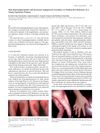
November 1995 in “American Journal of Obstetrics and Gynecology” Taking vitamin B6 corrected a pregnant woman's metabolic disorder, which changed her hair color.
 16 citations
,
January 2008 in “Acta dermato-venereologica”
16 citations
,
January 2008 in “Acta dermato-venereologica” Vitamin B12 deficiency can cause skin darkening and increased blood vessels, but treatment can improve symptoms.
13 citations
,
October 2010 in “Methods in molecular biology” Hair follicle culture helps study cell interactions and effects of substances on tissue growth.
3 citations
,
July 1990 in “PubMed” Human hair follicles can grow and form structures in a collagen gel, useful for studying hair cell growth.
 1 citations
,
January 2008 in “Springer eBooks”
1 citations
,
January 2008 in “Springer eBooks” Hair follicle stem cells can turn into many cell types and may help repair nerve damage and have other medical uses.
 December 2012 in “Journal of dermatological science”
 Langerhans cells and melanocytes migrate to the skin and hair follicles during early human development.
67 citations
,
June 2019 in “Proceedings of the National Academy of Sciences” A new 3D culture system helps grow and study mouse skin stem cells for a long time.
 26 citations
,
May 2014 in “BioEssays”
26 citations
,
May 2014 in “BioEssays” Using neurohormones to control keratin can lead to new skin disease treatments.
 26 citations
,
January 1994 in “Clinics in Dermatology”
26 citations
,
January 1994 in “Clinics in Dermatology” Artificial skin is improving wound healing and shows potential for treating different types of wounds.
 19 citations
,
February 2017 in “Journal of radiation research”
19 citations
,
February 2017 in “Journal of radiation research” High-dose radiation speeds up aging in skin stem cells.
 2 citations
,
May 2017 in “InTech eBooks”
2 citations
,
May 2017 in “InTech eBooks” Stem cells could improve hair growth and new treatments for baldness are being researched.
November 2024 in “Journal of Investigative Dermatology” Secukinumab reduces immune activity in hidradenitis suppurativa skin.
 January 2022 in “bioRxiv (Cold Spring Harbor Laboratory)”
 Skin lesions in Carney complex are likely caused by a specific group of skin cells that promote pigment production due to a genetic mutation.
 May 2021 in “International journal of developmental research”
 Estrogens and progesterone are key in regulating melasma pigmentation.
 12 citations
,
September 2018 in “International Journal of Cosmetic Science”
12 citations
,
September 2018 in “International Journal of Cosmetic Science” Palmitoyl tetrapeptide-20 may help reduce hair greying and increase melanin production.
 184 citations
,
December 2018 in “Nature Communications”
184 citations
,
December 2018 in “Nature Communications” Researchers created human hair follicles using a new method that could help treat hair loss.
 102 citations
,
December 2017 in “The journal of investigative dermatology. Symposium proceedings/The Journal of investigative dermatology symposium proceedings”
102 citations
,
December 2017 in “The journal of investigative dermatology. Symposium proceedings/The Journal of investigative dermatology symposium proceedings” Restoring hair bulb immune privilege is crucial for managing alopecia areata.
41 citations
,
July 2016 in “Journal of Investigative Dermatology” Dysplastic nevi have unique gene expressions, making them distinct from common melanocytic nevi.
 28 citations
,
September 2015 in “Wiener Klinische Wochenschrift”
28 citations
,
September 2015 in “Wiener Klinische Wochenschrift” New skin substitutes for treating severe burns and chronic wounds are being developed, but a permanent solution for deep wounds is not yet available commercially.
 26 citations
,
June 2019 in “The journal of investigative dermatology/Journal of investigative dermatology”
26 citations
,
June 2019 in “The journal of investigative dermatology/Journal of investigative dermatology” Regenerative therapies show promise for treating vitiligo and alopecia areata.
 19 citations
,
May 1992 in “International Journal of Dermatology”
19 citations
,
May 1992 in “International Journal of Dermatology” Some alternative vitiligo treatments show promise, but none are as effective as psoralens and UVA.
 5 citations
,
November 2020 in “Frontiers in Cell and Developmental Biology”
5 citations
,
November 2020 in “Frontiers in Cell and Developmental Biology” The "Two-Cell Assemblage" assay is a new, simple method to identify substances that may promote hair growth.
December 2016 in “Chin J Anat Clin” Rat hair follicle stem cells can be effectively isolated and used for tissue engineering.

Keratin hydrogels from human hair show promise for tissue engineering and regenerative medicine.
 September 2004 in “Experimental dermatology”
 Melatonin directly affects mouse hair follicles and may influence hair growth.
March 1990 in “Journal of Dermatological Science”  September 2017 in “Journal of Investigative Dermatology”
 HIF-1A may aid hair growth, Backhousia citriodora improves skin, autologous cells stabilize hair loss, infrared thermography assesses alopecia, and a new treatment preserves hair.