January 2024 in “Revista da Associação Médica Brasileira” Bald men should protect their scalps from the sun to reduce skin cancer risk.
 April 2016 in “Journal of The American Academy of Dermatology”
 Some blood pressure medications are linked to a higher risk of skin cancer.
 150 citations
,
April 2013 in “Dermato-endocrinology”
150 citations
,
April 2013 in “Dermato-endocrinology” Estrogen therapy can reduce skin aging but has cancer risks.
 128 citations
,
September 2011 in “British Journal of Dermatology”
128 citations
,
September 2011 in “British Journal of Dermatology” Obesity is linked to various skin problems and may increase the risk of skin cancer.
 60 citations
,
September 2013 in “Alimentary Pharmacology & Therapeutics”
60 citations
,
September 2013 in “Alimentary Pharmacology & Therapeutics” Immunosuppressive and anti-TNF therapies in IBD patients can increase the risk of skin cancer and cause various skin issues.
April 2025 in “International Journal of Dermatology” Prostaglandin E2 promotes skin cancer, but certain supplements and drugs may help reduce risk and improve treatment.
2 citations
,
March 1997 in “Veterinary Dermatology” The Doberman had multiple skin tumors, but it's unclear if color dilution increased the risk.
June 2025 in “Albus Scientia” MC1R gene variations affect skin, hair color, UV sensitivity, and melanoma risk.

Melanoma characteristics vary by age, which could help doctors with diagnosis and prevention.
 April 2016 in “JAMA Dermatology”
 Acne is not a key diagnostic feature for PCOS, postadolescent men with acne may have insulin resistance, melanoma patients often have few moles, tumor size in CSCC indicates higher risk of serious outcomes, and hidradenitis suppurativa is linked to higher risk of heart problems and death.
 71 citations
,
February 2006 in “Clinics in Dermatology”
71 citations
,
February 2006 in “Clinics in Dermatology” Pregnancy causes skin changes like darkening, hair thickening, nail changes, and increased risk of skin growths, most of which usually resolve after birth.
 14 citations
,
April 2019 in “PLOS ONE”
14 citations
,
April 2019 in “PLOS ONE” Skin cancer is common in elderly nursing home residents, with risk factors including being male, having light skin, outdoor work history, and smoking. Regular skin checks are recommended.
 4 citations
,
May 2018 in “International Journal of Molecular Sciences”
4 citations
,
May 2018 in “International Journal of Molecular Sciences” The research showed how melanocytes develop, move, and respond to UV light, and their stem cells' role in hair color and skin cancer risk.
 7 citations
,
May 2020 in “Trends in molecular medicine”
7 citations
,
May 2020 in “Trends in molecular medicine” The document concludes that the immune-inhibitory environment of the hair follicle may prevent melanoma development.
 April 2016 in “Journal of Investigative Dermatology”
 SOX4 is crucial for the development of melanoma.
 23 citations
,
January 2015 in “Journal of The American Academy of Dermatology”
23 citations
,
January 2015 in “Journal of The American Academy of Dermatology” People with myotonic dystrophy type 1 have a higher chance of getting skin tumors, including melanoma.
 24 citations
,
December 2011 in “Journal of The American Academy of Dermatology”
24 citations
,
December 2011 in “Journal of The American Academy of Dermatology” Melanoma survivors are more likely to use sunscreen and seek shade than others, but less than half often use sunscreen and avoid the sun, and some still use tanning beds.
 4 citations
,
June 2013 in “The Journal of Rheumatology”
4 citations
,
June 2013 in “The Journal of Rheumatology” The document concludes that various findings in rheumatology offer insights into disease severity, treatment responses, and potential risks in medication, with some limitations due to unspecified participant numbers.
 2 citations
,
December 2019 in “Cureus”
2 citations
,
December 2019 in “Cureus” A patient with a scalp condition and benign skin tumor experienced hair loss and did not improve with treatment, choosing not to have surgery despite a small cancer risk.
 1 citations
,
August 2018 in “Journal of The American Academy of Dermatology”
1 citations
,
August 2018 in “Journal of The American Academy of Dermatology” Patients with melanoma who saw dermatologists and were from higher-income areas were more likely to have follow-up visits, which was linked to lower mortality.
1 citations
,
January 2007 in “Side effects of drugs annual” Dermatological treatments can have significant side effects, including allergic reactions, sexual dysfunction, and increased cancer risk.
June 2025 in “British Journal of Dermatology” Melanocytic matricoma can look like skin cancer but is usually harmless; surgery and follow-up are advised.
 3 citations
,
October 2021 in “Clinical, Cosmetic and Investigational Dermatology”
3 citations
,
October 2021 in “Clinical, Cosmetic and Investigational Dermatology” Scalp melanoma, a deadly skin cancer, is often found late due to its hard-to-see location, especially in older men. Early detection, possible treatments, and the role of hairdressers in spotting it early are discussed. More research is needed to improve detection and treatment.
 8 citations
,
October 2018 in “Journal of the European Academy of Dermatology and Venereology”
8 citations
,
October 2018 in “Journal of the European Academy of Dermatology and Venereology” Mohs micrographic surgery is effective for early-stage non-melanoma skin cancers on the lips, with basal cell carcinoma more common on the upper cutaneous lip and squamous cell carcinoma more common on the lower vermilion lip.
 8 citations
,
June 2016 in “Journal of Cutaneous Pathology”
8 citations
,
June 2016 in “Journal of Cutaneous Pathology” Two women were diagnosed with a rare melanoma that looked like hair loss but was actually a type of skin cancer.
 8 citations
,
January 2011 in “Experimental and Therapeutic Medicine”
8 citations
,
January 2011 in “Experimental and Therapeutic Medicine” Stromal cells in melanoma promote tumor growth and spread.
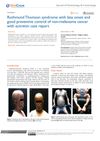 August 2024 in “Journal of Dermatology & Cosmetology”
 Acitretin effectively prevented skin cancer in a patient with late-onset Rothmund-Thomson syndrome.
3 citations
,
November 2022 in “Frontiers in Oncology” Melanin may help melanoma cells grow by aiding their metabolism.
 29 citations
,
April 2019 in “Acta neuropathologica communications”
29 citations
,
April 2019 in “Acta neuropathologica communications” Stopping mitochondrial respiration can prevent brain cancer spread in skin cancer patients, and plant compound β-sitosterol could help achieve this.
June 2025 in “British Journal of Dermatology” The new AI software predicts melanoma outcomes more accurately than traditional methods.