 60 citations
,
September 2013 in “Alimentary Pharmacology & Therapeutics”
60 citations
,
September 2013 in “Alimentary Pharmacology & Therapeutics” Immunosuppressive and anti-TNF therapies in IBD patients can increase the risk of skin cancer and cause various skin issues.
 May 2014 in “Journal of The American Academy of Dermatology”
 Living near more dermatologists and using certain cancer screening tests lowers the chance of being diagnosed with advanced skin cancer.
 20 citations
,
August 2016 in “International Journal of Cancer”
20 citations
,
August 2016 in “International Journal of Cancer” Men with male pattern baldness have a higher risk of certain skin cancers, especially on the scalp.
 25 citations
,
March 2012 in “Journal of Dermatological Science”
25 citations
,
March 2012 in “Journal of Dermatological Science” Genetic variants linked to ten skin diseases were found, showing both immune and non-immune factors play a role.
May 2026 in “Frontiers in Oncology” Alopecia areata may lower melanoma risk and does not increase overall skin cancer risk.
 1 citations
,
April 2016 in “Journal of Investigative Dermatology”
1 citations
,
April 2016 in “Journal of Investigative Dermatology” UV photography can help identify people at higher risk for skin cancer, and male pattern baldness at age 45 is linked to a higher risk of certain skin cancers.
 January 2019 in “Revista Medicina Cutánea Ibero-Latino-Americana”
 Vitamin D is important for skin health and can help improve various skin conditions.
149 citations
,
January 2015 in “Journal of the American Academy of Dermatology” Targeted cancer therapies often cause skin side effects, needing dermatologist care.
 128 citations
,
September 2011 in “British Journal of Dermatology”
128 citations
,
September 2011 in “British Journal of Dermatology” Obesity is linked to various skin problems and may increase the risk of skin cancer.
 21 citations
,
September 2015 in “Journal of the European Academy of Dermatology and Venereology”
21 citations
,
September 2015 in “Journal of the European Academy of Dermatology and Venereology” Yellow and orange colors are important for diagnosing certain skin conditions.
 20 citations
,
July 2013 in “International Journal of Dermatology”
20 citations
,
July 2013 in “International Journal of Dermatology” Obesity increases the risk of skin infections, inflammatory conditions, and melanoma, but not basal cell carcinoma.
 13 citations
,
April 2019 in “Actas Dermo-Sifiliográficas”
13 citations
,
April 2019 in “Actas Dermo-Sifiliográficas” Vitamin D is important for skin health, but more research is needed to understand its full effects and treatment potential.
 12 citations
,
July 2019 in “Acta Neurologica Belgica”
12 citations
,
July 2019 in “Acta Neurologica Belgica” Levodopa for Parkinson's disease might be linked to skin issues like melanoma, but it's unclear if the drug or the disease causes them.
 4 citations
,
January 2012 in “Elsevier eBooks”
4 citations
,
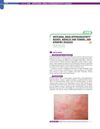
January 2012 in “Elsevier eBooks” The document concludes that various skin conditions have specific treatments, ranging from antihistamines for urticaria to surgery and medication for tumors and chronic skin diseases.
1 citations
,
January 2007 in “Side effects of drugs annual” Dermatological treatments can have significant side effects, including allergic reactions, sexual dysfunction, and increased cancer risk.
 February 2024 in “Journal of the American Academy of Dermatology”
 Vascular patterns in dermoscopy help tell apart malignant and benign skin tumors.
 July 2021 in “Rossiiskii Zhurnal Kozhnykh i Venericheskikh Boleznei”
 Low vitamin D levels are linked to more skin problems.
 April 2016 in “Journal of Investigative Dermatology”
 Male pattern baldness is linked to a higher risk of certain skin cancers, especially on the scalp.
 April 2016 in “JAMA Dermatology”
 Acne is not a key diagnostic feature for PCOS, postadolescent men with acne may have insulin resistance, melanoma patients often have few moles, tumor size in CSCC indicates higher risk of serious outcomes, and hidradenitis suppurativa is linked to higher risk of heart problems and death.
 4 citations
,
June 2013 in “The Journal of Rheumatology”
4 citations
,
June 2013 in “The Journal of Rheumatology” The document concludes that various findings in rheumatology offer insights into disease severity, treatment responses, and potential risks in medication, with some limitations due to unspecified participant numbers.
1 citations
,
October 2007 in “The Cancer Handbook” Malignant melanoma is the deadliest skin cancer, while BCC is the most common but rarely spreads, and SCC is more aggressive than BCC.
COCs can improve acne but may cause skin issues like cholasma; high estrogen is advised for hair loss concerns.
 January 2014 in “Pathology”
 The document concludes that understanding nail anatomy is key for diagnosing nail diseases, early signs of nail melanoma may allow for less aggressive treatment, and specific genetic mutations are important in thyroid cancer prognosis and treatment.
 May 2015 in “Journal of Investigative Dermatology”
 Melanoma risk tools need improvement, a gene mutation causes a hair disorder that might be treated by managing cell stress, a potential therapy for a skin-ear disorder involves blocking cell channels, skin wrinkling may indicate lung aging regardless of smoking, and oxidative stress might contribute to common baldness.
 2 citations
,
January 1998 in “Dermatology”
2 citations
,
January 1998 in “Dermatology” Stopping forehead irritation and using hydrocortisone helped a man's skin, Martinique has lower melanoma rates, a man had an allergy to a specific antifungal, another had unexplained cysts, certain drugs can cause skin reactions without always being interrelated, a link between Fanconi anemia and a skin condition was suggested, high levels of a certain protein may play a role in a type of psoriasis, and there's a need to study the connection between scalp pain and hair loss.
 March 2022 in “JAMA Dermatology”
 In 2021, JAMA Dermatology published significant findings on skin conditions post-COVID vaccination, melanoma surveillance, atopic dermatitis treatments, and confirmed that sun protection does not harm bone health.
 July 2014 in “Plastic and Reconstructive Surgery”
 The document concludes that rib-sparing techniques in breast reconstruction have limited benefits, sentinel lymph node biopsy is needed for desmoplastic melanoma, certain hair preservation methods improve graft survival, partial turbinectomy effectively reduces nasal obstruction, nipple shields with irrigation may reduce capsular contracture, and thicker malignant melanomas have a higher risk of non-skin cancers.
 July 2014 in “Plastic and Reconstructive Surgery”
 The document concludes that rib-sparing techniques in breast reconstruction have limited benefits, sentinel lymph node biopsy is needed for desmoplastic melanoma, certain hair preservation methods improve graft survival, partial turbinectomy effectively reduces nasal obstruction, nipple shields with irrigation may reduce capsular contracture, and thicker malignant melanomas have a higher risk of non-skin cancers.
 November 2011 in “Australasian Journal of Dermatology”
 Cellulite may be linked to low adiponectin, isotretinoin with UVB can treat psoriasis effectively, permanent alopecia post-chemotherapy resembles a unique hair loss, deodorants may cause fragrance allergies, desmoplastic melanoma is becoming more common, and intensive UVB treatment can give long-term psoriasis remission.
 September 2015 in “British Journal of Dermatology”
 Most clinicians follow discharge guidelines, many lupus patients don't use sunscreen regularly, dithranol is effective for psoriasis, biopsy methods should be based on lesion type, voriconazole may raise skin cancer risk, a new scale can help diagnose female hair loss early, and most melanomas may develop from existing moles.