 June 2026 in “International Journal of Drug Delivery Technology”
 Herbal remedies show promise for managing premature hair greying but need more research.

Mechanical surface cues can control macrophage behavior for better immunotherapy and tissue healing.
 April 2026 in “Clinical Journal of Gastroenterology”
 Upadacitinib can cause hypersensitivity that worsens ulcerative colitis symptoms.
 February 2026 in “American Journal of Clinical Dermatology”
 Radiotherapy can cause skin fibrosis, which is often overlooked and needs better treatment and evaluation.

Elderly skin care needs personalized treatment, early intervention, and integrated psychiatric care.
 January 2026 in “Annals of Clinical Endocrinology and Metabolism”
 Restoring NAD⁺ may help with aging and chronic diseases, but more research is needed.
 January 2026 in “The Eurasian Journal of Life Sciences”
 Pectin nanofibers show promise for medical use due to their unique properties.

Autologous platelet concentrates help heal and regenerate dental tissues.
 May 2025 in “The Journal of Rheumatology”
 A woman with skin and joint issues progressed from one type of lupus to another, highlighting the need to recognize complex conditions.
 May 2025 in “The Journal of Rheumatology”
 Chronic granulomatous disease may be linked to developing systemic lupus erythematosus.
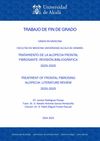
Frontal fibrosing alopecia can be managed with personalized combination therapies, but no cure exists yet.
 November 2024 in “Research for Rural Development/Research for Rural Development (Online)”
 Rosemary essential oil is rich in terpenes and can be effectively extracted and analyzed using environmentally friendly methods, benefiting local economies.
 August 2024 in “Qucosa (Saxon State and University Library Dresden)”
 White fat tissue in the skin helps control inflammation by affecting certain immune cells.

Dexamethasone-primed stem cell media shows promise in treating lupus by reducing symptoms and inflammation.
 April 2024 in “Frontiers in physiology”
 Immune cells are crucial for hair growth and preventing hair loss.
 February 2024 in “Curēus”
 Long COVID is more common in those with severe initial infections, but not linked to blood group.

New insights into cell communication in psoriasis suggest innovative drug treatments.
 January 2024 in “International Journal of Biology Sciences”
 Targeted interventions based on gender, education, and age can improve COVID-19 healthcare responses.
 October 2023 in “Advancement in yoga and physical therapy”
 More research is needed before using brown fat to treat polycystic ovary syndrome.
 October 2023 in “Biomedical science and engineering”
 Innovative methods are reducing animal testing and improving biomedical research.
 September 2023 in “International journal of medicine”
 AI is revolutionizing healthcare by improving diagnosis, treatment, and monitoring, but still needs close supervision.
 January 2023 in “Frontiers research topics”
 Skin conditions can cause significant psychological distress, so addressing mental health is crucial for improving quality of life.
 June 2022 in “Organic communications”
 Natural compounds, especially Withaferin-A, may help treat post-COVID-19 complications, but some may have side effects.

Human hair keratins can be turned into useful 3D biomedical scaffolds through a freeze-thaw process.
 January 2019 in “Advances in stem cells and their niches”
 Skin health and repair depend on the signals between skin stem cells and their surrounding cells.

Accurate diagnosis and timely, tailored treatments improve outcomes in obstetrics and gynecology.
 February 2018 in “Trends in Immunology”
 Skin bacteria can help wound healing by activating certain immune cells.
 March 2015 in “Plastic and reconstructive surgery”
 Human skin has multiple layers and functions, with key roles in protection, temperature control, and appearance.
 March 2014 in “Journal of The American Academy of Dermatology”
 The document lists various dermatology topics, treatments, and diagnostic methods.
 January 2012 in “Human health handbooks”
 Traditional Indian remedies are used for hair health, but more scientific evidence is needed to prove their safety and effectiveness.