 August 2024 in “Dermatology and Therapy”
 Vorasidenib can cause unusual hair growth.
 29 citations
,
April 2013 in “Mycoses”
29 citations
,
April 2013 in “Mycoses” A young man was initially misdiagnosed with a scalp condition but was found to have a fungal infection, which improved with antifungal treatment.
 4 citations
,
August 2017 in “Journal of cutaneous pathology”
4 citations
,
August 2017 in “Journal of cutaneous pathology” An 8-year-old girl had a rare, benign skin tumor on her forehead.
28 citations
,
November 2018 in “American Journal of Medical Genetics Part A” ODC1 gene mutations cause a neurodevelopmental disorder with large head size, hair loss, and facial abnormalities.
34 citations
,
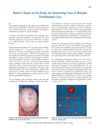
January 1998 in “Archiv für Pathologische Anatomie und Physiologie und für Klinische Medicin” Trichoblastomas may mimic fetal skin development by having many Merkel cells, unlike adult skin.
 5 citations
,
January 2014 in “Journal of Cutaneous and Aesthetic Surgery”
5 citations
,
January 2014 in “Journal of Cutaneous and Aesthetic Surgery” A woman had 13 non-cancerous cysts on her scalp successfully removed in one surgery.
 8 citations
,
January 2007 in “Mycoses”
8 citations
,
January 2007 in “Mycoses” A man's scalp infection, mistaken for bacterial, was actually a rare fungal infection treated successfully with antifungal medication.
6 citations
,
June 2010 in “Dermatologica Sinica” Panfolliculoma is a rare, non-cancerous growth related to hair follicles.
1 citations
,
January 2007 in “The Internet Journal of Dermatology” A rare, harmless skin tumor was found on a man's nose.
16 citations
,
March 1991 in “International Journal of Dermatology” Tinea capitis is rare in healthy adults but should be considered in scalp issues.
8 citations
,
January 2006 in “Dermatology Online Journal” The girl's skin condition is benign but challenging to treat due to its size and location.
 6 citations
,
November 2017 in “Journal of the European Academy of Dermatology and Venereology”
6 citations
,
November 2017 in “Journal of the European Academy of Dermatology and Venereology” A woman got melanoma on her scalp after anti-hair loss treatment with injections.
 28 citations
,
May 1978 in “Archives of dermatology”
28 citations
,
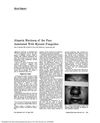
May 1978 in “Archives of dermatology” Alopecia mucinosa on the face can be linked to mycosis fungoides, a type of lymphoma.
33 citations
,
December 1982 in “Developmental Medicine & Child Neurology” Hair-shaft abnormalities can indicate neurological disorders, some of which are treatable.
24 citations
,
August 2007 in “Journal of pediatric surgery” Surgery is not the right treatment for a fungal scalp infection; proper medical treatment is needed.
 1 citations
,
July 2022 in “Dermatology practical & conceptual”
1 citations
,
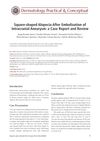
July 2022 in “Dermatology practical & conceptual” Square-shaped hair loss can occur after treating a brain aneurysm due to localized radiation exposure.
 September 2013 in “Science”
 Certain astrocytes can protect the brain and improve recovery after a stroke, and a hair loss drug might reduce cancer spread.
October 2022 in “Amplla Editora eBooks”  1 citations
,
July 2023 in “Clinical case reports”
1 citations
,
July 2023 in “Clinical case reports” Tinea capitis should be considered for scalp infections in infants.
 1 citations
,
March 2020 in “Poster presentations”
1 citations
,
March 2020 in “Poster presentations” SLE patients need careful diagnosis to distinguish infections from disease flares for proper treatment.
 4 citations
,
February 2020 in “Cell & tissue research/Cell and tissue research”
4 citations
,
February 2020 in “Cell & tissue research/Cell and tissue research” Hair follicle stem cells might help treat traumatic brain injury.
 October 2023 in “Indian dermatology online journal”
 The young woman has a benign, hereditary skin condition with no signs of a more serious syndrome.
 1 citations
,
May 2022 in “Голова и шея.”
1 citations
,
May 2022 in “Голова и шея.” p53 protein may help protect or kill neurons under stress.
August 2025 in “Dermatopathology” Pilomatricomas are often linked to genetic syndromes, especially Apert syndrome, and genetic analysis is crucial for diagnosis.
2 citations
,
October 1931 in “Archives of Dermatology and Syphilology” A rare scalp infection in a child developed into a kerion with additional skin symptoms.
January 2003 in “Linchuang pifuke zazhi” A benign skin tumor was removed from a man's leg, and it didn't come back after 9 months.
 April 2016 in “Plastic and reconstructive surgery. Global open”
 Surgery may help infants with sagittal craniosynostosis develop more typical language processing.

A neck lesion misdiagnosed as benign was later treated successfully with Mohs Micrographic Surgery.
3 citations
,
April 2017 in “Medicine” An 11-year-old boy in Saudi Arabia has a rare case of hypoparathyroidism with severe brain calcifications but normal development and no known cause.
April 2020 in “Journal of the Endocrine Society” Type 3 acromegaly patients have more health issues and higher death risk.