 August 1993 in “Journal of Dermatological Science”
 Testosterone metabolism in balding scalp cells may not be the main cause of hair loss.
 27 citations
,
July 2017 in “European Journal of Dermatology”
27 citations
,
July 2017 in “European Journal of Dermatology” Certain microRNAs are linked to various skin diseases and could be used to diagnose and treat these conditions.
 4 citations
,
January 2012 in “Elsevier eBooks”
4 citations
,
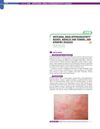
January 2012 in “Elsevier eBooks” The document concludes that various skin conditions have specific treatments, ranging from antihistamines for urticaria to surgery and medication for tumors and chronic skin diseases.

Ruxolitinib cream shows promise for vitiligo, and early melanoma diagnosis is crucial.
 September 2016 in “JAMA Dermatology”
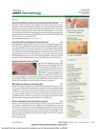
 Melanoma patients can learn to check their skin, early balding in men may indicate similar risks as PCOS in women, certain criteria can help predict skin cancer behavior, small skin cancer may not need extra therapy after surgery, and sterile gloves don't reduce infection in minor surgeries.
 10 citations
,
June 2024 in “American Journal of Clinical Dermatology”
10 citations
,
June 2024 in “American Journal of Clinical Dermatology” Hedgehog pathway inhibitors for advanced basal cell carcinoma can cause side effects, but managing them helps maintain treatment.
48 citations
,
April 2021 in “Pharmaceuticals” Liposomal curcumin improves skin cancer treatment effectiveness while sparing normal cells.
3 citations
,
June 2023 in “Modern Pathology” GLI1 RNA CISH effectively identifies basal cell carcinoma but is less specific for benign follicular tumors.
 80 citations
,
June 2000 in “Modern Pathology”
80 citations
,
June 2000 in “Modern Pathology” Long-standing benign tumors can become cancerous, especially in people with weakened immune systems.
 1 citations
,
September 2025 in “Journal of Zhejiang University SCIENCE B”
1 citations
,
September 2025 in “Journal of Zhejiang University SCIENCE B” Photodynamic therapy successfully treated skin cancer in a 53-year-old woman.
48 citations
,
July 1993 in “Archives of Dermatological Research” Merkel cells are abundant in facial vellus hair follicles, especially during the anagen phase.
 3 citations
,
August 2024 in “Frontiers in Oncology”
3 citations
,
August 2024 in “Frontiers in Oncology” Targeted radionuclide therapy shows promise for improving head and neck cancer treatment but needs more research.
 2 citations
,
September 2010 in “Journal of the Dermatology Nurses’ Association”
2 citations
,
September 2010 in “Journal of the Dermatology Nurses’ Association” Transplant patients on immunosuppressive medications have a higher risk of skin cancer, and managing this involves balancing medication with cancer risk.
 232 citations
,
January 2013 in “Nature Cell Biology”
232 citations
,
January 2013 in “Nature Cell Biology” Understanding where cancer cells come from helps create better prevention and treatment methods.
3 citations
,
April 2019 in “Stem cells international” Markers CRABP1, Nestin, and Ephrin B2 are present in skin cancer environments and may influence their development.
 1 citations
,
January 2023 in “IEEE access”
1 citations
,
January 2023 in “IEEE access” Deep learning helps detect skin conditions and is advancing dermatology diagnosis and treatment.
 1 citations
,
April 2018 in “The journal of investigative dermatology/Journal of investigative dermatology”
1 citations
,
April 2018 in “The journal of investigative dermatology/Journal of investigative dermatology” Topical patidegib gel effectively treats basal cell carcinoma in Gorlin syndrome patients without causing the side effects seen with oral treatments.
 December 2023 in “Curēus”
 Surgical removal of a scalp keratoacanthoma is effective and prevents recurrence, but hair may not regrow.
 205 citations
,
July 2009 in “Journal of Dermatological Science”
205 citations
,
July 2009 in “Journal of Dermatological Science” Male and female skin differ in many ways, which could lead to gender-specific skin treatments.
 58 citations
,
November 2013 in “Journal of Innovative Optical Health Sciences”
58 citations
,
November 2013 in “Journal of Innovative Optical Health Sciences” Multiphoton microscopy is a promising tool for detailed skin imaging and could improve patient care if its challenges are addressed.
 1 citations
,
January 2021
1 citations
,
January 2021 CD4+ skin cells may be precursors to basal cell carcinoma.
 1 citations
,
January 2016 in “Elsevier eBooks”
1 citations
,
January 2016 in “Elsevier eBooks” The document concludes that identifying the specific cells where skin cancers begin is important for creating better prevention, detection, and treatment methods.
 March 2022 in “Ophthalmology Journal”
 A woman's rare benign eyelid tumor was correctly identified through detailed tissue analysis.
 5 citations
,
August 2020 in “Curēus”
5 citations
,
August 2020 in “Curēus” The document concludes that recent studies help tell apart desmoplastic trichoepitheliomas from other skin tumors, but more research is needed for clear differentiation.
 41 citations
,
September 2012 in “Cellular and Molecular Life Sciences”
41 citations
,
September 2012 in “Cellular and Molecular Life Sciences” MicroRNAs play a crucial role in skin and hair health, affecting everything from growth to aging, and could potentially be used in treating skin diseases.
 3 citations
,
June 2021 in “Clinical, Cosmetic and Investigational Dermatology”
3 citations
,
June 2021 in “Clinical, Cosmetic and Investigational Dermatology” Dermoscopy is an effective tool for accurately detecting skin cancers.
December 2021 in “Pathologica” Trichogerminoma is a rare, benign skin tumor from hair cells, with a small risk of becoming cancerous.
72 citations
,
November 2017 in “Journal of developmental biology” The Hedgehog signaling pathway is important for skin and hair growth and can lead to cancer if it doesn't work right.
May 2025 in “International Journal of Women’s Dermatology” 5-alpha reductase inhibitors and spironolactone don't increase gynecological tumor risk, glucagon-like-peptide-1 receptor agonists may increase alopecia risk, sanitary pads can cause dermatitis, early hidradenitis suppurativa intervention is crucial for Hispanic patients, community education boosts skin cancer awareness, metformin may improve skin cancer survival, LNG-IUDs can increase acne risk, machine learning accurately detects basal cell carcinoma, JAK-inhibitors may raise miscarriage risk, inclusive skincare ads affect those with darker skin, and CCCA in Black women might involve autoimmunity.
June 2019 in “International journal of dermatology and venereology” The Hedgehog Signaling Pathway is important for skin and hair development and skin cancer treatment, but more research is needed to understand it fully.