 100 citations
,
September 1999 in “British Journal of Dermatology”
100 citations
,
September 1999 in “British Journal of Dermatology” The study found that two enzymes linked to hair loss are located in different parts of the scalp, supporting a common treatment's effectiveness.
 99 citations
,
January 2014 in “Nature communications”
99 citations
,
January 2014 in “Nature communications” Scientists created stem cells that can grow hair and skin.
 97 citations
,
November 1986 in “Journal of Steroid Biochemistry”
97 citations
,
November 1986 in “Journal of Steroid Biochemistry” Antiandrogens affect androgen-dependent body functions and are used for various medical conditions, with some risks like fetus feminization, but new forms like 17α-propylmesterolone show promise for acne without systemic effects.
 96 citations
,
June 2017 in “Nature Communications”
96 citations
,
June 2017 in “Nature Communications” A WNT10A gene mutation leads to ectodermal dysplasia by disrupting cell growth and differentiation.
 93 citations
,
February 2008 in “Atmospheric environment”
93 citations
,
February 2008 in “Atmospheric environment” Ozone reacts more with unwashed hair, producing compounds due to scalp oils, which could lower ozone exposure but increase exposure to reaction products.
 93 citations
,
January 1996 in “Clinical Pharmacokinectics”
93 citations
,
January 1996 in “Clinical Pharmacokinectics” Finasteride helps regrow hair and shrink prostate by reducing DHT, with some sexual side effects.
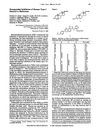 89 citations
,
February 1993 in “Journal of Medicinal Chemistry”
89 citations
,
February 1993 in “Journal of Medicinal Chemistry” New compounds called benzoquinolinones may treat conditions linked to excess DHT.
 87 citations
,
January 2017 in “PLoS Genetics”
87 citations
,
January 2017 in “PLoS Genetics” Removing both KLK5 and KLK7 proteins can prevent death and skin issues in Netherton syndrome.
 87 citations
,
July 2009 in “The journal of investigative dermatology/Journal of investigative dermatology”
87 citations
,
July 2009 in “The journal of investigative dermatology/Journal of investigative dermatology” Human beard hair medulla contains a unique and complex mix of keratins not found in other human tissues.
 85 citations
,
July 2025 in “Nature Communications”
85 citations
,
July 2025 in “Nature Communications” Nanozymes greatly improve biocatalysis by being stable, efficient, and versatile.