38 citations
,
October 2005 in “Expert opinion on therapeutic patents” Selective androgen receptor modulators (SARMs) are a promising type of drug for various health conditions due to their targeted actions.
 April 2026 in “Zenodo (CERN European Organization for Nuclear Research)”
 Microbes in the small intestine may cause Post-Finasteride Syndrome symptoms.
February 2023 in “Reactions Weekly” July 2025 in “Nano Research” Microneedles offer a promising, less invasive way to treat and monitor psoriasis.
 April 2018 in “Journal of Investigative Dermatology”
 Sensitive scalp has higher pH, more redness, abnormal sebum, and altered bacterial makeup.
175 citations
,
September 1998 in “British Journal of Dermatology” Keratin 17 gene mutations cause both steatocystoma multiplex and pachyonychia congenita type 2.
1 citations
,
April 2025 in “Journal of Applied Polymer Science” Microneedles with green tea polyphenols improve diabetic wound healing.

Hidradenitis Suppurativa has genetic links, with certain gene mutations more common in patients and a third of cases having a family history.
June 2020 in “Comparative medicine” NSG mice had the most mites, and genetic factors affect immune response and susceptibility.
 5 citations
,
July 2022 in “Orphanet journal of rare diseases”
5 citations
,
July 2022 in “Orphanet journal of rare diseases” RSPO1 mutations in certain patients lead to skin cells that don't develop properly and are more likely to become invasive, increasing the risk of skin cancer.
June 2025 in “Frontiers in Immunology” Sampling methods greatly affect skin microbiome data in acne studies.
220 citations
,
May 2017 in “JAMA dermatology” Patients with hidradenitis suppurativa have a different skin microbiome compared to healthy people.
91 citations
,
August 2019 in “Frontiers in Microbiology” RpoS helps Borrelia burgdorferi survive in hosts and adapt to different environments.
11 citations
,
June 2025 in “Advanced Functional Materials” The new nanosilver treatment effectively kills bacteria and speeds up wound healing with less toxicity.
56 citations
,
July 2014 in “PloS one” SARMs may be an effective treatment for a certain type of breast cancer by blocking cancer growth and spread.
4 citations
,
August 2023 in “Frontiers in Pediatrics” Most children with MIS-C showed significant improvement by 6 months.
 April 2023 in “Journal of Investigative Dermatology”
 Using DNase enzymes to break down harmful NETs could be a new treatment for Stevens-Johnson syndrome and toxic epidermal necrolysis.
9 citations
,
January 2012 in “International journal of trichology” Trichostasis spinulosa can be diagnosed with a simple skin biopsy and treated with specific gels, but lesions may return after stopping treatment.
23 citations
,
September 1997 in “Veterinary dermatology” Mupirocin ointment effectively treats feline acne.
 March 2026 in “Frontiers in Bioscience-Elite”
 Duloxetine, escitalopram, and finasteride may be effective against bacteria and fungi.
 July 2023 in “Media Dermato Venereologica Indonesiana”
 Early diagnosis, stopping the suspected drug, and supportive care are crucial for treating Stevens-Johnson Syndrome and Toxic Epidermal Necrolysis.
 October 2007 in “Journal of Investigative Dermatology”
 The document suggests a bacteria plays a significant role in acne rosacea and that white hair can regain color after transplant, meriting more research on reversing grey hair.
1 citations
,
January 2024 in “BMJ Case Reports” A woman had meningitis caused by mixed connective tissue disease, not an infection.
Finasteride may help reduce COVID-19 infection by altering a key gene.
 1 citations
,
July 2023 in “Scientific Reports”
1 citations
,
July 2023 in “Scientific Reports” Wearing a hijab changes the common bacteria and fungi on the scalp, possibly affecting skin health.
February 2026 in “Toxicology Letters” MK-0773 is a moderate inhibitor of the SRD5A2 enzyme.
9 citations
,
September 2023 in “Viruses” The XBB lineage of the Omicron variant spread rapidly in Southeastern Wisconsin.
 March 2026 in “Zenodo (CERN European Organization for Nuclear Research)”
 The N-K GM Series offers highly selective, eco-friendly antimicrobials free for everyone.
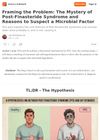 April 2026 in “Open MIND”
 Microbes in the small intestine may cause Post-Finasteride Syndrome symptoms.
84 citations
,
March 2002 in “The Journal of Dermatology” Steatocystoma multiplex is a skin condition starting around age 26, linked to hair follicles, and related to eruptive vellus hair cysts.