3 citations
,
April 2010 in “The FASEB Journal” Estrogen and MLL enzymes work together to regulate genes important for hair growth and leukemia.
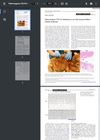 May 2024 in “Animal genetics”
 A cat's poor wound healing was linked to a genetic deletion in the COL5A1 gene.
8 citations
,
March 2004 in “Mammalian genome” KAP genes are crucial for hair development and show both shared and unique traits in humans, chimpanzees, and baboons.
 November 2022 in “The journal of investigative dermatology/Journal of investigative dermatology”
 Researchers made a detailed map of gene activity for different parts of human hair follicles to help create targeted hair disorder treatments.
April 2017 in “The journal of investigative dermatology/Journal of investigative dermatology” A girl with excessive hair growth had a genetic change on chromosome 17 that reduced the activity of two genes linked to hair growth.
July 2025 in “Journal of Investigative Dermatology” Hhip-Cre effectively targets dermal papilla cells for gene manipulation in hair biology.
January 2016 in “Methods in molecular biology” HAP stem cells in hair follicles could help repair nerves and spinal cords.
1 citations
,
May 2022 in “International journal of molecular sciences” Faulty LEF1 activation causes faster skin cell differentiation in premature aging syndrome.
 January 2012 in “heiDOK (Heidelberg University)”
 Dormant melanoma cells in mice interact minimally with memory T cells due to a suppressive tumor environment.
3 citations
,
September 2013 in “Journal of the American Academy of Dermatology” A new genetic mutation linked to Hutchinson-Gilford progeria syndrome was found in China.

The document concludes that the development of certain tumors is influenced by genetic background and that a specific gene modification can lead to tumor regression and reduced growth.
 2 citations
,
March 2021 in “bioRxiv (Cold Spring Harbor Laboratory)”
2 citations
,
March 2021 in “bioRxiv (Cold Spring Harbor Laboratory)” Hairless mammals have genetic changes in both their protein-coding and regulatory sequences related to hair.
18 citations
,
February 2006 in “Genomics” A new genetic mutation in mice causes permanent hair loss and skin wrinkling.

Hairlessness in mammals is caused by combined changes in genes and regulatory regions.
7 citations
,
April 2000 in “Mammalian Genome” A new mutation in mice causes crooked whiskers and messy hair.
 January 2017 in “Jikken doubutsu ihou/Jikken doubutsu/Experimental animals/Jikken Dobutsu”
 Mice with a changed Hr gene lose and regrow hair due to changes in the gene's activity.
 5 citations
,
May 2023 in “European Journal of Human Genetics”
5 citations
,
May 2023 in “European Journal of Human Genetics” NIPT can help detect potential maternal cancer, and GIPXplore can identify immune diseases in pregnancies.
 14 citations
,
August 2009 in “Cancer epidemiology”
14 citations
,
August 2009 in “Cancer epidemiology” AHCC reduces hair loss and liver injury caused by chemotherapy in rodents.
 17 citations
,
August 2012 in “Journal of Medical Genetics”
17 citations
,
August 2012 in “Journal of Medical Genetics” A new mutation in the XEDAR gene might cause a rare skin condition called hypohidrotic ectodermal dysplasia.
 9 citations
,
November 2012 in “Archives of Dermatological Research”
9 citations
,
November 2012 in “Archives of Dermatological Research” MC4R gene variants not linked to female hair loss.
 3 citations
,
January 2008 in “Journal of the American Academy of Dermatology”
3 citations
,
January 2008 in “Journal of the American Academy of Dermatology” A patient's skin rash did not affect the area where a previous viral rash was healing, suggesting a rare immune response.
 3 citations
,
April 2015 in “AFRICAN JOURNAL OF BIOTECHNOLOGY”
3 citations
,
April 2015 in “AFRICAN JOURNAL OF BIOTECHNOLOGY” Certain genetic markers on the Y-chromosome may influence prostate cancer risk in Iraqi males.
Matriptase-2 helps control iron levels by suppressing hepcidin, and its deficiency can cause iron-deficiency anemia.
 January 2023 in “International Journal of Zoological Investigations”
 Certain genetic variations in IL-16 may increase the risk of alopecia areata.
1 citations
,
September 2023 in “Frontiers in Genetics” A heterozygous mutation in HTRA1 can cause severe CARASIL symptoms.
 6 citations
,
October 2017 in “Oncotarget”
6 citations
,
October 2017 in “Oncotarget” Hairless mice are more vulnerable to Listeria infection, but gut microbiota can help reduce damage.
Mutations in the hairless protein gene cause hair loss.
1 citations
,
February 2024 in “Journal of the European Academy of Dermatology and Venereology” Certain genetic factors may contribute to frontal fibrosing alopecia in Brazil.
 November 2022 in “The journal of investigative dermatology/Journal of investigative dermatology”
 The study found markers indicating that cells responsible for hair color are differentiating in specific areas of the hair follicle.