June 2022 in “Jordan Journal of Applied Science - Natural Science Series” Human body follicles have diverse structures and functions important for health.
Daily hair care may cause holes in hair fibers.
January 2005 in “Chinese Journal of Veterinary” Hairless mice lose hair by 3-4 weeks, develop thicker, folded skin, and show pigmentation differences.
January 2022 in “Figshare” Autophagy helps mouse glands stay healthy, prevents early aging, and maintains their oil and scent production.
 139 citations
,
July 1991 in “Journal of The American Academy of Dermatology”
139 citations
,
July 1991 in “Journal of The American Academy of Dermatology” Understanding hair follicle anatomy helps diagnose hair disorders.
18 citations
,
October 1978 in “The journal of investigative dermatology/Journal of investigative dermatology” Excess vitamin A causes lasting gland changes in mouse hair follicles.
 2 citations
,
May 2012 in “Acta pharmaceutica sinica B”
2 citations
,
May 2012 in “Acta pharmaceutica sinica B” The study found unique microscopic features for hair or feather in five animal ingredients in Shenrongbian pill.
28 citations
,
November 2009 in “Journal of Structural Biology” High flux X-ray beams quickly damage the structure of human hair.
 22 citations
,
March 2012 in “Molecular Medicine Reports”
22 citations
,
March 2012 in “Molecular Medicine Reports” DHT affects hair follicle cells by changing microRNA levels, leading to less cell growth and more cell death.
Giant axonal neuropathy changes the structure of keratin in human hair, making it stiffer and stronger.
 22 citations
,
July 2012 in “International Journal of Trichology”
22 citations
,
July 2012 in “International Journal of Trichology” Miniaturized hairs stay connected to muscle in alopecia areata, allowing possible regrowth, but not in androgenetic alopecia.
31 citations
,
February 2007 in “Journal of Structural Biology” Oxidation changes the structure of hair protein filaments, causing them to compact and rearrange.
1 citations
,
June 2023 in “Journal of Visualized Experiments” A new 3D-printed microscope stage makes long-term imaging of live tissue easier and more accessible.
 March 2026 in “International Journal of Health Science”
 Pregnancy causes temporary skin changes that are usually harmless.
November 2024 in “Journal of Investigative Dermatology” Changes in hair follicle structure may help diagnose and monitor alopecia.
 4 citations
,
May 2013 in “Dermatologic Surgery”
4 citations
,
May 2013 in “Dermatologic Surgery” Three new techniques simplify and improve the preparation of tissue samples for skin cancer surgery.
September 1990 in “Journal of Dermatological Science” 8 citations
,
April 2017 in “Journal of The Royal Society Interface” Giant axonal neuropathy changes the structure of keratin in human hair.
 May 2024 in “Scientific Reports”
 Androgen receptors in the mouse brain may explain cognitive and mood changes in prostate cancer treatment.
 August 2020 in “Current psychopharmacology”
 Pregnancy and nursing increase certain brain activities in rats, but these changes disappear when the babies are taken away.
 September 2013 in “Science”
 Human stem cells can aid stroke recovery, research experiences boost students' career aspirations, minoxidil may reduce cancer spread, a molecule can slow tumor growth, a protein affects water flow in cells, magnesium behaves differently at tiny scales, and a new method detects slow-moving objects.
During late pregnancy in rats, hormonal changes increased certain GABAA receptors in specific brain cells.
 24 citations
,
March 2011 in “British Journal of Dermatology”
24 citations
,
March 2011 in “British Journal of Dermatology” Men with hair loss have more DNA changes in back-of-head hair follicles, possibly protecting them from thinning.
 10 citations
,
December 2010 in “British Journal of Dermatology”
10 citations
,
December 2010 in “British Journal of Dermatology” After menopause, some women lose scalp hair and gain facial hair, with patterns suggesting different underlying causes.
Sensory neuron remodeling and Merkel-cell changes in the skin happen independently.
 4 citations
,
April 2016 in “Experimental Dermatology”
4 citations
,
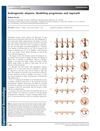
April 2016 in “Experimental Dermatology” AGA causes hair loss through follicle miniaturization and hair cycle changes; regrowth depends on anagen initiation in kenogen follicles.
 January 2019 in “The Review of Laser Engineering”
 Multiphoton excitation microscopy is a promising tool for deep tissue imaging and clinical applications.
 February 2024 in “International Journal of Molecular Sciences”
 Hair loss in Androgenetic Alopecia is caused by genetics, aging, and lifestyle, leading to hair follicle shrinkage and related health risks.
 13 citations
,
January 2020 in “Neuroscience”
13 citations
,
January 2020 in “Neuroscience” Blocking 5α-reductase can harm memory and brain structure, and increase harmful brain changes in male mice used for Alzheimer's disease research.
 29 citations
,
October 2011 in “British Journal of Dermatology”
29 citations
,
October 2011 in “British Journal of Dermatology” Certain microRNAs are more common in balding areas and might be involved in male pattern baldness.