December 2025 in “Antibiotics” Tinea capitis in older adults is often misdiagnosed but can be effectively treated with antifungal therapy.
9 citations
,
August 2002 in “British journal of ophthalmology” The document reports a rare case of ECCL with a new association with optic disc colobomas.
A 5-year-old boy grew too much hair after using minoxidil, but it went away after stopping the treatment.
 33 citations
,
December 2013 in “Journal of cutaneous pathology”
33 citations
,
December 2013 in “Journal of cutaneous pathology” A fungal infection can look like a different scalp condition in teens, leading to wrong treatment until proper tests are done.
694 citations
,
April 2000 in “Nature genetics” Msx2 deficiency in mice leads to bone growth and organ development problems.
46 citations
,
January 2002 in “Paediatric drugs” Tinea capitis, a scalp fungal infection in children, is best treated with newer antifungal agents for shorter periods.
 May 2014 in “JAMA Dermatology”
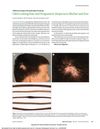
 Mother and son diagnosed with a rare genetic hair loss condition with no effective treatment.
 26 citations
,
November 1993 in “Progress in Neuro-psychopharmacology & Biological Psychiatry”
26 citations
,
November 1993 in “Progress in Neuro-psychopharmacology & Biological Psychiatry” Treatment during development affects hormone balance and sexual behavior in male rats.
 3 citations
,
August 2012 in “The American Journal of Dermatopathology”
3 citations
,
August 2012 in “The American Journal of Dermatopathology” A man with a birthmark on his scalp developed hair loss that improved with treatment, but the link between the birthmark and hair loss was unclear.

A rapid screening method using trichoscopy and clinical data can improve diagnosis and treatment of tinea capitis.
33 citations
,
January 2014 in “Pediatric Research” June 2020 in “Journal of Investigative Dermatology” Hair shaft malformation contributes to Central Centrifugal Cicatricial Alopecia.
11 citations
,
November 2019 in “The FASEB Journal” A mutation in the MAP2 gene causes reduced hair follicle density, leading to hairlessness.
3 citations
,
November 2010 in “The Journal of Dermatology” A giant blue nevus on the scalp can cause hair loss and may damage underlying structures.
January 1983 in “Archives of Dermatology” Penicillium might rarely cause scalp infection in children.
24 citations
,
July 2009 in “Mycoses” A scalp infection was treated successfully, leading to full hair regrowth.
22 citations
,
May 2005 in “Journal of the European Academy of Dermatology and Venereology” People with Down syndrome are more likely to have alopecia areata and need regular skin check-ups.
 February 2024 in “Infection and drug resistance”
 Tinea capitis in a child was caused by a fungus from cats, highlighting the need for accurate diagnosis and treatment.
June 2011 in “European Journal of Pediatric Dermatology” An 11-year-old girl with hair thinning was diagnosed with monilethrix and early androgenetic alopecia.
 March 2026 in “Open MIND”
 Early treatment of scalp infections can prevent permanent hair loss.
 59 citations
,
February 2021 in “BMJ”
59 citations
,
February 2021 in “BMJ” High doses of cyproterone acetate increase the risk of brain tumors in women, but the risk decreases after stopping the medication.
 12 citations
,
March 2013
12 citations
,
March 2013 Minoxidil cream can safely treat hair loss in kids with ectodermal dysplasia.
61 citations
,
April 1980 in “Journal of the American Academy of Dermatology” A new syndrome may link skin, growth, mental, and hair issues.
 7 citations
,
January 2018 in “Neurodegenerative Diseases”
7 citations
,
January 2018 in “Neurodegenerative Diseases” Researchers found a new ABCD1 gene mutation linked to a rare brain and nerve disorder with unusual brain changes.
 13 citations
,
June 2006 in “Pituitary”
13 citations
,
June 2006 in “Pituitary” A woman with acromegaloidism and normal growth hormone levels had a rare X-Tetrasomy, suggesting a need to study X-chromosome genes for their role in growth and facial development.
March 2024 in “Clinical Case Reports” Early detection of tinea capitis is possible by spotting specific hair patterns like comma or corkscrew hairs.
5 citations
,
June 1993 in “Pediatric dermatology” Monilethrix Syndrome causes fragile, beaded hair that breaks easily and needs early diagnosis for better care.
28 citations
,
January 1985 in “Journal of the American Academy of Dermatology” A girl with citrullinemia developed pili torti, suggesting a link between the hair condition and the metabolic disorder.
June 2026 in “Clinical Case Reports” Early recognition and treatment of multiple carboxylase deficiency with biotin can prevent serious health issues in infants.
1 citations
,
September 1998 in “Journal of Advancement in Medicine” Thiamin deficiency might cause hair loss and mental health issues.