 49 citations
,
September 2007 in “Journal of Investigative Dermatology”
49 citations
,
September 2007 in “Journal of Investigative Dermatology” The study found that bioengineered hair follicles work when using cells from the same species but have issues when combining human and mouse cells.
2 citations
,
November 1992 in “Journal of dermatology” Hair cells grown in a lab showed specific hair proteins.
 5 citations
,
March 2020 in “Cell and Tissue Banking”
5 citations
,
March 2020 in “Cell and Tissue Banking” Injected cells show potential for hair growth.
 9 citations
,
August 2015 in “Tissue Engineering and Regenerative Medicine”
9 citations
,
August 2015 in “Tissue Engineering and Regenerative Medicine” Human skin cell byproducts can potentially be used to treat hair loss and promote hair growth.
 1 citations
,
March 2022 in “Hair transplant forum international”
1 citations
,
March 2022 in “Hair transplant forum international” Hair cell cloning could potentially rejuvenate shrinking hair follicles, allowing for lifelong hair maintenance.
48 citations
,
April 1995 in “PubMed” Testosterone helps beard and axillary hair cells grow by releasing growth factors from dermal papilla cells.
22 citations
,
February 2008 in “Biochemical and Biophysical Research Communications” Androgen effects on hair follicles vary by skin area.
 22 citations
,
March 2012 in “Molecular Medicine Reports”
22 citations
,
March 2012 in “Molecular Medicine Reports” DHT affects hair follicle cells by changing microRNA levels, leading to less cell growth and more cell death.
13 citations
,
September 2017 in “Cytometry Part A” Horse hair follicles could be a new source of stem cells for healing horses.
January 2018 in “Belarusian State Pedagogical University repository (Belarusian State Pedagogical University)” Adipose-derived stem cells can be used to create cells that help grow new hair.
 14 citations
,
October 2000 in “Genomics”
14 citations
,
October 2000 in “Genomics” Rat dermal papilla cells have unique genes crucial for hair growth.
30 citations
,
February 1977 in “Nature” The dermal papilla can still grow new hair even after heavy radiation.
12 citations
,
January 2022 in “Cells” Dermal papilla cell vesicles can boost hair growth genes in fat stem cells.
July 2018 in “Chinese Journal of Dermatology” The two-step enzyme digestion method is the best for isolating axillary dermal papilla cells.
43 citations
,
September 2009 in “Stem Cells” A nonviral method was developed to label and culture human hair follicle stem cells.
 January 2014 in “Hair transplant forum international”
 Hair follicle cloning is possible but faces many challenges before it can replace traditional hair transplants.
25 citations
,
January 1988 in “Journal of Investigative Dermatology” 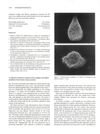 8 citations
,
September 1993 in “British journal of dermatology/British journal of dermatology, Supplement”
8 citations
,
September 1993 in “British journal of dermatology/British journal of dermatology, Supplement” A new method helps isolate key hair components to study hair growth and loss.
 November 2023 in “Experimental Dermatology”
 Exosomes from human hair follicle cells can improve aging hair follicle cell function and help regenerate hair follicles.
28 citations
,
November 1987 in “Journal of the American Academy of Dermatology” The model successfully grew and differentiated hair follicle cells in the lab.
9 citations
,
July 1993 in “The journal of investigative dermatology/Journal of investigative dermatology” Sex hormones and antiandrogens can either stimulate or inhibit human hair follicle cell growth depending on the dose.
 April 2023 in “Journal of Investigative Dermatology”
 The research found that certain factors in hair follicle cells control hair growth and development, and these could be used to create new treatments for hair loss.
1 citations
,
February 2025 in “International Journal of Molecular Sciences” Enzymatic digestion is an efficient method for isolating cells from hair follicles for tissue-engineered skin.
July 2022 in “Institutional Repositories DataBase (IRDB)” 3D spheroid cells effectively test hair growth compounds like Minoxidil.
 April 2017 in “Plastic and reconstructive surgery. Global open”
 Fetal scalp cells have more regenerative genes than adult cells, and decellularized muscle matrix is better for muscle repair than commercial alternatives.
15 citations
,
December 1972 in “Journal of Investigative Dermatology” November 2024 in “Journal of Investigative Dermatology” ATP-sensitive potassium channels are important for hair growth.
September 1992 in “Journal of Dermatological Science” Platelet-rich plasma helps human hair cells grow and survive better.
 2 citations
,
April 2021 in “International Journal of Molecular Sciences”
2 citations
,
April 2021 in “International Journal of Molecular Sciences” The study concluded that changing the culture conditions can cause sika deer skin cells to switch from a flat to a 3D pattern, which is important for creating hair follicles.