 July 2018 in “Elsevier eBooks”
 Stopping tight hairstyles can prevent and reduce traction alopecia.
 September 2017 in “Springer eBooks”
 FUE hair transplants have improved to give more natural results with less scarring and pain.
 September 2017 in “Indian Journal of Plastic Surgery”
 Garg and Garg created an affordable, easy-to-use training program for hair restoration surgery using everyday items, which can teach a technician the basics in 3-4 weeks with two hours of daily practice.
 September 2017 in “Plastic and Reconstructive Surgery – Global Open”
 Some migraine sufferers had no more headaches after getting a hair transplant.
 June 2017 in “JPRAS Open”
 Hair transplant was successful on a bald area after skin graft surgery.
 January 2017 in “Elsevier eBooks”
 The document concludes that choosing the right forehead and brow lifting technique based on individual patient characteristics is crucial to prevent complications and achieve desired results.
 January 2017 in “International journal of transplantation & plastic surgery”
 Hair restoration techniques have improved over time, focusing on better results and less scarring, but skilled doctors are essential for natural-looking outcomes.
 January 2016 in “Springer eBooks”
 The document concludes that there are various causes and treatments for hair loss, with hair transplantation being a notable option.
 July 2014 in “Plastic and Reconstructive Surgery”
 The document concludes that rib-sparing techniques in breast reconstruction have limited benefits, sentinel lymph node biopsy is needed for desmoplastic melanoma, certain hair preservation methods improve graft survival, partial turbinectomy effectively reduces nasal obstruction, nipple shields with irrigation may reduce capsular contracture, and thicker malignant melanomas have a higher risk of non-skin cancers.
 July 2014 in “Plastic and Reconstructive Surgery”
 The document concludes that rib-sparing techniques in breast reconstruction have limited benefits, sentinel lymph node biopsy is needed for desmoplastic melanoma, certain hair preservation methods improve graft survival, partial turbinectomy effectively reduces nasal obstruction, nipple shields with irrigation may reduce capsular contracture, and thicker malignant melanomas have a higher risk of non-skin cancers.
 July 2014 in “Plastic and Reconstructive Surgery”
 Sentinel lymph node biopsy is recommended for all types of desmoplastic melanoma due to higher rates of nodal metastasis.
 July 2014 in “Plastic and Reconstructive Surgery”
 The rib-sparing technique in breast reconstruction may lead to more complications without reducing the need for further surgery.
 July 2014 in “Plastic and Reconstructive Surgery”
 Sentinel lymph node biopsy is recommended for all types of desmoplastic melanoma due to higher rates of nodal metastasis.
 July 2014 in “Plastic and Reconstructive Surgery”
 The rib-sparing technique in breast reconstruction may lead to more complications without reducing the need for further surgery.
 October 2013 in “European Orthopaedics and Traumatology”
 A woman's hair grew back within 3 months after temporary hair loss from improper head positioning during shoulder surgery.
 December 2012 in “Canadian journal of ophthalmology”
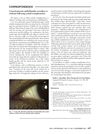
 Eyelash transplantation can cause eye damage and pain if not done carefully.
 July 2011 in “Facial Plastic Surgery”
 The document provides a quiz for physicians to earn continuing medical education credits in facial plastic surgery.
 November 2009 in “Actas dermo-sifiliográficas/Actas dermo-sifiliográficas”
 Hair transplantation effectively treated a bald patch in an 18-year-old woman with Temporal Triangular Alopecia.
 June 2008 in “Springer eBooks”
 The document concludes that permanent hair loss conditions are complex, require early specific treatments, and "secondary permanent alopecias" might be a more accurate term than "secondary cicatricial alopecia."
 September 2006 in “Plastic and Reconstructive Surgery”
 Hair transplant surgeries can be improved by preserving follicles in a special solution, and surgeries done at outpatient facilities are more profitable than those at hospitals.
 September 2006 in “Plastic and Reconstructive Surgery”
 Outpatient aesthetic and reconstructive surgeries are about equally profitable in Academic Health Centers and Ambulatory Surgery Centers when time is considered, but dedicated surgery centers are generally more profitable.
 September 2006 in “Plastic and Reconstructive Surgery”
 The SGAP flap effectively treats large sacral pressure sores with good results and minimal complications.
 May 2005 in “Seminars in Plastic Surgery”
 The Erbium YAG laser is effective in hair restoration, resulting in high yield and density, but it's not recommended for second replacements or those with good-quality hair.
 September 2004 in “Atlas of the Oral and Maxillofacial Surgery Clinics”
 Hair restoration surgery techniques can effectively treat scalp deformities and have evolved to provide natural-looking results.
 June 2004 in “Dermatologic Surgery”
 The single-scar technique in hair transplantation minimizes scarring and preserves hairs for future use, with proper training overcoming its perceived drawbacks.
 June 2004 in “Dermatologic Surgery”
 The commentary suggests that using a single-scar technique for hair transplants can give good cosmetic results, but some surgeons hesitate to use it despite ways to address their concerns.
 May 2004 in “Facial Plastic Surgery Clinics of North America”
 Better understanding of hair patterns and advanced techniques are crucial for improving hair restoration and removal outcomes.
 October 2002 in “Dermatologic Surgery”
 The document concludes that careful planning, efficient use of every hair graft, and setting surgical priorities are crucial for successful hair restoration surgery.
 June 2002 in “Seminars in Cutaneous Medicine and Surgery”
 Hair transplantation has improved to more natural-looking results and is complemented by effective non-surgical treatments, with ongoing research into hair follicle cloning.
 June 2002 in “Dermatologic Surgery”
 Chinese scalps have fewer hair clusters than Caucasians, and transplanting 30 clusters per square centimeter creates a natural-looking hairline for bald Chinese individuals.